
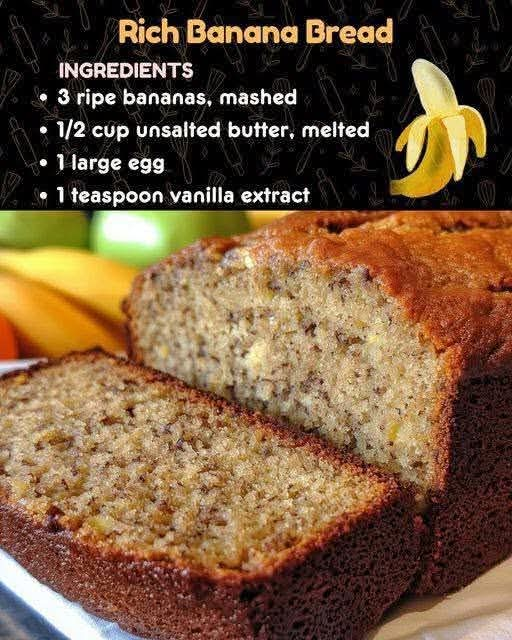
Rich Banana Bread
Introduction
Rich Banana Bread is one of those classic homemade treats that turns a few simple ingredients into something wonderfully comforting. It is moist, tender, buttery, and packed with the natural sweetness and flavor of ripe bananas. The best part is that it is easy enough for a beginner to make, yet delicious enough to become a family favorite.
This recipe is especially useful when you have bananas sitting on the counter that have become too soft to enjoy on their own. In fact, the darker and more spotted the bananas become, the more flavorful and naturally sweet your banana bread can be.
A slice of freshly baked banana bread is perfect for breakfast, an afternoon snack, or a simple dessert. Serve it plain, with butter, or alongside a cup of coffee or tea.
Ingredients
Main Ingredients
- 3 very ripe bananas, mashed
- 1/2 cup unsalted butter, melted and slightly cooled
- 1 large egg
- 1 teaspoon vanilla extract
- 3/4 cup granulated sugar
- 1 1/2 cups all-purpose flour
- 1 teaspoon baking soda
- 1/2 teaspoon salt
Optional Additions
For extra flavor and texture, you can also add:
- 1/2 teaspoon ground cinnamon
- 1/2 cup chopped walnuts or pecans
- 1/2 cup chocolate chips
- 1/2 teaspoon nutmeg
- 1 tablespoon brown sugar for a slightly deeper flavor
The optional ingredients are not necessary, but they allow you to customize the loaf according to your taste.
Instructions
Step 1: Prepare the Oven and Pan
Preheat your oven to 350°F (175°C).
Grease a standard 9 x 5-inch loaf pan with butter or cooking spray. You can also line the pan with parchment paper, leaving some paper hanging over the sides. This makes removing the finished banana bread much easier.
Step 2: Mash the Bananas
Peel the ripe bananas and place them in a large mixing bowl.
Mash them thoroughly with a fork or potato masher. A few small pieces of banana are perfectly fine and can add wonderful texture to the finished loaf.
For the richest flavor, use bananas that are very ripe, soft, and covered with brown or dark spots.
Step 3: Add the Wet Ingredients
Pour the melted butter into the mashed bananas.
Add the egg and vanilla extract. Whisk or stir everything together until the mixture is well combined.
Make sure the melted butter has cooled slightly before adding the egg so that the egg does not become partially cooked.
Step 4: Add the Sugar
Stir the granulated sugar into the banana mixture.
Mix until the sugar is evenly distributed. The bananas already provide natural sweetness, while the sugar helps create the classic tender texture and caramelized flavor of banana bread.
Step 5: Combine the Dry Ingredients
In a separate bowl, whisk together the flour, baking soda, and salt.
If you are using cinnamon or nutmeg, add them to the dry ingredients at this stage.
Mixing the dry ingredients separately helps distribute the baking soda and salt evenly throughout the flour.
Step 6: Combine Wet and Dry Mixtures
Gradually add the dry ingredients to the banana mixture.
Use a wooden spoon or rubber spatula to gently fold everything together.
Do not overmix the batter. Stop stirring as soon as you no longer see large streaks of dry flour. A few small lumps are completely normal.
Overmixing can make the finished banana bread dense or chewy instead of soft and tender.
Step 7: Add Optional Ingredients
If desired, gently fold in chopped walnuts, pecans, or chocolate chips.
You can reserve a small handful of nuts or chocolate chips to sprinkle over the top before baking.
Step 8: Fill the Pan
Pour the batter into the prepared loaf pan.
Spread the surface evenly with a spatula. If desired, place a halved banana lengthwise on top of the batter for a beautiful homemade appearance.
Step 9: Bake
Place the loaf pan in the preheated oven.
Bake for approximately 50 to 65 minutes, depending on your oven and the size and shape of your pan.
The banana bread is ready when the top is golden brown and a toothpick inserted into the center comes out clean or with a few moist crumbs attached.
If the top becomes dark before the center is finished, loosely cover the loaf with aluminum foil and continue baking.
Step 10: Cool
Remove the banana bread from the oven and allow it to cool in the pan for about 10 to 15 minutes.
Carefully lift it out of the pan and transfer it to a wire rack.
Allow it to cool further before slicing. This gives the interior time to finish setting and makes it easier to achieve neat slices.
Method
The method behind this banana bread is simple: ripe bananas provide moisture, sweetness, and intense banana flavor, while melted butter contributes richness and tenderness.
The egg helps bind the ingredients together and gives the loaf structure. Vanilla enhances the overall flavor, while baking soda provides the leavening needed to help the bread rise.
The most important technique is gentle mixing. Once the flour is added, the batter should only be mixed until combined. This keeps the loaf soft rather than developing too much gluten.
Using ripe bananas is another important part of the method. Green or barely ripe bananas will not provide the same sweetness or strong banana flavor. Very ripe bananas are soft, fragrant, and ideal for baking.
The History of Banana Bread
Banana bread became especially popular in American home baking during the 20th century. The recipe developed as a practical way to use overripe bananas rather than throwing them away.
As home cooks experimented with baking, bananas became a popular ingredient in quick breads. Unlike traditional yeast breads, banana bread does not require yeast or a long rising period. Baking soda or baking powder provides the lift, making the recipe convenient for everyday kitchens.
During the Great Depression, avoiding food waste became particularly important, and recipes that used ingredients that might otherwise be discarded became increasingly valuable.
Over the years, banana bread became a beloved comfort food. Families created their own versions by adding nuts, cinnamon, chocolate chips, brown sugar, or other ingredients.
Today, banana bread remains one of the most recognizable homemade quick breads.
Formation and Texture
The formation of this banana bread begins when the wet ingredients are blended together. The mashed bananas distribute moisture throughout the batter, while the melted butter coats the flour and contributes a rich, tender crumb.
When the dry ingredients are incorporated, the baking soda reacts with the acidic components in the batter and produces gases that help the loaf rise during baking.
As the loaf heats in the oven, the egg proteins set, the flour structure develops, and the sugars begin to brown. This creates the golden crust and rich aroma associated with freshly baked banana bread.
The finished loaf should have a lightly crisp exterior and a soft, moist center.
Tips for Perfect Banana Bread
Use Very Ripe Bananas
The best bananas for banana bread are soft and heavily spotted. They contain more developed sweetness and provide stronger banana flavor.
Do Not Overmix
Once the flour has been added, mix only until combined. Too much mixing can result in a tougher loaf.
Measure Flour Carefully
Too much flour can make banana bread dry. For the most consistent results, spoon flour into your measuring cup and level it off rather than packing it down.
Let the Butter Cool
Melted butter should be warm rather than extremely hot before it is mixed with the egg.
Check the Center
The outside of banana bread can look finished before the center is completely baked. Always test the middle with a toothpick or skewer.
Allow It to Rest
Banana bread often tastes even better after it has cooled. The flavors settle and the texture becomes beautifully moist.
Serving Suggestions
Rich Banana Bread can be served in many different ways.
For breakfast, serve warm slices with butter and fresh fruit.
For an afternoon snack, pair a slice with coffee, tea, or milk.
For dessert, warm a slice and serve it with vanilla ice cream.
You can also spread a slice with peanut butter, cream cheese, or a thin layer of honey.
For a special presentation, dust the cooled loaf lightly with powdered sugar.
Storage
Store completely cooled banana bread in an airtight container at room temperature for up to several days.
For longer storage, wrap the loaf tightly in plastic wrap or foil and refrigerate it.
Banana bread can also be frozen. Wrap individual slices or the entire loaf tightly, place it in a freezer-safe bag or container, and freeze.
When ready to enjoy, allow frozen slices to thaw at room temperature or warm them gently before serving.
Variations
Walnut Banana Bread
Fold 1/2 cup chopped walnuts into the batter for a classic crunchy variation.
Chocolate Chip Banana Bread
Add 1/2 cup chocolate chips for a richer, dessert-style loaf.
Cinnamon Banana Bread
Add 1/2 teaspoon cinnamon to the dry ingredients for a warm, aromatic flavor.
Pecan Banana Bread
Replace the walnuts with chopped pecans for a buttery Southern-inspired version.
Brown Sugar Banana Bread
Replace part or all of the granulated sugar with brown sugar for deeper caramel notes.
Conclusion
Rich Banana Bread is a perfect example of how ordinary ingredients can create something truly special. With three ripe bananas, melted butter, an egg, vanilla, flour, and a few pantry staples, you can make a soft and flavorful loaf that fills the kitchen with an irresistible homemade aroma.
It is simple enough for a weekday breakfast, comforting enough for a family gathering, and delicious enough to serve as dessert. Most importantly, it is a wonderful way to transform overripe bananas into something everyone will want another slice of.
For Banana Bread Lovers
If you love homemade banana bread, this recipe is one to keep close. The rich buttery texture, naturally sweet bananas, and tender crumb make it an excellent basic recipe that can easily be customized.
Add nuts for crunch, chocolate chips for indulgence, cinnamon for warmth, or simply enjoy it exactly as it is.
A warm slice straight from the oven, served with a little butter, is one of the simplest and most comforting homemade treats you can make.