
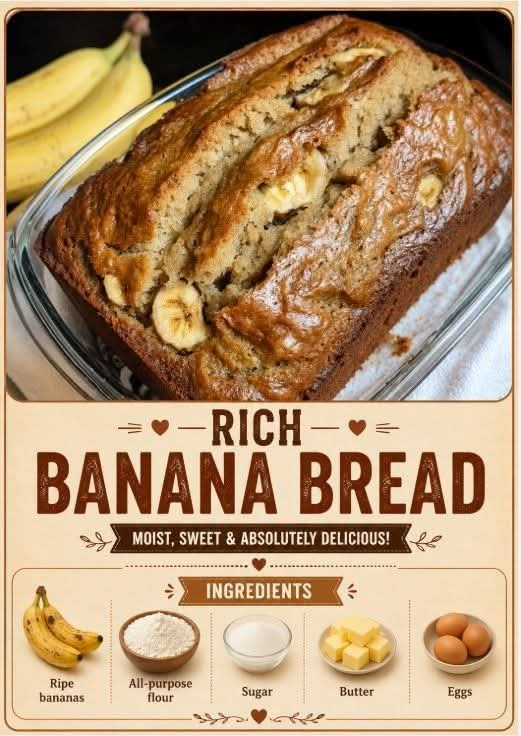
Rich Banana Bread
Introduction
There is something wonderfully comforting about a loaf of homemade banana bread coming out of the oven. The smell of ripe bananas, butter, and vanilla filling the kitchen instantly makes the house feel warm and inviting.
Rich Banana Bread is one of those classic recipes that never seems to go out of style. It is simple enough for a beginner to make, yet delicious enough to serve to family and guests. The secret is using very ripe bananas. As bananas become softer and develop brown spots, their natural sweetness becomes stronger, making them perfect for baking.
This banana bread is moist, tender, buttery, and full of natural banana flavor. It makes a wonderful breakfast, afternoon snack, or simple homemade dessert.
Ingredients
- 3 very ripe bananas, mashed
- 2 cups all-purpose flour
- 3/4 cup granulated sugar
- 1/2 cup unsalted butter, melted and slightly cooled
- 2 large eggs
- 1 teaspoon vanilla extract
- 1 teaspoon baking soda
- 1/2 teaspoon salt
Optional Additions
For a different variation, you can also add:
- 1/2 cup chopped walnuts or pecans
- 1/2 cup chocolate chips
- 1 teaspoon ground cinnamon
- 1/4 teaspoon nutmeg
- 1/2 cup shredded coconut
Instructions
Step 1: Prepare the Oven and Pan
Preheat your oven to 350°F (175°C).
Grease a standard 9 x 5-inch loaf pan with butter or nonstick cooking spray. You can also line the pan with parchment paper, leaving a little overhang on the sides to make the finished loaf easier to remove.
Step 2: Mash the Bananas
Peel the ripe bananas and place them in a large mixing bowl.
Mash them thoroughly with a fork until mostly smooth. A few small pieces of banana are perfectly fine and can add extra moisture and flavor to the finished bread.
The riper the bananas, the sweeter and more flavorful your banana bread will be.
Step 3: Add the Wet Ingredients
Pour the melted butter into the mashed bananas and stir until combined.
Add the sugar, eggs, and vanilla extract. Mix gently until the ingredients are evenly incorporated.
Do not overmix the batter at this stage. A simple hand whisk or wooden spoon is all you need.
Step 4: Combine the Dry Ingredients
In a separate bowl, whisk together the all-purpose flour, baking soda, and salt.
This helps distribute the baking soda and salt evenly throughout the flour.
Step 5: Make the Batter
Gradually add the dry ingredients to the banana mixture.
Fold everything together gently with a spatula or wooden spoon just until no large streaks of flour remain.
Avoid excessive mixing. Overmixing can develop the gluten in the flour and result in a dense or chewy loaf instead of a soft and tender banana bread.
If you are using nuts, chocolate chips, cinnamon, or another optional addition, gently fold them into the batter at this point.
Step 6: Fill the Loaf Pan
Pour the finished batter into the prepared loaf pan.
Use a spatula to spread the batter evenly and gently smooth the top.
For an attractive bakery-style loaf, you can place a thin banana sliced lengthwise on top before baking.
Step 7: Bake
Place the loaf pan in the preheated oven.
Bake for approximately 55 to 65 minutes, or until the top is golden brown and a toothpick inserted into the center comes out clean or with a few moist crumbs attached.
If the top begins browning too quickly while the center still needs more time, loosely cover the loaf with aluminum foil during the final part of baking.
Step 8: Cool
Remove the banana bread from the oven and allow it to cool in the pan for approximately 10 to 15 minutes.
Carefully remove the loaf from the pan and transfer it to a wire rack.
Allow it to cool further before slicing. This gives the interior time to finish setting and makes it easier to achieve neat slices.
Method
The method for this banana bread is intentionally simple.
First, the ripe bananas are mashed to create the primary source of moisture and banana flavor. Melted butter adds richness and tenderness, while sugar provides sweetness and helps create a beautifully golden crust.
The eggs help bind everything together and contribute to the soft texture. Vanilla enhances the flavor, while baking soda provides the lift needed to create a light, tender loaf.
The dry ingredients are mixed separately before being folded into the wet mixture. The most important technique is to avoid overmixing once the flour is added. Stir only until the ingredients are combined.
The finished batter is then baked until the loaf is golden on top and fully cooked in the center.
The History of Banana Bread
Banana bread became especially popular in the United States during the 20th century. The recipe became a practical way for home cooks to use bananas that had become overly ripe instead of throwing them away.
During the Great Depression, avoiding food waste was particularly important, and recipes that transformed leftover or overripe ingredients into something delicious became increasingly valuable.
The popularity of baking soda and baking powder also helped quick breads become common in American kitchens. Unlike traditional yeast breads, banana bread does not require kneading, rising, or a long fermentation process.
Over time, countless variations appeared. Some families added walnuts, while others preferred chocolate chips, cinnamon, or simply extra bananas. Despite these variations, the basic idea has remained the same: transform ripe bananas into a rich, comforting homemade loaf.
Formation and Texture
A great banana bread should have a golden-brown exterior with a soft, moist interior.
The bananas provide moisture and natural sweetness, while the butter gives the bread its rich texture. The eggs help create structure, and the flour provides the framework that holds everything together.
Baking soda reacts with the natural acidity in the bananas and other ingredients, helping the loaf rise as it bakes.
The ideal finished texture is moist but not wet, tender but sturdy enough to slice easily.
Tips for Perfect Banana Bread
Use Very Ripe Bananas
Brown-spotted bananas are ideal. They contain more natural sweetness and provide a stronger banana flavor.
Do Not Overmix
Once the flour is added, mix only until combined. Too much mixing can make the bread dense.
Measure Flour Carefully
For the most consistent results, spoon flour into your measuring cup and level it off rather than packing the flour down.
Do Not Slice Immediately
Allowing the bread to cool before slicing gives the crumb time to settle and helps prevent it from becoming gummy.
Store Properly
Once completely cooled, wrap the banana bread tightly or place it in an airtight container.
It can be kept at room temperature for several days. Individual slices can also be wrapped and frozen for longer storage.
Serving Ideas
Rich Banana Bread is delicious served plain, but there are many ways to enjoy it.
Serve a warm slice with a little butter for a classic breakfast.
For dessert, add a spoonful of whipped cream or a scoop of vanilla ice cream.
You can also toast individual slices and serve them with peanut butter, cream cheese, honey, or your favorite nut butter.
For a special occasion, lightly dust the cooled loaf with powdered sugar or drizzle it with a simple vanilla glaze.
For Banana Bread Lovers
Banana bread lovers will appreciate how simple this recipe is. It requires everyday ingredients, comes together without complicated equipment, and produces a loaf that tastes homemade in every bite.
It is especially perfect for those mornings when you have a few overripe bananas sitting on the kitchen counter and do not want them to go to waste.
The combination of ripe bananas, butter, vanilla, and a golden crust creates the kind of comforting flavor that reminds many people of home kitchens, family breakfasts, and something freshly baked waiting on the counter.
Conclusion
Rich Banana Bread is a timeless homemade favorite because it combines simplicity with incredible flavor. With ripe bananas, butter, eggs, vanilla, and a few basic pantry ingredients, you can create a moist and tender loaf that is perfect for breakfast, snacking, or dessert.
Whether you enjoy it warm from the oven, toasted with butter, or served alongside coffee, this banana bread is a wonderful way to turn simple ingredients into something special.
Once you try it, those overripe bananas on the counter may become something you look forward to having.