
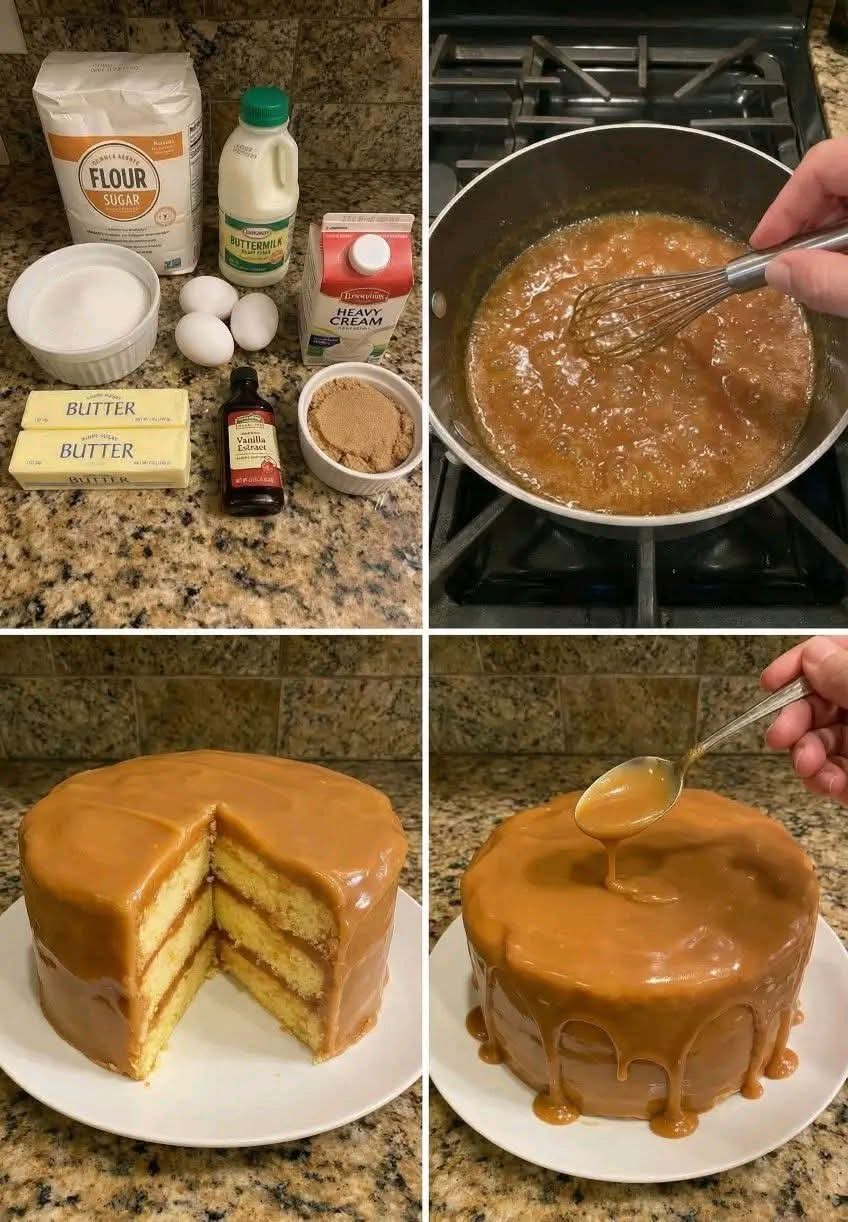
🍰🤎 Southern Caramel Cake
A Classic Southern Layer Cake with Silky, Deep-Caramel Frosting
🌟 Introduction
Southern Caramel Cake is one of those desserts that feels like a celebration from the very first bite. It combines tender, buttery vanilla cake layers with a generous coating of rich, old-fashioned caramel frosting.
The magic of this cake isn’t only in the ingredients—it’s in the caramel. Properly cooked caramel develops a deep golden-brown color and a wonderfully complex flavor that is sweet, buttery, slightly toasted, and incredibly comforting.
This is the kind of cake that deserves a place on a holiday table, birthday table, family gathering, Sunday dinner, or afternoon coffee table. Once you taste a homemade Southern Caramel Cake, you’ll understand why generations of bakers have treasured it.
🧺 Ingredients
For the Cake
- 3 cups all-purpose flour
- 2 cups granulated sugar
- 1 cup unsalted butter, softened
- 1 cup whole milk
- 5 large eggs, room temperature
- 1 teaspoon vanilla extract
- 2 teaspoons baking powder
- ½ teaspoon salt
Optional additions
- ½ teaspoon almond extract for a subtle Southern-style flavor
- 1–2 tablespoons sour cream for an especially tender crumb
🤎 For the Caramel Frosting
- 1 cup unsalted butter
- 2 cups packed light brown sugar
- ½ cup evaporated milk or whole milk
- ½ teaspoon salt
- 2 teaspoons vanilla extract
- 3–4 cups powdered sugar, sifted
For decoration
- A small pinch of flaky sea salt, optional
- Chopped toasted pecans, optional
- A drizzle of warm caramel, optional
🔥 Equipment
You will need:
- 2 or 3 round cake pans, approximately 8 or 9 inches
- Mixing bowls
- Electric mixer
- Rubber spatula
- Measuring cups and spoons
- Wire cooling rack
- Saucepan
- Cake turntable, optional
- Offset spatula
- Cake knife
👩🍳 Method 1: Prepare the Cake Pans
Preheat your oven to 350°F (175°C).
Grease your cake pans thoroughly with butter or baking spray.
Line the bottoms with parchment paper and lightly grease the parchment as well.
This extra step helps prevent the delicate cake layers from sticking.
🧈 Method 2: Cream the Butter and Sugar
Place the softened butter and granulated sugar into a large mixing bowl.
Beat on medium speed for approximately 3–5 minutes, until the mixture becomes pale, fluffy, and creamy.
This step is important because beating the butter incorporates air into the batter.
A well-creamed butter-and-sugar mixture helps produce a lighter cake.
🥚 Method 3: Add the Eggs
Add the eggs one at a time.
Beat well after each addition before adding the next egg.
Add the vanilla extract and mix until combined.
If the mixture looks slightly curdled, don’t worry. Once the flour is incorporated, the batter should come together.
🌾 Method 4: Combine the Dry Ingredients
In a separate bowl, whisk together:
- Flour
- Baking powder
- Salt
Mix thoroughly so the leavening and salt are evenly distributed.
🥛 Method 5: Combine the Batter
Add approximately one-third of the dry ingredients to the butter mixture.
Mix gently.
Add half of the milk.
Continue alternating:
Dry ingredients → milk → dry ingredients → milk → remaining dry ingredients
Mix only until everything is incorporated.
Important:
Do not overmix the batter.
Overmixing can develop too much gluten and produce a tougher cake.
The finished batter should be smooth, thick, and creamy.
🍰 Method 6: Form the Cake Layers
Divide the batter evenly between the prepared cake pans.
Smooth the tops with a spatula.
Gently tap the pans against the counter once or twice to release any large air bubbles.
Place the pans in the preheated oven.
Bake for approximately 25–35 minutes, depending on the size and depth of your pans.
The cake is ready when:
- The top springs back lightly when touched
- A toothpick inserted into the center comes out clean or with a few moist crumbs
- The edges begin to pull slightly away from the pan
Avoid overbaking because caramel cake is best when the layers remain tender and moist.
❄️ Method 7: Cool the Cake
Allow the cakes to cool in their pans for approximately 10 minutes.
Run a thin knife around the edges.
Carefully turn the cakes onto a wire rack.
Remove the parchment paper.
Allow the layers to cool completely before frosting.
Important:
Never frost a hot cake.
Warm cake can melt the caramel frosting and cause the layers to slide.
🤎 Method 8: Make the Caramel Frosting
Now comes the star of the recipe!
Place the butter in a medium saucepan over medium heat.
Allow it to melt completely.
Add the brown sugar, milk, and salt.
Stir continuously as the mixture heats.
Bring it to a gentle boil.
Continue cooking for approximately 2–4 minutes, stirring frequently.
The sugar should dissolve and the mixture should become glossy and rich.
Remove the saucepan from the heat.
Add the vanilla extract carefully and stir.
Allow the caramel mixture to cool slightly.
🍯 Method 9: Turn the Caramel into Frosting
Transfer the warm caramel mixture to a large mixing bowl.
Gradually add sifted powdered sugar.
Beat with an electric mixer until smooth and creamy.
Add more powdered sugar if the frosting is too thin.
If it becomes too thick, add a tiny splash of milk.
The ideal frosting should be:
thick enough to spread but soft enough to glide across the cake.
Do not let the frosting become completely cold before using it.
Traditional caramel frosting can firm up considerably as it cools.
🎂 Method 10: Assemble the Cake
Place the first completely cooled cake layer onto your serving plate.
Spread a generous layer of caramel frosting over the top.
Place the second cake layer on top.
Spread more frosting over the second layer.
If using three layers, repeat the process.
Then cover the top and sides of the entire cake with the remaining caramel frosting.
Use an offset spatula to create smooth or decorative swirls.
✨ Method 11: The Finishing Touch
For an elegant Southern presentation, leave the caramel frosting slightly rustic.
You can create beautiful swirls with the back of a spoon or an offset spatula.
For extra decoration, sprinkle a few chopped toasted pecans over the top.
A tiny pinch of flaky sea salt can also beautifully balance the sweetness.
📜 A Little History
Caramel cakes are strongly associated with the American South, where homemade layer cakes became treasured desserts for family gatherings, church suppers, holidays, birthdays, and Sunday meals.
Southern bakers developed many variations, but the defining feature is usually the rich caramel frosting.
Before modern convenience foods became common, caramel frosting was prepared from simple pantry ingredients such as butter, sugar, milk, and vanilla.
The caramel had to be cooked carefully, and the baker’s experience played a major role in determining its final texture.
Because of this, Southern caramel cake became more than a dessert—it became a recipe passed from one generation to another.
Many families have their own version, with differences in the cake, caramel, number of layers, or cooking technique.
🏗️ The Formation of the Perfect Cake
A beautiful Southern Caramel Cake has several important layers:
1. The Cake Foundation
The cake should be soft, buttery, and tender.
2. The Caramel Filling
A generous layer of caramel frosting connects the cake layers and adds moisture and richness.
3. The Outer Caramel Coat
The outside should be covered generously with caramel frosting.
4. The Decorative Finish
Simple caramel swirls, pecans, or a delicate caramel drizzle make the cake look homemade and luxurious.
💡 Secrets to a Moist Southern Caramel Cake
Use room-temperature ingredients
Room-temperature butter, eggs, and milk generally combine more evenly.
Don’t overmix
Once the flour is incorporated, mix just until combined.
Don’t overbake
A few extra minutes in the oven can make a cake noticeably drier.
Cool completely
Let the cake layers cool before frosting.
Watch the caramel carefully
Caramel can change from perfectly cooked to overcooked very quickly.
Use sifted powdered sugar
This helps produce a smoother frosting.
Frost while the caramel is workable
If the frosting becomes too firm, gently warm it or mix in a small amount of milk.
🌰 Southern Variations
Pecan Caramel Cake
Add chopped toasted pecans between the layers and sprinkle more over the top.
Salted Caramel Cake
Add a small amount of flaky sea salt to the finished frosting.
Coconut Caramel Cake
Add lightly toasted coconut between the layers.
Banana Caramel Cake
Add thinly sliced bananas between the cake layers with caramel frosting.
Chocolate-Caramel Cake
Add a thin layer of chocolate ganache beneath the caramel frosting for a rich chocolate-and-caramel combination.
☕ How to Serve It
Southern Caramel Cake is wonderful served at room temperature with:
- Freshly brewed coffee
- Black tea
- Vanilla ice cream
- Whipped cream
- Fresh berries
- Toasted pecans
For an especially indulgent dessert, serve a warm slice with a small scoop of vanilla ice cream.
The warm caramel and cold ice cream make an incredible combination.
❤️ For Caramel Cake Lovers
If you love desserts that are buttery, rich, nostalgic, and intensely caramel-forward, this cake is made for you.
The cake itself is soft and delicate, while the caramel frosting provides a deeper, almost toasted sweetness.
Every bite brings together:
tender vanilla cake + buttery caramel + creamy frosting + optional crunchy pecans.
It’s a dessert that feels homemade in the very best way.
🕰️ Make-Ahead Instructions
The cake layers can be baked one day ahead.
Once completely cooled, wrap each layer tightly in plastic wrap and store at room temperature for a short period or refrigerate if necessary.
The frosting can also be prepared ahead of time.
Before decorating, allow it to soften to a spreadable consistency.
For the best texture, assemble the cake several hours before serving so the caramel frosting has time to settle into the layers.
❄️ Storage
Store the finished cake in an airtight cake container.
Because the frosting contains dairy, refrigerate the cake if your kitchen is warm.
Before serving, allow refrigerated cake to sit at room temperature for approximately 30–60 minutes so the cake and caramel frosting can soften.
🍰 Troubleshooting
My cake is dry.
It was likely overbaked or the flour was overmeasured. Measure flour carefully and remove the cake as soon as it tests done.
My frosting is too runny.
Add sifted powdered sugar gradually until it reaches a spreadable consistency.
My frosting became too hard.
Warm it gently and add a small splash of milk while mixing.
My cake layers slide.
The cake may still have been warm, or the frosting may have been too soft. Chill the layers briefly before assembling.
My caramel tastes bitter.
The sugar was probably cooked too far. Caramel should become deep golden brown, not black or heavily burnt.
🎉 Conclusion
Southern Caramel Cake is a beautiful example of how simple ingredients can become an unforgettable dessert.
With flour, butter, sugar, milk, eggs, vanilla, and a little patience, you can create a cake that is rich, elegant, comforting, and full of old-fashioned Southern character.
The secret is not rushing the process.
Cream the butter properly, mix the batter gently, bake the layers carefully, and give the caramel frosting the attention it deserves.
Then slice it high, serve it proudly, and enjoy every buttery, caramel-filled bite. 🍰🤎
❤️ A Cake Worth Sharing
Make this cake for the people you love, bring it to a family gathering, serve it at a celebration, or simply make it because you deserve something special.
One slice is never enough for true caramel lovers! 🥰🤎🍰