
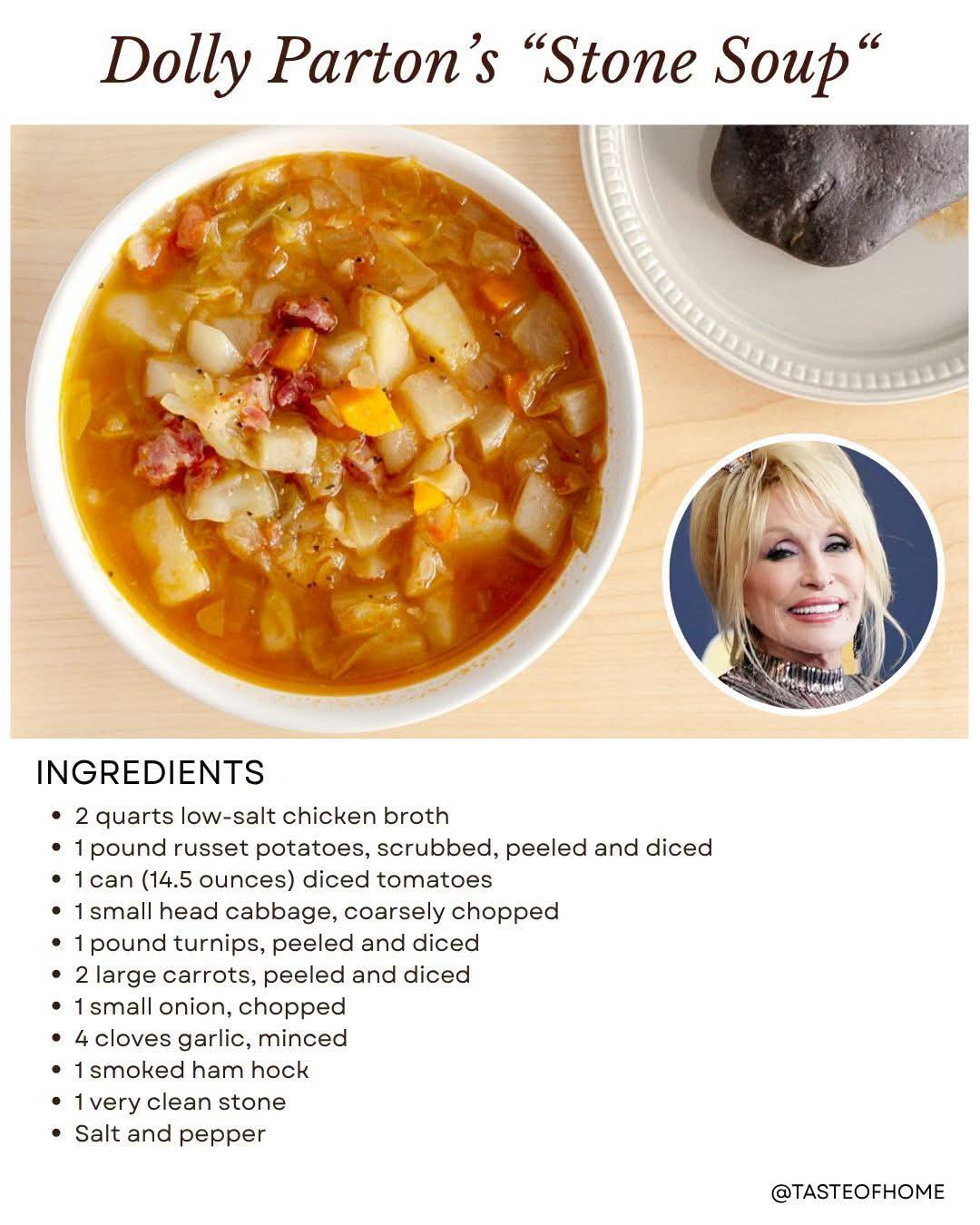
Dolly Parton’s Stone Soup
Introduction
There are some recipes that are more than just food. They carry memories, family traditions, childhood stories, and the warmth of a kitchen filled with people you love. Dolly Parton’s Stone Soup is one of those recipes.
Inspired by the kind of simple, hearty cooking associated with Dolly’s Appalachian upbringing, stone soup is a wonderful example of how humble ingredients can become something deeply satisfying. The idea behind the dish is especially charming: start with a “stone” and invite everyone to contribute whatever ingredients they have available. Before long, a simple pot becomes a nourishing meal made through generosity, creativity, and togetherness.
This soup is rustic, comforting, and flexible. Tender vegetables, potatoes, beans, tomatoes, and savory seasonings simmer together in a flavorful broth. You can make it with meat, keep it vegetarian, or add whatever vegetables are waiting in your refrigerator.
The real beauty of stone soup, however, isn’t perfection. It’s the story behind it and the reminder that a little bit of this and a little bit of that can become something wonderful when everyone contributes.
Ingredients
For the Soup
- 2 tablespoons olive oil or vegetable oil
- 1 medium yellow onion, finely chopped
- 2 cloves garlic, minced
- 2 medium carrots, peeled and sliced
- 2 celery stalks, sliced
- 3 medium potatoes, peeled and cut into bite-sized pieces
- 1 can diced tomatoes, about 14–15 ounces
- 1 can kidney beans, drained and rinsed
- 1 can green beans, drained
- 6 cups chicken, beef, or vegetable broth
- 1 teaspoon salt, or to taste
- 1/2 teaspoon black pepper
- 1 teaspoon dried thyme
- 1 teaspoon dried parsley
- 1/2 teaspoon smoked paprika
- 1 bay leaf
- 1 cup corn, fresh or frozen
- 1 cup chopped cabbage
- 1 cup cooked ground beef, diced ham, or shredded chicken, optional
- 1 tablespoon Worcestershire sauce, optional
- 1–2 tablespoons chopped fresh parsley for serving
For the Stone
- 1 clean, smooth, food-safe stone
The stone is symbolic and should never be eaten. If you are actually cooking with one, choose a smooth food-safe stone that has been thoroughly washed and sanitized. You can also simply place a clean stone in the pot for the story and remove it before serving.
Preparation
Before beginning, wash and prepare all of the vegetables. Chop the onion, carrots, celery, potatoes, and cabbage into pieces that are reasonably similar in size so they cook evenly.
Drain and rinse the beans thoroughly. If you are using meat, have it cooked and ready before starting the soup.
The preparation is simple, but taking a few extra minutes to organize everything makes the cooking process much easier.
Method
Step 1: Begin With the Aromatics
Place a large heavy-bottomed soup pot or Dutch oven over medium heat.
Add the oil and allow it to warm. Add the chopped onion, carrots, and celery.
Cook for approximately 5 to 7 minutes, stirring occasionally, until the vegetables begin to soften and the onion becomes translucent.
Add the minced garlic and cook for another 30 to 60 seconds.
The purpose of this first step is to create the flavorful foundation of the soup. The onion, celery, carrot, and garlic release their natural aromas into the oil, giving the finished soup much more depth.
Step 2: Add the Potatoes
Add the chopped potatoes to the pot and stir them together with the softened vegetables.
Cook for about 2 minutes.
The potatoes will absorb some of the flavors already developing in the pot.
Step 3: Add the Tomatoes and Broth
Pour in the diced tomatoes and broth.
Stir everything together.
Add the salt, black pepper, thyme, parsley, smoked paprika, bay leaf, and Worcestershire sauce if using.
Stir once again.
Step 4: Add the Stone
This is the part that gives the recipe its name.
Place the clean, food-safe stone into the pot.
The stone is not intended to add flavor or nutrition. It represents the heart of the traditional stone soup story: something simple that becomes the starting point for a meal created through sharing.
If you prefer not to place an actual stone in your cooking pot, simply tell the story while preparing the soup and leave the stone out.
Step 5: Add the Remaining Ingredients
Add the kidney beans, green beans, corn, and chopped cabbage.
If you are making a meat version, add the cooked ground beef, diced ham, or shredded chicken.
Stir everything together.
Bring the soup to a gentle boil.
Step 6: Simmer Slowly
Once the soup begins boiling, reduce the heat to low.
Cover the pot partially and let the soup simmer for approximately 30 to 45 minutes.
Stir occasionally.
The potatoes should become tender, the vegetables should soften, and the flavors should begin to blend together.
For an even richer flavor, you can simmer the soup a little longer over very low heat. Just be careful not to overcook the vegetables until they become mushy.
Step 7: Taste and Adjust
Remove the bay leaf and carefully remove the stone before serving.
Taste the broth.
Add additional salt or black pepper if needed.
If you want a slightly richer flavor, add another small splash of Worcestershire sauce. If you prefer a thinner soup, add a little more broth. If you want it thicker, allow it to simmer uncovered for several additional minutes.
The soup should taste savory, hearty, and comforting, with a balance of vegetables, beans, broth, and seasonings.
The Stone Soup Method
The most important method in this recipe isn’t really a cooking technique at all. It is the idea of contribution.
Stone soup is traditionally associated with a folk tale in which a traveler arrives in a village with little or nothing to eat. The traveler places a stone into a pot of water and announces that he is making stone soup.
Curious villagers begin asking questions.
The traveler explains that the soup would be even better with a few additional ingredients. Someone contributes a carrot. Another person offers potatoes. Someone else brings beans. Eventually, everyone has contributed something, and the stone soup becomes a complete meal.
The story has been told in many variations across different cultures. Its central message remains the same: cooperation and generosity can turn seemingly insignificant contributions into something valuable.
That message makes stone soup particularly meaningful when associated with family cooking.
Dolly Parton and Appalachian Food Traditions
Dolly Parton grew up in the Great Smoky Mountains of Tennessee in a large family where food was often simple, practical, and deeply connected to family life.
Appalachian cooking traditionally made good use of inexpensive and readily available ingredients. Potatoes, beans, corn, greens, cabbage, tomatoes, onions, and other vegetables could be transformed into filling meals.
Soups and stews were especially useful because they allowed cooks to stretch ingredients and feed a family without wasting food.
That philosophy is reflected beautifully in stone soup.
The recipe doesn’t demand expensive ingredients or elaborate techniques. Instead, it encourages cooks to look at what they already have and make something delicious from it.
Formation of the Soup
The soup develops its flavor in layers.
First, the onion, celery, carrots, and garlic create the aromatic base.
Then the tomatoes contribute acidity and sweetness.
The broth provides the liquid foundation.
Potatoes add body and make the soup satisfying.
Beans provide texture and heartiness.
Corn contributes sweetness.
Cabbage adds another layer of flavor and softens beautifully as it simmers.
Finally, the herbs and spices bring all of those ingredients together.
Slow simmering is the key. It allows the flavors to mingle while the vegetables become tender.
Variations
Country Beef Stone Soup
For an especially hearty version, brown approximately 1 pound of ground beef before cooking the vegetables.
Drain excess grease and continue with the recipe.
The beef adds a rich, savory flavor that makes the soup particularly filling.
Chicken Stone Soup
Use shredded cooked chicken and chicken broth.
This version is lighter but still comforting.
It is also an excellent way to use leftover roasted chicken.
Vegetarian Stone Soup
Use vegetable broth and leave out the meat.
Add extra beans, mushrooms, zucchini, spinach, or additional cabbage for a vegetable-packed version.
Ham and Bean Stone Soup
Diced cooked ham pairs beautifully with beans, potatoes, cabbage, and corn.
This is a wonderful way to use leftover holiday ham.
Refrigerator Stone Soup
One of the best things about this recipe is that it doesn’t have to be exact.
Have leftover zucchini? Add it.
A few mushrooms? Throw them in.
Extra spinach? Add it near the end.
Have leftover cooked vegetables? They can go into the pot too.
Stone soup is designed around the idea of using what you have.
Serving Suggestions
Serve the soup hot in generous bowls.
It pairs beautifully with:
- Homemade cornbread
- Buttermilk biscuits
- Crusty French bread
- Dinner rolls
- Garlic bread
- Crackers
- A simple green salad
A spoonful of fresh chopped parsley on top adds a fresh finish.
For an especially comforting meal, serve the soup with warm cornbread straight from the oven.
How to Store Leftovers
Allow the soup to cool slightly before transferring it to airtight containers.
Refrigerate for up to 3 to 4 days.
The flavors often become even better after resting overnight.
To reheat, place the soup in a saucepan over medium-low heat and warm gently until steaming hot. Add a little broth or water if it has thickened too much.
The soup can also be frozen in individual portions.
Allow it to cool completely before freezing, leaving a little space in each container for expansion.
Tips for the Best Stone Soup
Use a large pot. This gives the vegetables plenty of room to cook evenly.
Don’t rush the onions and vegetables. Giving them time to soften at the beginning builds a better flavor base.
Cut the potatoes into similar-sized pieces so they cook evenly.
Taste before adding more salt. Broth, canned vegetables, beans, and meat can already contain quite a bit of sodium.
Don’t overcook the soup. You want the vegetables tender but still recognizable.
Let the soup rest for several minutes before serving. This gives the flavors a chance to settle.
Most importantly, don’t worry about making the recipe exactly the same every time. Stone soup is meant to be adaptable.
The Sweetest Part of the Recipe
The most memorable ingredient in stone soup isn’t the potato, the bean, the tomato, or even the stone.
It’s generosity.
The story reminds us of a time when meals were often built around whatever was available. One person might have potatoes. Another might have beans. Someone else might have a little meat or some vegetables from the garden.
Individually, those ingredients might not seem like much.
Together, they become dinner.
That is what makes this soup so special.
It represents the idea that everyone has something to contribute, even when what they have seems small.
For Family Gatherings
Stone soup is especially wonderful for family gatherings because the recipe naturally encourages participation.
One person can chop the vegetables.
Another can prepare the meat.
Someone else can measure the seasonings.
Children can learn about the stone soup story while watching the ingredients go into the pot.
It becomes more than dinner. It becomes an experience.
And that is exactly the kind of food that tends to stay in our memories.
Conclusion
Dolly Parton’s Stone Soup is a beautiful example of comfort food with a story behind it.
It is humble, flexible, filling, and deeply nostalgic. The vegetables don’t need to be fancy. The broth doesn’t need complicated ingredients. The recipe doesn’t require expensive equipment.
What it does require is patience, warmth, and a willingness to share.
Whether you make it with beef, chicken, ham, or vegetables alone, the result is a big pot of hearty soup that feels like something made for a family kitchen.
And perhaps that’s the real lesson of stone soup: sometimes the simplest meals are the ones that bring people together.
A stone may begin the story, but the people around the pot are what make the meal.
A Note for the Lovers of Old-Fashioned Recipes
If you love recipes that remind you of family kitchens, Sunday dinners, homemade bread, garden vegetables, and meals that simmer slowly on the stove, this is the kind of recipe worth keeping.
Stone soup is not about following a rigid formula.
It’s about taking simple ingredients and turning them into something comforting.
It’s about using what you have.
It’s about not wasting food.
It’s about sharing.
And most of all, it’s about remembering that the best recipes aren’t always the fanciest ones. Sometimes they are the recipes that come with a story.