
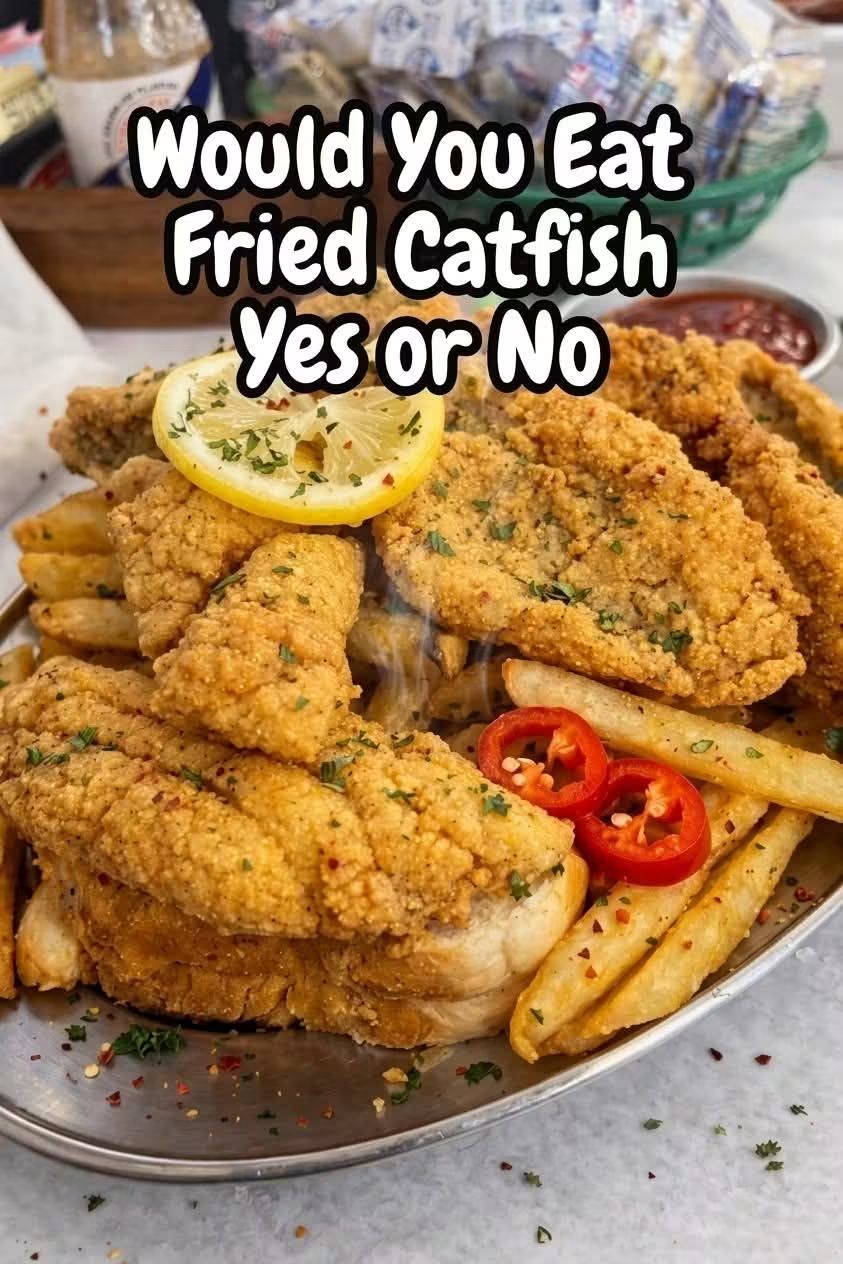
Crispy Fried Catfish: A Complete Guide to the Southern Classic
Introduction
Fried catfish is more than just a recipe—it’s a cultural cornerstone of Southern cuisine with deep roots in African American foodways. This golden, cornmeal-crusted fish represents the perfect intersection of simplicity and flavor: a humble ingredient transformed through hot oil into something transcendent. Whether served at a backyard fish fry, a riverside fish camp, or a Sunday family dinner, crispy fried catfish embodies comfort, community, and culinary heritage.
The Big Recipe
Ingredients
For the Catfish:
· 4-6 catfish fillets (about 2 pounds), rinsed and patted thoroughly dry
· 1 cup buttermilk (or 1 cup milk + 1 tablespoon lemon juice)
· 1-2 tablespoons hot sauce (Louisiana-style preferred)
· 1 cup yellow cornmeal (fine or medium grind)
· 1/2 cup all-purpose flour
· 1 teaspoon baking powder
· 1 teaspoon kosher salt
· 1/2 teaspoon freshly ground black pepper
· 1/2 teaspoon garlic powder
· 1/2 teaspoon onion powder
· 1/2 teaspoon cayenne pepper (adjust to taste)
· 1/4 teaspoon smoked paprika
· Peanut or vegetable oil, for frying (about 1 quart)
For Serving:
· Lemon wedges
· Hot sauce
· Tartar sauce (optional)
· White bread (optional, for serving)
Instructions
Step 1: Prepare the Soak
In a shallow dish, whisk together the buttermilk and hot sauce. Submerge the catfish fillets, ensuring they’re fully coated. Cover and refrigerate for at least 15 minutes, or up to 1 hour. This step tenderizes the fish and eliminates any muddy flavor often associated with river catfish.
Step 2: Set Up Your Breading Station
In a separate shallow dish or large zip-top bag, combine the cornmeal, flour, baking powder, salt, black pepper, garlic powder, onion powder, cayenne, and smoked paprika. Mix thoroughly until the spices are evenly distributed throughout the cornmeal mixture.
Step 3: Heat the Oil
Pour oil into a deep cast-iron skillet or Dutch oven to a depth of about 1 to 1.5 inches. Heat over medium-high heat until the oil reaches 350°F (175°C). Use a deep-fry or candy thermometer for accuracy. If you don’t have a thermometer, drop a pinch of the cornmeal mixture into the oil—it should sizzle immediately upon contact.
Step 4: Bread the Catfish
Remove each fillet from the buttermilk, allowing excess liquid to drip off slightly. Dredge the fillet in the cornmeal mixture, pressing gently to ensure a thick, even coating adheres to all sides. Shake off any excess. Place the breaded fillets on a wire rack and let them rest for about 5 minutes before frying—this helps the coating set and prevents it from falling off in the oil.
Step 5: Fry to Golden Perfection
Carefully place the fillets into the hot oil, working in batches to avoid overcrowding. Fry for 3 to 6 minutes per side, depending on thickness, until the crust is deep golden brown and the fish flakes easily with a fork. Maintain the oil temperature between 350°F and 375°F throughout frying.
Step 6: Drain and Serve
Using tongs or a spider strainer, transfer the fried catfish to a wire rack set over a paper towel-lined baking sheet. This keeps the bottom crust crispy—placing fish directly on paper towels can make the underside soggy. Serve immediately with lemon wedges, hot sauce, and your favorite sides.
Methods and Techniques
The Soak: Buttermilk vs. Egg Wash
Traditional Southern recipes typically call for a buttermilk soak. The acidity in buttermilk tenderizes the fish and adds a subtle tang. Some recipes use an egg and buttermilk combination for a thicker, more adhesive coating. For dairy-free options, unsweetened almond milk with lemon juice works as a substitute.
The Dredge: Cornmeal is King
Cornmeal is the non-negotiable element of authentic Southern fried catfish. Some cooks use cornmeal alone, while others blend it with flour for a lighter, crispier crust. Rice flour can be substituted for an extra-crunchy, gluten-free option. The key is to use a coarse enough grind to create that signature jagged texture.
Frying: Deep-Fry vs. Shallow-Fry
Both methods work beautifully. Deep-frying in a Dutch oven or deep skillet yields even browning and hands-off cooking. Shallow-frying (about 1/2 to 1 inch of oil) is the traditional method for fish fries and allows for easy flipping and monitoring. Whichever you choose, maintaining the correct oil temperature is critical—too hot and the crust burns before the fish cooks through; too cool and the coating absorbs oil and becomes greasy.
The Flip: Once is Enough
Turn the fish only once during frying. Multiple flips can cause the crust to break and fall off. Use a sturdy spatula or tongs and be gentle.
History of Fried Catfish
The story of fried catfish is inseparable from the history of the American South and the African American experience. Catfish were abundant in the rivers and waterways where enslaved people lived and worked, particularly in the Mississippi River Valley. Enslaved Africans brought with them a familiarity with catfish from West Africa, where similar species were valued as food.
On plantations, the work schedule typically slowed by noon on Saturdays, giving enslaved people time to fish. The catch was fried that evening—often outdoors over open fires—as an impromptu gathering. Plantation owners didn’t mind, as it was one less meal they had to provide. These Saturday night fish fries became a cherished tradition of community, nourishment, and brief autonomy.
After Emancipation, the fish fry tradition continued and flourished. It became a tool for church fundraising, a way to celebrate the Fourth of July and Emancipation Day, and a business opportunity during the Great Migration, when African Americans moved from the South to cities across the country. Alongside barbecue and fried chicken, fried fish became one of the three pillars of cheap, Black-owned restaurants in urban America.
Catfish faced an image problem for much of the 20th century. Its “muddy” flavor—caused by the fish’s natural bottom-feeding habits—made it unpopular among some white Southerners, and its association with Black foodways was often used to denigrate the fish. However, the rise of aquaculture in the 1960s and 1970s transformed catfish into a cleaner, milder-tasting product. Farm-raised catfish became a major Southern industry, and catfish houses proliferated across the region. Today, catfish even has an honorary month—August—and is celebrated as an iconic Southern food.
Benefits
Nutritional Benefits
Catfish is a lean source of high-quality protein. A 3-ounce serving of cooked catfish provides approximately 15-19 grams of protein, along with significant amounts of vitamin D, vitamin B12, and selenium. Catfish also contains omega-3 fatty acids—including EPA and DHA—which support heart health and brain function, though frying does alter the fatty acid profile compared to baking or broiling.
Cultural and Social Benefits
The fish fry is a powerful tradition of community building. It brings people together across generations, preserves culinary heritage, and creates space for connection and celebration. As food historian Adrian Miller notes, the fish fry was one of the few social activities enslaved people could fully control, making it a profound expression of agency and joy.
Practical Benefits
Catfish is affordable, widely available, and quick to prepare. The mild flavor makes it an excellent introduction to seafood for those who are hesitant about fish. And because it’s typically sold as boneless fillets, it’s easy to eat and family-friendly.
Formation: The Anatomy of the Perfect Crust
The magic of crispy fried catfish lies in its crust formation. When the buttermilk-coated fish hits the hot cornmeal mixture, the liquid binds the grains to the surface. As the fish enters the oil, the moisture in the coating rapidly evaporates, creating steam that pushes the cornmeal outward. This results in the signature jagged, craggy texture that shatters with each bite.
The cornmeal’s coarse grind is essential. Finely ground cornmeal creates a smoother crust, while medium or coarse grind yields more crunch. The addition of flour provides structure and helps the coating adhere, while baking powder creates tiny air pockets that contribute to lightness and crispness.
The buttermilk soak serves a dual purpose: its acidity breaks down proteins on the fish’s surface, tenderizing the flesh and removing any undesirable flavors. This is why buttermilk-marinated catfish tastes cleaner and more delicate than unsoaked fish.
Nutrition (Per Serving Estimate)
Based on a serving of 3 ounces of fried catfish (fillet, rolled in cornmeal and fried):
Nutrient Amount
Calories ~200-240
Protein 15-19g
Total Fat 11-13g
Saturated Fat 2-3g
Carbohydrates 7-10g
Cholesterol 66-70mg
Sodium 240-350mg
Vitamin D 14mcg
Vitamin B12 2.5mcg
Selenium 15mcg
Potassium 473mg
Note: Nutritional values vary based on fish size, breading thickness, and oil absorption.
For the Lovers of Fried Catfish
For those who hold fried catfish close to their hearts, this dish is more than sustenance—it’s memory, identity, and love. It’s the crackle of a cornmeal crust broken by eager fingers, the squeeze of lemon cutting through richness, the laughter of family gathered around a table piled high with golden fillets.
Fried catfish lovers know that the best version isn’t found in a restaurant—it’s the one made by someone who learned from their grandmother, who learned from theirs. It’s the fish fry that spills into the yard, where the oil pops and the stories flow. It’s the taste of home, wherever home may be.
Whether you’re a lifelong devotee or a curious newcomer, this recipe is an invitation to participate in a tradition that stretches back centuries. Fry it with care, serve it with pride, and share it generously.
Conclusion
Crispy fried catfish is a dish that rewards attention to detail and respect for tradition. The buttermilk soak, the cornmeal crust, the precise oil temperature, the gentle flip—each step matters. But beyond technique, fried catfish carries the weight of history and the lightness of celebration. It is a food of the people, by the people, and for the people. From the riverbanks of the Mississippi to the fish camps of the Carolinas to your own kitchen, this dish continues to bring people together, one golden, shattering bite at a time.