
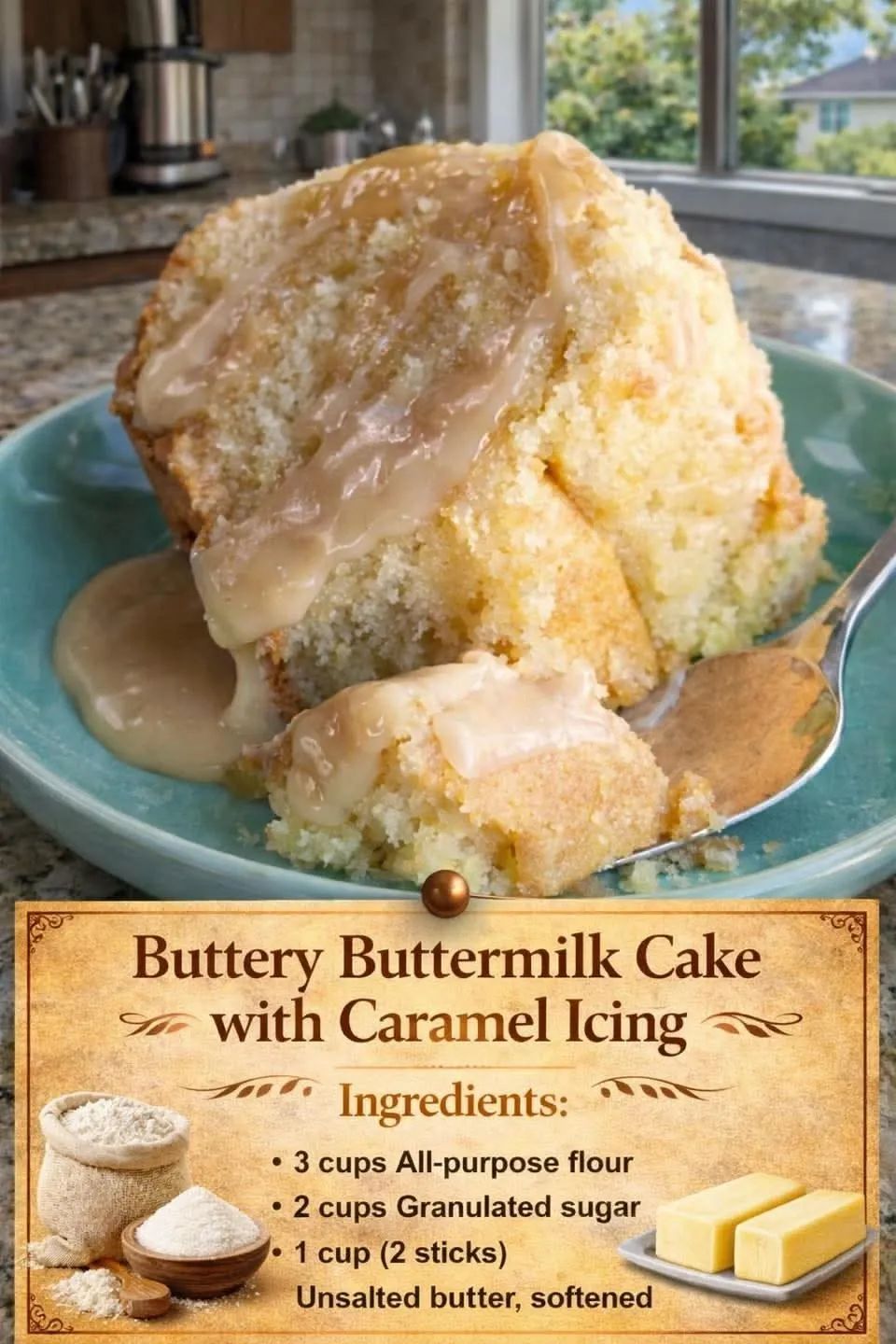
Buttery Buttermilk Cake with Old-Fashioned Caramel Icing
Introduction
There is something truly special about an old-fashioned buttermilk cake fresh from the oven. With its soft, tender crumb, rich buttery flavor, and irresistible homemade caramel icing, this classic Southern-inspired dessert brings the warmth and comfort of traditional home baking to every slice.
Buttery Buttermilk Cake with Caramel Icing is the kind of dessert that turns an ordinary afternoon into a memorable occasion. The cake is wonderfully moist thanks to the buttermilk, while the butter gives it a rich flavor and delicate texture. The finishing touch is a smooth, sweet caramel icing made with brown sugar, butter, and milk, creating a glossy topping that settles beautifully over the cake.
This is a wonderful recipe for family gatherings, Sunday dinners, birthdays, holidays, potlucks, or simply enjoying a homemade dessert with a cup of coffee. It is simple enough for a home baker to prepare but delicious enough to serve to guests.
If you love traditional cakes with homemade frosting, this buttery buttermilk cake deserves a place in your recipe collection.
Ingredients
For the Buttermilk Cake
- 2½ cups all-purpose flour
- 1½ cups granulated sugar
- 1 cup unsalted butter, softened to room temperature
- 3 large eggs, at room temperature
- 1 cup buttermilk, at room temperature
- 2 teaspoons vanilla extract
- 2 teaspoons baking powder
- ½ teaspoon baking soda
- ½ teaspoon salt
For the Homemade Caramel Icing
- ½ cup unsalted butter
- 1 cup packed light brown sugar
- ¼ cup whole milk
- 2 cups powdered sugar, sifted
- 1 teaspoon vanilla extract
- A small pinch of salt, optional
Optional Garnishes
- Chopped toasted pecans
- Finely chopped walnuts
- A light dusting of powdered sugar
- A few caramel drizzles for decoration
Equipment Needed
- One 9-by-13-inch baking pan
- Two mixing bowls
- An electric mixer or sturdy hand whisk
- Measuring cups and spoons
- A rubber spatula
- A medium saucepan
- A wire cooling rack
Instructions
Step 1: Prepare the Oven and Baking Pan
Preheat your oven to 350°F (175°C).
Grease a 9-by-13-inch baking pan with butter or nonstick cooking spray. Lightly dust it with flour, or line the bottom with parchment paper for easier removal.
Allow your butter, eggs, and buttermilk to reach room temperature before mixing. Room-temperature ingredients combine more evenly and help produce a smoother batter and a tender cake.
Step 2: Combine the Dry Ingredients
In a medium bowl, whisk together the flour, baking powder, baking soda, and salt.
Mix thoroughly to distribute the leavening ingredients evenly throughout the flour. This helps the cake rise consistently and prevents pockets of baking soda or baking powder from forming.
Set the bowl aside while you prepare the butter and sugar.
Step 3: Cream the Butter and Sugar
Place the softened butter and granulated sugar in a large mixing bowl.
Beat them together with an electric mixer for approximately 3–5 minutes, until the mixture becomes pale, light, and fluffy.
This step is important because creaming incorporates tiny air bubbles into the batter. These bubbles expand during baking and help give the cake its soft, delicate texture.
Scrape down the sides of the bowl as needed to ensure everything is evenly mixed.
Step 4: Add the Eggs and Vanilla
Add the eggs one at a time, beating well after each addition.
Once all the eggs are incorporated, add the vanilla extract and mix until combined.
If the mixture looks slightly curdled, do not worry. It will usually come together when the dry ingredients and buttermilk are added.
Step 5: Alternate the Flour and Buttermilk
Reduce the mixer speed to low.
Add approximately one-third of the dry ingredients to the butter mixture, followed by half of the buttermilk. Mix gently.
Add another third of the flour mixture, followed by the remaining buttermilk. Finish with the remaining dry ingredients.
Mix only until the flour disappears. Use a rubber spatula to scrape the sides and bottom of the bowl, making sure no dry pockets remain.
Avoid overmixing, as excessive mixing can develop gluten and make the finished cake dense or tough.
The batter should be smooth, thick, and easy to spread.
Step 6: Transfer the Batter to the Pan
Pour the batter into the prepared baking pan.
Use a spatula to spread it evenly into the corners. Gently tap the pan against the countertop once or twice to release any large air pockets.
Place the pan on the center rack of the preheated oven.
Step 7: Bake the Cake
Bake for approximately 30–38 minutes, checking for doneness near the 30-minute mark.
The cake is ready when the top is lightly golden, the center springs back when gently touched, and a toothpick inserted into the middle comes out clean or with a few moist crumbs.
If the center is still wet, continue baking for a few more minutes and check again.
Remove the cake from the oven and place it on a wire rack. Let it cool for approximately 15–20 minutes before adding the caramel icing.
The cake should still be slightly warm when you frost it, but it should not be piping hot.
How to Make the Homemade Caramel Icing
Step 8: Melt the Butter and Brown Sugar
Place the butter in a medium saucepan over medium-low heat.
Once the butter has melted, add the packed brown sugar and stir continuously until the sugar is moistened and the mixture begins to bubble gently.
Cook for approximately 2 minutes, stirring constantly to prevent scorching.
The mixture should look glossy and smell wonderfully buttery and caramel-like.
Step 9: Add the Milk
Slowly pour in the milk while stirring.
The mixture may bubble more vigorously when the milk is added, so pour carefully. Continue stirring until the mixture becomes smooth.
Bring it to a gentle simmer for approximately 1 minute, then remove the saucepan from the heat.
Do not allow the caramel mixture to boil aggressively, as it can become too thick or develop a burnt flavor.
Step 10: Add the Powdered Sugar and Vanilla
Allow the caramel mixture to cool for approximately 2–3 minutes.
Gradually whisk in the sifted powdered sugar, mixing until the icing is smooth and free of lumps.
Add the vanilla extract and a small pinch of salt if desired.
The icing should be thick enough to coat the back of a spoon but still pourable.
If it becomes too thick, add milk one teaspoon at a time. If it is too thin, allow it to cool briefly or add a little more sifted powdered sugar.
Work relatively quickly because caramel icing thickens as it cools.
Step 11: Ice the Cake
Pour the warm caramel icing over the slightly warm cake.
Use a spatula to spread it evenly across the surface, allowing some of the icing to settle into the top of the cake.
For a traditional homemade appearance, let the icing form a smooth layer with a few natural swirls.
If desired, sprinkle chopped toasted pecans or walnuts over the icing before it sets.
Allow the cake to rest for 20–30 minutes, or until the icing has thickened enough to slice neatly.
Detailed Baking Methods
The Creaming Method
The creaming method is the foundation of this recipe. Butter and sugar are beaten together to incorporate air, helping the cake develop a light and tender texture.
For the best results, use softened butter rather than melted butter. Softened butter traps air more effectively during mixing.
The Alternating Mixing Method
Adding the dry ingredients and buttermilk in stages helps maintain a smooth batter and reduces the risk of overmixing.
Beginning and ending with the flour mixture also helps the batter remain stable and evenly combined.
The Gentle Baking Method
Baking at 350°F (175°C) allows the cake to rise gradually while developing a delicate golden crust.
Avoid opening the oven door repeatedly during the first 25 minutes, as sudden temperature changes can interfere with rising.
The Warm Icing Method
Caramel icing thickens as it cools. Applying it while it is still warm makes it easier to spread and helps it settle evenly across the cake.
For a softer finish, ice the cake while it is slightly warm. For a more defined layer, allow the cake to cool further before frosting.
The History of Buttermilk Cake and Caramel Icing
Buttermilk cakes have a long association with traditional American home baking, especially in the Southern United States. Buttermilk was a familiar ingredient in many households, often remaining after cream was churned into butter.
Rather than letting it go to waste, home cooks used buttermilk in biscuits, cornbread, pancakes, and cakes. Its natural acidity reacts with baking soda, helping baked goods rise while contributing a subtle tang and tender crumb.
Caramel frosting also became a beloved feature of old-fashioned American desserts. Made from everyday ingredients such as butter, brown sugar, milk, and powdered sugar, it offered a rich alternative to more elaborate frostings.
Recipes varied from family to family. Some cooks prepared a soft caramel glaze, while others cooked the sugar mixture longer to produce a thicker, more traditional caramel frosting.
Combining buttermilk cake with caramel icing brings together two enduring home-baking traditions. Although this particular recipe is a modern, standardized version rather than a documented historical family recipe, it captures the familiar flavors and uncomplicated charm associated with classic Southern-inspired desserts.
The Formation of the Perfect Cake
A successful buttermilk cake depends on the balance between its ingredients.
Butter provides richness and contributes to the cake’s soft texture.
Sugar sweetens the cake, helps retain moisture, and works with the butter to create an airy batter.
Eggs bind the ingredients together, contribute structure, and help the cake rise.
Buttermilk adds moisture and a gentle tang. Its acidity also works with the baking soda to support leavening.
Flour provides the structure needed to hold the cake together.
Baking powder and baking soda help the batter rise and create a lighter crumb.
Vanilla extract enhances the buttery flavor and adds warmth.
The caramel icing has its own important balance. Butter contributes a creamy richness, brown sugar provides deep caramel notes, milk helps create a smooth consistency, and powdered sugar thickens the icing into a spreadable topping.
When these ingredients are combined carefully and baked correctly, the result is a tender cake with a soft interior and a rich caramel finish.
Tips for the Best Results
- Measure the flour correctly. Spoon flour into the measuring cup and level it off rather than packing it down. Too much flour can make the cake dry.
- Use room-temperature ingredients. Butter, eggs, and buttermilk should not be refrigerator-cold when mixing.
- Do not overmix the batter. Stop mixing as soon as the ingredients are combined.
- Watch the baking time. Every oven is different, so begin checking the cake early.
- Prepare the icing near the end of baking. Caramel icing becomes harder to spread as it cools.
- Use a saucepan with a heavy bottom. This helps distribute heat more evenly and reduces the risk of burning the sugar.
- Toast the nuts if using them. A few minutes in a dry skillet can deepen their flavor and add a pleasant crunch.
- Let the icing set before slicing. This helps each slice hold its shape and gives the topping time to thicken.
Delicious Variations
1. Buttermilk Pecan Caramel Cake
Add ¾ cup of finely chopped toasted pecans to the cake batter. Finish the caramel icing with another handful of toasted pecans for a nutty, Southern-inspired variation.
2. Brown Butter Caramel Cake
Brown the butter intended for the icing over medium-low heat until it develops golden-brown flecks and a nutty aroma. Let it cool slightly before proceeding with the caramel icing.
Watch carefully because browned butter can burn quickly.
3. Caramel Layer Cake
Divide the batter between two greased 8-inch round cake pans. Begin checking for doneness after approximately 22–25 minutes.
Once completely cool, layer the cakes with caramel icing, allowing the filling to firm up before stacking.
4. Vanilla Buttermilk Cake
For a more pronounced vanilla flavor, add another ½ teaspoon of vanilla extract to the cake batter. Keep the caramel icing as written for a classic combination.
5. Salted Caramel Buttermilk Cake
Add a small pinch of flaky sea salt to the finished icing. The gentle saltiness balances the sweetness and emphasizes the caramel flavor.
6. Cinnamon Caramel Cake
Add ½ teaspoon of ground cinnamon to the dry ingredients. The subtle spice complements the buttery cake and gives it a cozy flavor suitable for autumn gatherings.
Serving Suggestions
This cake is delicious on its own, but it also pairs beautifully with simple accompaniments.
- Serve a slice with freshly brewed coffee.
- Enjoy it with black tea or a glass of cold milk.
- Add a small scoop of vanilla ice cream for a special dessert.
- Serve with sliced apples or pears for a fresh contrast.
- Present it as the centerpiece of a Sunday dinner dessert table.
- Cut it into small squares for potlucks, bake sales, and family celebrations.
Because the caramel icing is rich and sweet, modest slices are often enough to satisfy a dessert craving.
Storage Instructions
At room temperature: Store the cake in an airtight container in a cool room for up to 2 days, provided the icing and ingredients are suitable for room-temperature storage.
In the refrigerator: For longer storage, keep the cake covered in the refrigerator for up to 5 days. Allow individual slices to sit at room temperature for approximately 15–20 minutes before serving for a softer texture.
In the freezer: Freeze individual slices or portions without crushing the icing. Wrap them tightly and place them in a freezer-safe container for up to 2 months for best quality. Thaw overnight in the refrigerator.
The icing may lose some of its original sheen after refrigeration or freezing, but the cake should remain delicious.
Common Questions
Can I make this cake without buttermilk?
Yes. For a practical substitute, place 1 tablespoon of lemon juice or white vinegar in a measuring cup and add enough milk to reach 1 cup. Let it stand for 5–10 minutes before using.
The flavor and texture may differ slightly from a cake made with real buttermilk.
Why did my cake turn out dense?
Common reasons include adding too much flour, using cold ingredients, insufficiently creaming the butter and sugar, or overmixing the batter after adding the flour.
Measure carefully and mix gently for the best texture.
Why did my caramel icing become too thick?
Caramel icing thickens naturally as it cools. If it becomes difficult to spread, gently warm it over low heat and add a teaspoon of milk at a time until it reaches the desired consistency.
Can I prepare the cake a day ahead?
Absolutely. Bake the cake the day before serving and allow it to cool completely. Store it covered, then prepare and spread the caramel icing when convenient. Alternatively, ice the cake in advance and store it covered.
Can I make this recipe in a bundt pan?
The batter can be adapted for a bundt pan, but baking time will vary. Grease and flour the pan thoroughly, avoid filling it more than about two-thirds full, and begin checking for doneness after approximately 40 minutes. Cool according to the pan’s requirements before turning it out, then drizzle the icing over the cake.
Conclusion
Buttery Buttermilk Cake with Old-Fashioned Caramel Icing is a celebration of simple ingredients and timeless baking techniques. The cake is soft and tender, the butter gives it a rich homemade flavor, and the caramel icing provides a sweet, glossy finish that makes every slice feel special.
It is a dessert that fits comfortably into family traditions, holiday celebrations, potluck gatherings, and quiet afternoons at home. You do not need complicated equipment or professional baking skills to make it. With careful measuring, gentle mixing, and a little attention to the caramel icing, you can create a beautiful homemade cake that looks inviting and tastes even better.
Serve it to family, share it with friends, or save a slice for the next day’s coffee break. This is the kind of classic dessert that reminds us why homemade cakes continue to hold a special place at the table.
For the Lovers of Old-Fashioned Homemade Cakes
If you love soft cakes, buttery flavors, and homemade caramel frosting, this recipe is made for your dessert collection.
It is especially appealing to people who enjoy traditional Southern-style desserts, old-fashioned family recipes, and cakes that do not need elaborate decorations to impress.
The tender buttermilk crumb, sweet caramel icing, and optional toasted pecans create a comforting combination that is easy to return to whenever you want something familiar and delicious.
Bake it for a celebration, bring it to a gathering, or make it simply because you are in the mood for a homemade treat. One thing is certain: a well-made buttermilk cake topped with buttery caramel icing is a wonderful way to bring people together around the dessert table.
Final Recipe Summary
Preparation time: 20 minutes
Baking time: 30–38 minutes
Icing time: 10 minutes
Cooling and setting time: Approximately 30–45 minutes
Total time: Approximately 1 hour 30 minutes to 1 hour 55 minutes
Yield: 12–16 slices
Oven temperature: 350°F (175°C)
Difficulty: Easy to moderate
Texture: Soft, tender, and moist
Flavor: Buttery, sweet, and richly caramelized
Best occasion: Family dinners, holidays, birthdays, potlucks, and afternoon coffee.
The secret to the best result is simple: cream the butter and sugar well, avoid overmixing, bake just until done, and spread the caramel icing while it is still warm and easy to work with.