
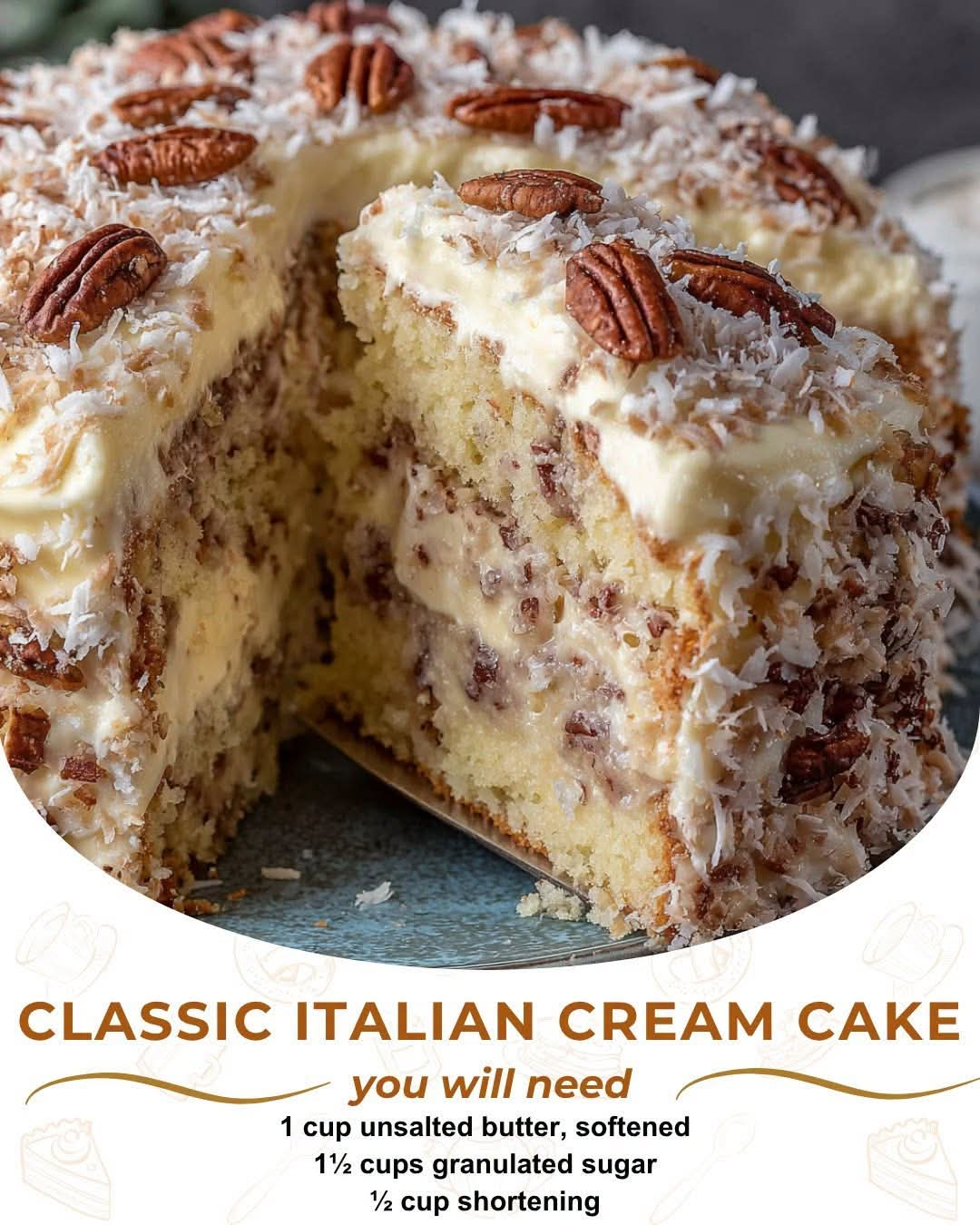
Classic Italian Cream Cake — A Southern Favorite
Italian Cream Cake is a wonderfully rich, tender layer cake made with butter, shortening, buttermilk, coconut, and pecans, then covered generously with a smooth cream cheese frosting. Despite its name, this cake is strongly associated with Southern American baking rather than traditional Italian cuisine. It became especially popular as a celebration cake because of its combination of moist cake, toasted nuts, sweet coconut, and tangy cream cheese frosting.
The cake has a beautiful contrast of textures: the crumb is soft and buttery, the coconut adds pleasant chewiness, the pecans provide crunch, and the frosting brings everything together with a creamy sweetness. It is especially lovely for birthdays, holidays, family gatherings, Sunday dinners, potlucks, and other special occasions.
Ingredients
For the Cake
- 1 cup unsalted butter, softened
- 1½ cups granulated sugar
- ½ cup vegetable shortening, softened
- 5 large eggs, separated, at room temperature
- 1 teaspoon vanilla extract
- 1 cup buttermilk, room temperature
- 2 cups all-purpose flour
- 1 teaspoon baking soda
- ½ teaspoon salt
- 1½ cups sweetened shredded coconut
- 1 cup chopped pecans
For the Cream Cheese Frosting
- 8 ounces cream cheese, softened
- ½ cup unsalted butter, softened
- 4 cups powdered sugar
- 1 teaspoon vanilla extract
- 2–3 tablespoons milk or heavy cream, as needed
For Garnish
- ½ cup chopped pecans
- ¼ cup shredded coconut
Equipment
- Three 8-inch or 9-inch round cake pans
- Mixing bowls
- Electric mixer
- Whisk
- Rubber spatula
- Cake tester or toothpick
- Cooling rack
- Offset spatula or knife for frosting
Preparation
Before beginning, allow the butter, cream cheese, eggs, and buttermilk to come close to room temperature. Room-temperature ingredients blend more evenly and help produce a smoother batter.
Preheat the oven to 350°F (175°C).
Grease three round cake pans thoroughly. Line the bottoms with parchment paper, then lightly grease the parchment as well. This makes the finished layers much easier to remove.
If desired, you can lightly flour the pans after greasing them.
Method for Making the Cake
Step 1: Prepare the Dry Ingredients
In a medium bowl, whisk together the all-purpose flour, baking soda, and salt.
Mixing these ingredients together first distributes the baking soda and salt throughout the flour, helping the cake rise evenly.
Set the bowl aside.
Step 2: Cream the Butter, Shortening, and Sugar
Place the softened butter, shortening, and granulated sugar in a large mixing bowl.
Beat on medium speed for approximately 3–5 minutes, or until the mixture becomes noticeably lighter, fluffy, and creamy.
This is an important part of the recipe. Proper creaming incorporates air into the fat, which contributes to the cake’s tender texture.
Do not rush this stage.
Step 3: Add the Egg Yolks
Separate the eggs carefully, placing the yolks in one bowl and the whites in another clean bowl.
Add the egg yolks to the butter and sugar mixture one at a time, beating well after each addition.
Add the vanilla extract and mix until incorporated.
The batter should now be smooth, rich, and creamy.
Step 4: Add the Flour and Buttermilk
Reduce the mixer speed to low.
Add approximately one-third of the flour mixture, followed by about half of the buttermilk.
Continue alternating the flour mixture and buttermilk, beginning and ending with the dry ingredients.
Mix only until the ingredients are combined.
Avoid overmixing because excessive mixing can develop too much gluten and make the cake less tender.
Step 5: Add the Coconut and Pecans
Fold the shredded coconut and chopped pecans into the batter using a rubber spatula.
Fold gently until they are evenly distributed.
At this stage, the batter should be thick, creamy, and filled with coconut and pecan pieces.
The Special Method: Whipping the Egg Whites
One of the traditional techniques that gives Italian Cream Cake its characteristic texture is whipping the egg whites separately.
Place the egg whites in a clean, dry mixing bowl.
Beat them on medium-high speed until they form soft peaks. The whites should look white and foamy and should hold their shape briefly when the beaters are lifted.
Do not overbeat them until they become dry.
Using a rubber spatula, gently fold the beaten egg whites into the cake batter in two or three additions.
Use a slow folding motion, moving the spatula from the bottom of the bowl upward.
This preserves some of the air incorporated into the egg whites and helps create a lighter cake.
Step 6: Divide the Batter
Divide the batter evenly among the three prepared cake pans.
Smooth the tops gently with a spatula.
Tap the pans very lightly on the counter once or twice to remove any unusually large air pockets, but do not knock out all the air from the batter.
Step 7: Bake
Place the pans in the preheated oven.
Bake for approximately 22–28 minutes, depending on the size of your pans and your oven.
Begin checking around the 22-minute mark.
The cakes are ready when:
- The tops are lightly golden.
- The centers spring back when gently touched.
- A toothpick inserted into the center comes out clean or with a few moist crumbs.
- The edges begin to pull slightly away from the sides of the pans.
Avoid overbaking because the cake can lose some of its desirable moisture.
Step 8: Cool the Cake Layers
Remove the pans from the oven and allow the cakes to cool in the pans for approximately 10–15 minutes.
Carefully run a knife around the edges if necessary.
Turn the cakes out onto cooling racks and remove the parchment paper.
Allow the layers to cool completely before frosting.
This is very important. Frosting a warm cake can cause the cream cheese frosting to melt and slide between the layers.
Making the Cream Cheese Frosting
Step 1: Beat the Cream Cheese and Butter
Place the softened cream cheese and butter in a large bowl.
Beat until smooth and creamy.
There should be no large lumps remaining.
Step 2: Add the Powdered Sugar
Gradually add the powdered sugar, approximately one cup at a time.
Mix on low speed initially to prevent powdered sugar from flying out of the bowl, then increase the speed and beat until smooth.
Scrape down the sides of the bowl as needed.
Step 3: Add Vanilla and Cream
Add the vanilla extract.
Add 2 tablespoons of milk or heavy cream and beat until the frosting reaches a smooth, spreadable consistency.
If the frosting is too thick, add another tablespoon of milk or cream.
If it becomes too thin, add a little more powdered sugar.
The finished frosting should be creamy enough to spread easily while remaining firm enough to hold between the cake layers.
Assembling the Italian Cream Cake
Place the first completely cooled cake layer on a cake stand or serving plate.
Spread a generous layer of cream cheese frosting over the top.
Place the second cake layer on top.
Spread another layer of frosting.
Place the final cake layer on top, positioning it with the flattest side facing upward if possible.
Apply a thin layer of frosting around the entire cake.
This first thin coating is often called a crumb coat. It helps trap loose crumbs.
Place the cake in the refrigerator for approximately 15–20 minutes if the frosting feels soft.
Then apply the remaining frosting generously over the top and sides.
Smooth the frosting with an offset spatula or the back of a knife.
Finishing and Garnishing
Sprinkle the top with the chopped pecans.
Add the shredded coconut.
For an especially beautiful presentation, press a small amount of chopped pecans gently around the sides of the cake.
You can also lightly toast the pecans and coconut before using them for garnish. Toasting deepens their flavor and gives the cake an especially pleasant nutty aroma.
Allow the finished cake to rest in the refrigerator for at least 30–60 minutes before slicing.
The History and Formation of Italian Cream Cake
Italian Cream Cake is an interesting example of how American baking traditions can create a dessert with a European-sounding name.
Although the cake is called “Italian Cream Cake,” it is not generally considered a classic cake from Italy. Its strongest culinary associations are with the American South, where rich layer cakes featuring pecans, coconut, buttermilk, and cream cheese frosting became popular.
The exact origin is uncertain, and different family recipes have been passed down over generations. Some versions use slightly different quantities of butter, shortening, coconut, and pecans, while others use three or four layers.
The cake’s popularity comes from the way familiar Southern ingredients work together. Pecans are particularly associated with Southern American baking, while buttermilk is a traditional ingredient in many Southern cakes and biscuits.
The name “Italian Cream Cake” may have helped distinguish this rich coconut-and-pecan cake from other traditional Southern layer cakes, although there is no single universally accepted origin story.
Why the Cake Is So Tender
Several ingredients and techniques contribute to the texture.
Butter provides richness and flavor.
Shortening contributes to tenderness and helps create a soft crumb.
Buttermilk provides moisture and a gentle tang while working with the baking soda.
Egg yolks contribute richness and structure.
Whipped egg whites add air and help lighten the batter.
Coconut provides moisture and chewy texture.
Pecans provide a pleasant contrast with their crisp, nutty texture.
The combination makes the cake much more interesting than a simple vanilla layer cake.
Tips for the Best Italian Cream Cake
Use Room-Temperature Ingredients
Room-temperature butter creams more effectively with sugar, and room-temperature eggs and buttermilk blend more easily into the batter.
Do Not Overmix
Once the flour is added, mix only until combined. Overmixing can make the cake dense or chewy.
Fold the Egg Whites Carefully
The whipped egg whites contain air that contributes to the cake’s light texture. Fold them gently rather than stirring aggressively.
Do Not Overbake
The cake should remain moist and tender. Start checking early because oven temperatures can vary.
Cool Completely
Never frost hot cake layers with cream cheese frosting. Completely cooled layers are much easier to assemble.
Toast the Pecans
For a deeper flavor, spread the pecans on a baking sheet and toast them lightly before adding them to the cake or using them as garnish. Let them cool completely before incorporating them into the batter.
Chill Before Serving
A short period in the refrigerator helps the frosting firm up and makes the cake easier to slice.
Make-Ahead Method
Italian Cream Cake is an excellent make-ahead dessert.
The cake layers can be baked one day ahead, cooled completely, wrapped tightly, and refrigerated.
The frosting can also be prepared ahead and refrigerated in an airtight container.
Before assembling, allow the frosting to soften slightly at room temperature and beat it briefly until smooth.
Once assembled, keep the cake refrigerated because of the cream cheese frosting.
For the best flavor and texture, allow the cake to sit at room temperature for approximately 20–30 minutes before serving.
Storage
Store the finished cake covered in the refrigerator.
It is generally best enjoyed within 3–4 days.
For longer storage, individual slices can be wrapped well and frozen. Thaw them in the refrigerator before serving.
Serving Suggestions
Italian Cream Cake is wonderful served as a dessert after a family dinner, but it is also perfect for:
- Birthdays
- Christmas gatherings
- Thanksgiving
- Easter
- Mother’s Day
- Anniversaries
- Bridal showers
- Baby showers
- Potlucks
- Afternoon coffee
- Sunday family dinners
A small cup of coffee or tea pairs beautifully with the sweet coconut, buttery cake, pecans, and tangy cream cheese frosting.
Lovers of This Cake
This is a cake for people who love desserts with plenty of texture and richness.
If you enjoy coconut cake, pecan cake, carrot cake, classic cream cheese frosting, or Southern-style layer cakes, Italian Cream Cake is likely to become a favorite.
It is also an excellent choice for anyone who prefers a cake that feels homemade and generous rather than delicate or overly complicated.
Final Formation
The finished cake should have three soft, golden layers filled with coconut and pecans. Between each layer should be a generous spread of smooth cream cheese frosting, with the entire cake covered in another layer of frosting.
The final appearance should be elegant but homemade, with chopped pecans and shredded coconut scattered over the top.
When sliced, each piece should reveal distinct layers of tender cake and creamy frosting.
Conclusion
Classic Italian Cream Cake is a celebration cake in every sense. It combines the richness of butter and cream cheese, the gentle tang of buttermilk, the chewiness of sweet coconut, and the deep nutty flavor of pecans.
The process takes a little more care than a simple one-bowl cake, particularly because the egg whites are whipped separately and folded into the batter. That extra effort is rewarded with a wonderfully tender and flavorful cake.
It is the kind of dessert that looks beautiful on a holiday table but still feels like something made in a family kitchen. Once the first slice is cut and the layers of coconut, pecans, cake, and cream cheese frosting are revealed, it is easy to understand why this Southern favorite has remained so beloved.