
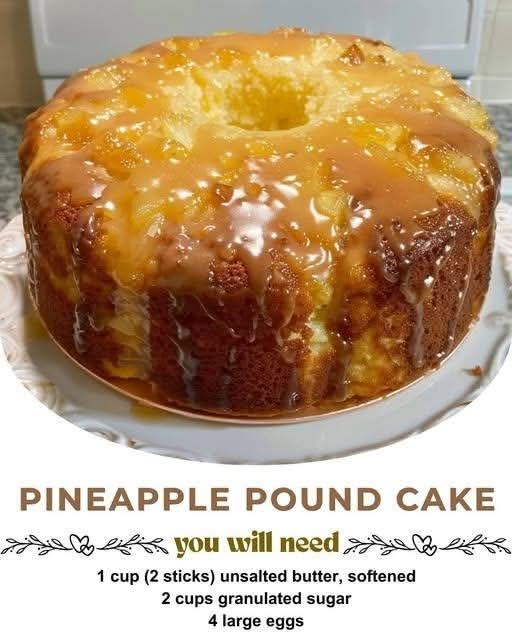
Pineapple Pound Cake
Introduction
Pineapple Pound Cake is a rich, buttery dessert with the classic dense and tender texture of a traditional pound cake and the bright, tropical flavor of pineapple. The combination of butter, sugar, eggs, vanilla, and pineapple creates a cake that is moist without being overly soft, flavorful without being too sweet, and beautiful enough for a family celebration or holiday table.
This cake is especially delicious when served slightly warm or completely cooled with a simple pineapple glaze. The pineapple adds natural sweetness and moisture while giving the traditional pound cake a refreshing tropical character.
Ingredients
For the Cake
- 1 cup (2 sticks) unsalted butter, softened
- 2 cups granulated sugar
- 4 large eggs, room temperature
- 1 teaspoon vanilla extract
- 1 cup crushed pineapple, preferably canned in juice, well drained
- 3 cups all-purpose flour
- 1 teaspoon baking powder
- 1/2 teaspoon salt
- 1/2 cup whole milk or evaporated milk
- 1 tablespoon pineapple juice
For the Pineapple Glaze
- 1 1/2 cups powdered sugar
- 2 to 3 tablespoons pineapple juice
- 1/2 teaspoon vanilla extract
- 1 tablespoon melted butter, optional
Optional Garnish
- Small pieces of crushed pineapple
- Toasted coconut
- Finely chopped pecans
- Thin pineapple slices
Instructions
Step 1: Prepare the Pan
Preheat your oven to 325°F (165°C).
Grease a 10-inch Bundt pan or tube pan thoroughly with butter or shortening. Dust the pan lightly with flour, making sure to coat the center tube and all the crevices. Shake out any excess flour.
Properly preparing the pan is important because pound cakes are rich and relatively dense, making them more likely to stick if the pan is not prepared well.
Step 2: Prepare the Pineapple
Place the crushed pineapple in a fine-mesh strainer and allow the excess liquid to drain.
Do not squeeze the pineapple completely dry. You want to remove enough liquid to prevent the cake batter from becoming watery while keeping some of the pineapple’s moisture and flavor.
Reserve a little pineapple juice for the glaze.
Step 3: Cream the Butter and Sugar
Place the softened butter in a large mixing bowl.
Beat the butter for about 2 minutes until smooth and creamy. Gradually add the granulated sugar and continue beating for approximately 4 to 5 minutes.
The mixture should become noticeably lighter in color and fluffy in texture.
This creaming process is one of the most important stages of the recipe because it incorporates air into the butter, helping give the finished pound cake a delicate texture.
Step 4: Add the Eggs
Add the eggs one at a time.
Beat well after each addition, scraping down the sides of the bowl when necessary. Make sure each egg is incorporated before adding the next.
Add the vanilla extract and mix briefly.
If the mixture appears slightly curdled, do not worry. The batter should come together once the flour is added.
Step 5: Combine the Dry Ingredients
In a separate bowl, whisk together:
- All-purpose flour
- Baking powder
- Salt
Mixing these ingredients separately ensures that the baking powder and salt are evenly distributed throughout the flour.
Step 6: Combine the Batter
Add approximately one-third of the flour mixture to the butter mixture.
Mix gently until just combined.
Add half of the milk and the tablespoon of pineapple juice. Mix briefly.
Continue alternating the remaining flour mixture and milk, beginning and ending with the flour.
Do not overmix the batter. Once the flour disappears, stop mixing.
Step 7: Add the Pineapple
Fold the drained crushed pineapple gently into the batter using a spatula.
Make sure the pineapple is distributed evenly without aggressively stirring the batter.
The finished batter should be thick, smooth, and rich, with small pieces of pineapple throughout.
Step 8: Fill the Pan
Pour the batter into the prepared Bundt pan.
Use a spatula to spread the batter evenly and gently tap the pan on the counter once or twice to remove large air pockets.
Smooth the top before placing the cake in the oven.
Step 9: Bake
Bake at 325°F (165°C) for approximately 70 to 85 minutes.
Because ovens and Bundt pans vary, begin checking the cake around the 70-minute mark.
Insert a long wooden skewer or cake tester into the deepest part of the cake. It should come out clean or with a few moist crumbs attached.
The cake should also be golden brown and should begin pulling slightly away from the sides of the pan.
Step 10: Cool the Cake
Remove the cake from the oven and allow it to rest in the pan for approximately 15 to 20 minutes.
Carefully run a thin knife around any areas that appear to be sticking. Place a serving plate over the pan and gently invert the cake.
Allow the cake to cool completely before glazing.
Making the Pineapple Glaze
Place the powdered sugar in a small bowl.
Add 2 tablespoons of pineapple juice and the vanilla extract. Whisk until smooth.
If the glaze is too thick, add a little more pineapple juice, a few drops at a time.
If you want a richer glaze, whisk in 1 tablespoon of melted butter.
The finished glaze should be thick enough to coat the cake while still flowing slowly over the sides.
Forming the Finished Cake
Once the pound cake has cooled, slowly drizzle the pineapple glaze over the top.
Allow the glaze to naturally run down the sides of the Bundt cake.
For a more decorative presentation, sprinkle toasted coconut or finely chopped pecans over the glaze while it is still wet.
You can also arrange a few small pieces of pineapple around the serving plate.
Allow the glaze to set for approximately 15 to 20 minutes before slicing.
The Method Behind a Good Pound Cake
A successful pound cake depends heavily on the order in which the ingredients are combined.
The butter and sugar should be thoroughly creamed first. This creates tiny air pockets that contribute to the cake’s texture.
The eggs should be added gradually rather than all at once. This helps maintain a smooth batter.
The flour should be added carefully and mixed only until incorporated. Excessive mixing can develop gluten and make the cake heavier or tougher than desired.
Finally, the pineapple should be folded in gently. Properly drained pineapple provides flavor and moisture without adding too much liquid to the batter.
History of Pound Cake
Pound cake has a long history in European and American baking. Traditional pound cake recipes were famously based on equal quantities of flour, butter, sugar, and eggs, often measured by weight.
The name “pound cake” comes from this original method of using approximately one pound of each principal ingredient.
Over time, bakers adapted the basic formula by changing the quantities and adding ingredients such as vanilla, citrus, nuts, coconut, chocolate, and fruit.
Pineapple became a particularly appealing addition because its sweet-tart flavor complements the richness of butter and sugar. Pineapple pound cakes became part of the broader tradition of American home baking, where classic cakes were frequently adapted according to available ingredients and family preferences.
Tips for the Best Pineapple Pound Cake
Use room-temperature ingredients.
Room-temperature butter and eggs combine more smoothly and help produce a consistent batter.
Do not add excessively wet pineapple.
Too much pineapple juice can change the texture of the cake and make it difficult to bake properly.
Cream the butter and sugar well.
This step helps create the characteristic tender crumb of the cake.
Avoid overmixing.
Once the flour has been incorporated, mix only as much as necessary.
Bake at a moderate temperature.
Pound cakes are dense, so a moderate oven temperature allows the center to cook without causing the outside to become excessively dark.
Let the cake cool before slicing.
The structure continues to set as the cake cools. Cutting it too early can result in a crumbly or gummy center.
Serving Suggestions
Pineapple Pound Cake can be served completely plain because it is already rich and flavorful.
For an extra-special dessert, serve a slice with:
- Whipped cream
- Vanilla ice cream
- Fresh pineapple
- Toasted coconut
- Chopped pecans
- A spoonful of pineapple glaze
- Fresh berries
For a warm dessert, microwave an individual slice for approximately 10 to 15 seconds and serve it with a scoop of vanilla ice cream.
Storage
Store the cooled cake in an airtight container at room temperature for up to 3 days.
For longer storage, refrigerate it in a tightly covered container for up to 5 days. Allow refrigerated slices to come closer to room temperature before serving for the best texture.
The cake can also be frozen. Wrap individual slices tightly in plastic wrap and place them in a freezer-safe container or bag. Freeze for up to 2 to 3 months. Thaw overnight in the refrigerator or at room temperature.
Conclusion
Pineapple Pound Cake brings together everything people love about classic pound cake with the bright, inviting flavor of pineapple. Its buttery crumb, sweet pineapple pieces, delicate vanilla aroma, and smooth pineapple glaze make it an excellent dessert for family dinners, birthdays, holidays, afternoon gatherings, bake sales, or simply a quiet afternoon with a cup of coffee.
The beauty of this recipe is its balance. It remains recognizably a traditional pound cake while the pineapple gives it a distinctive tropical character. With careful creaming, gentle mixing, properly drained pineapple, and patient baking, you can create a cake that is rich, tender, moist, and full of homemade flavor.
For lovers of classic homemade cakes, this Pineapple Pound Cake is the kind of recipe worth keeping in the family collection and making again and again.