
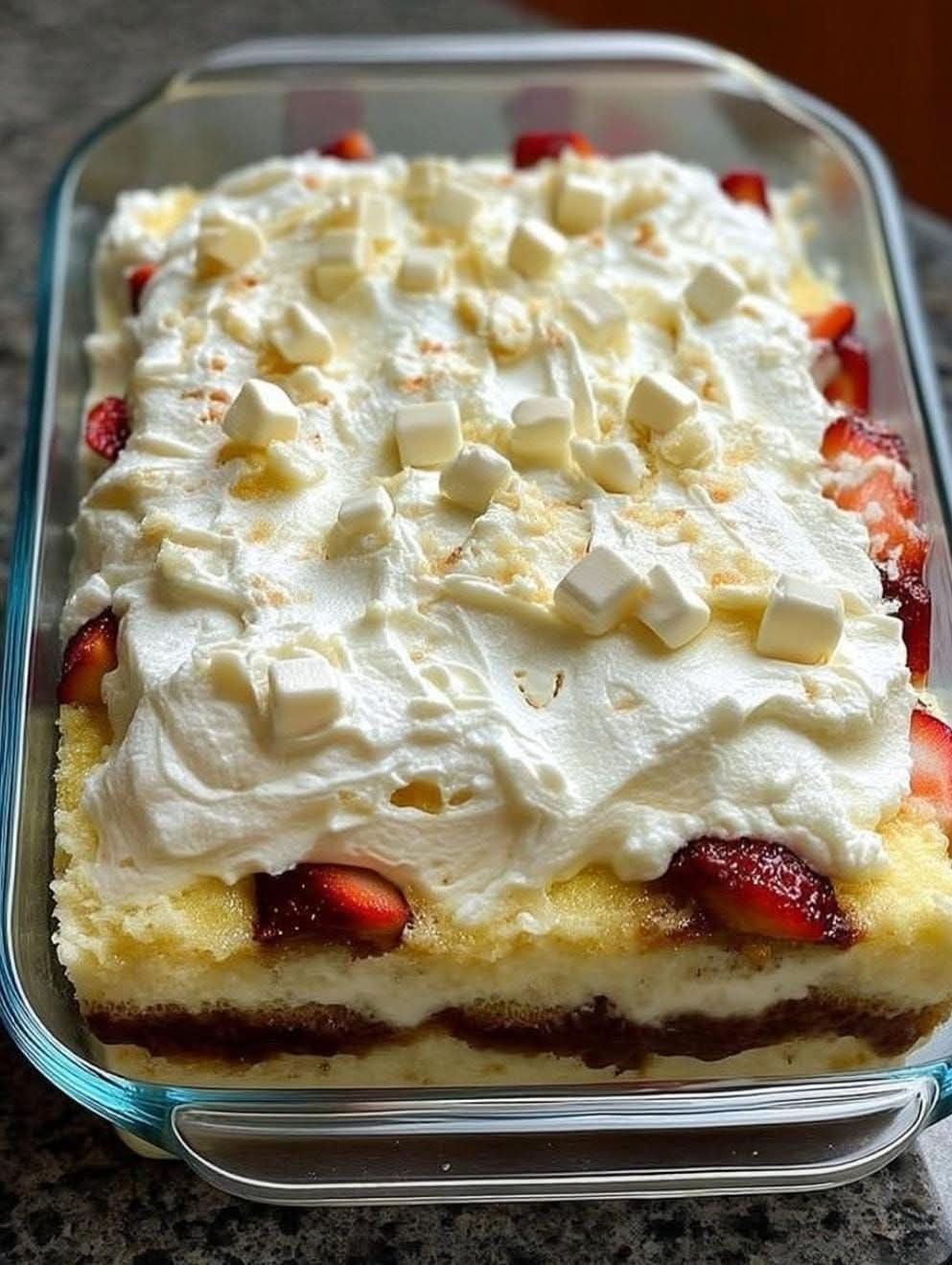
Classic Italian Tiramisu
Introduction
There are some desserts that simply belong to summer, and classic Italian tiramisu is one of them. Light yet wonderfully creamy, pleasantly chilled, and rich with the familiar combination of coffee, mascarpone, vanilla, and cocoa, tiramisu is an elegant dessert that requires no oven and can be prepared ahead of time.
The beauty of tiramisu is in its contrasting layers. Delicate ladyfingers are briefly dipped into strong coffee before being arranged beneath a smooth mascarpone cream. The layers are repeated until the dish is beautifully assembled, then finished with unsweetened cocoa powder.
After several hours in the refrigerator, the ladyfingers soften while still retaining enough structure to support the creamy filling. The coffee, mascarpone, and cocoa come together into a dessert that tastes sophisticated while remaining surprisingly simple to prepare.
This is the kind of dessert that can be made for a family dinner, a summer gathering, a special celebration, or simply because you want something wonderful waiting in the refrigerator.
Ingredients
For the Coffee Mixture
- 1 1/2 cups strong brewed espresso or very strong coffee, cooled
- 2 tablespoons granulated sugar
- 1 teaspoon pure vanilla extract
- 1 to 2 tablespoons coffee liqueur, optional
For the Mascarpone Cream
- 6 large egg yolks
- 3/4 cup granulated sugar
- 16 ounces mascarpone cheese, softened slightly
- 1 teaspoon pure vanilla extract
- 1 1/2 cups cold heavy whipping cream
- 2 tablespoons powdered sugar
For Assembly
- 24 to 30 Italian ladyfinger cookies, preferably crisp savoiardi
- Unsweetened cocoa powder, for dusting
- A small amount of finely grated dark chocolate, optional
Equipment
- Large mixing bowls
- Hand mixer or stand mixer
- Whisk
- Rubber spatula
- 9-by-13-inch baking dish or similar serving dish
- Fine-mesh sieve for the cocoa
- Refrigerator
Preparation of the Coffee Mixture
Begin by preparing the coffee because it needs to cool completely before the ladyfingers are dipped.
Brew strong espresso or coffee and pour it into a shallow bowl. Stir in the granulated sugar while the coffee is still warm so that it dissolves completely.
Add the vanilla extract and, if desired, the coffee liqueur. Stir well.
Allow the coffee mixture to cool completely.
The coffee should be flavorful and strong because the ladyfingers will absorb some of its flavor. However, it should never be hot when you begin assembling the tiramisu.
Method for the Mascarpone Cream
Place the egg yolks and granulated sugar in a heatproof bowl.
Set the bowl over a saucepan containing gently simmering water, making sure the bottom of the bowl does not touch the water.
Whisk the egg yolks and sugar continuously until the mixture becomes pale, creamy, and thickened. If using a kitchen thermometer, bring the mixture to approximately 160°F (71°C) for a safer cooked-egg preparation.
Remove the bowl from the heat and allow the mixture to cool slightly.
Add the mascarpone cheese and vanilla extract. Beat or whisk gently until smooth and creamy.
Do not overmix the mascarpone. Once the mixture is smooth, stop mixing.
In a separate chilled bowl, combine the cold heavy cream and powdered sugar.
Whip until medium-stiff peaks form. The cream should hold its shape but remain smooth and silky.
Using a rubber spatula, gently fold the whipped cream into the mascarpone mixture in several additions.
Fold carefully from the bottom of the bowl upward. The goal is to create a light, airy cream rather than a dense filling.
Formation and Assembly
Place a layer of ladyfingers across the bottom of your baking dish.
Working quickly, dip each ladyfinger into the cooled coffee mixture.
Do not soak them for too long. A quick dip is usually enough. If the ladyfingers become completely saturated, the finished tiramisu can become watery and difficult to slice.
Arrange the coffee-dipped ladyfingers in a single layer.
Spread approximately half of the mascarpone cream evenly over the ladyfingers.
Use a spatula to smooth the surface.
Add another layer of coffee-dipped ladyfingers.
Spread the remaining mascarpone cream over the second layer.
Smooth the top carefully with a spatula.
Cover the dish tightly with plastic wrap or a suitable lid.
Refrigerate for at least 6 hours, although overnight refrigeration is even better.
The Final Cocoa Layer
Do not add a thick layer of cocoa powder too early if you want the cleanest presentation.
Just before serving, place unsweetened cocoa powder into a fine-mesh sieve.
Dust the entire surface of the tiramisu generously but evenly.
For an extra chocolate finish, you can add a small amount of finely grated dark chocolate.
Chilling Method
The chilling stage is one of the most important parts of making excellent tiramisu.
During refrigeration, the ladyfingers absorb the coffee and become tender. At the same time, the mascarpone cream firms and the flavors have time to blend together.
For the best texture, refrigerate the tiramisu overnight.
If you are preparing it for a dinner or gathering, making it the day before is ideal.
Keep the dessert refrigerated until you are ready to serve it.
Serving Method
For a traditional presentation, serve the tiramisu directly from the baking dish.
Use a sharp serving knife or spatula to cut portions.
For cleaner slices, chill the dessert thoroughly before cutting and wipe the knife between portions.
Serve each piece with an additional light dusting of cocoa if desired.
Tiramisu is best served cold.
History of Tiramisu
Tiramisu is one of Italy’s best-known modern desserts. Its name is commonly translated as something similar to “pick me up,” a reference often associated with the coffee and cocoa contained in the dessert.
The exact origin of tiramisu has been debated, with different stories connecting its development to northern Italian regions, particularly Veneto and Friuli-Venezia Giulia.
Unlike many centuries-old Italian recipes, tiramisu is relatively modern. Its familiar combination of mascarpone, coffee-soaked ladyfingers, cocoa, and creamy filling became especially popular during the twentieth century.
Today, tiramisu has traveled far beyond Italy. Restaurants, bakeries, home cooks, and pastry chefs around the world have developed their own variations while maintaining the basic character of the original dessert.
Its enduring popularity comes from its simplicity. There is no complicated pastry dough, no elaborate decoration, and no long baking process. Instead, a handful of ingredients are transformed into elegant layers with remarkable flavor.
Traditional Formation
A beautiful tiramisu should have distinct layers.
The first layer is made from coffee-soaked ladyfingers.
The second layer is the creamy mascarpone filling.
The third layer is another layer of coffee-soaked ladyfingers.
The fourth layer is the remaining mascarpone cream.
Finally, the entire dessert is finished with cocoa powder.
When cut, the finished dessert should reveal these layers clearly.
The ladyfingers should be tender and moist without collapsing, while the mascarpone cream should remain thick, smooth, and delicate.
Important Tips for Perfect Tiramisu
Do Not Over-Soak the Ladyfingers
This is one of the most important rules.
Dip each ladyfinger briefly into the coffee. They absorb liquid very quickly.
Use Good Mascarpone
Mascarpone is the foundation of the cream, so choose a good-quality mascarpone with a smooth, rich texture.
Keep the Cream Light
When folding whipped cream into the mascarpone mixture, use gentle movements. Overmixing can make the filling heavy.
Use Strong Coffee
Weak coffee can disappear beneath the creamy mascarpone. Strong espresso or strongly brewed coffee gives the dessert its characteristic flavor.
Chill Thoroughly
Tiramisu improves as it rests. A minimum of six hours is recommended, but an overnight rest gives the best texture and flavor.
Add Cocoa at the End
Dusting the cocoa shortly before serving gives the dessert a fresher appearance and a more pronounced cocoa flavor.
Variations
Chocolate Tiramisu
Add a thin layer of finely grated dark chocolate between the mascarpone layers.
Strawberry Tiramisu
For a summer variation, replace the coffee-soaked ladyfingers with ladyfingers lightly brushed with strawberry syrup and add thinly sliced fresh strawberries.
Lemon Tiramisu
For an especially refreshing summer dessert, prepare a lemon syrup and add finely grated lemon zest to the mascarpone cream.
Pistachio Tiramisu
Add a thin layer of finely chopped pistachios between the cream layers and finish the dessert with additional pistachios.
Berry Tiramisu
Fresh raspberries, blueberries, or strawberries can be added between the layers for a colorful summer version.
Make-Ahead Method
Tiramisu is an excellent make-ahead dessert.
Prepare the entire dessert the day before serving and keep it covered in the refrigerator.
Wait until shortly before serving to add the final cocoa powder.
Properly chilled tiramisu develops a wonderfully soft texture and deeper flavor as it rests.
Storage
Keep tiramisu refrigerated at all times.
For the best quality, enjoy it within a few days.
Because this dessert contains mascarpone and cream, it should not be left sitting at room temperature for extended periods, especially during warm weather.
Conclusion
Classic Italian tiramisu is proof that an impressive dessert does not need to be complicated.
With layers of tender coffee-soaked ladyfingers, silky mascarpone cream, and bittersweet cocoa, every spoonful offers a perfect balance of richness, softness, coffee flavor, and chocolate aroma.
It is especially wonderful during the warmer months because it is served cold and can be prepared well in advance.
Once you make it at home, it is easy to understand why this Italian dessert has become beloved around the world. Prepare it in the morning for an evening gathering, let it rest patiently in the refrigerator, dust it with cocoa just before serving, and you will have a dessert that looks elegant and tastes even better.
For summer dinners, family celebrations, and quiet evenings at home, this is a recipe worth making again and again.