
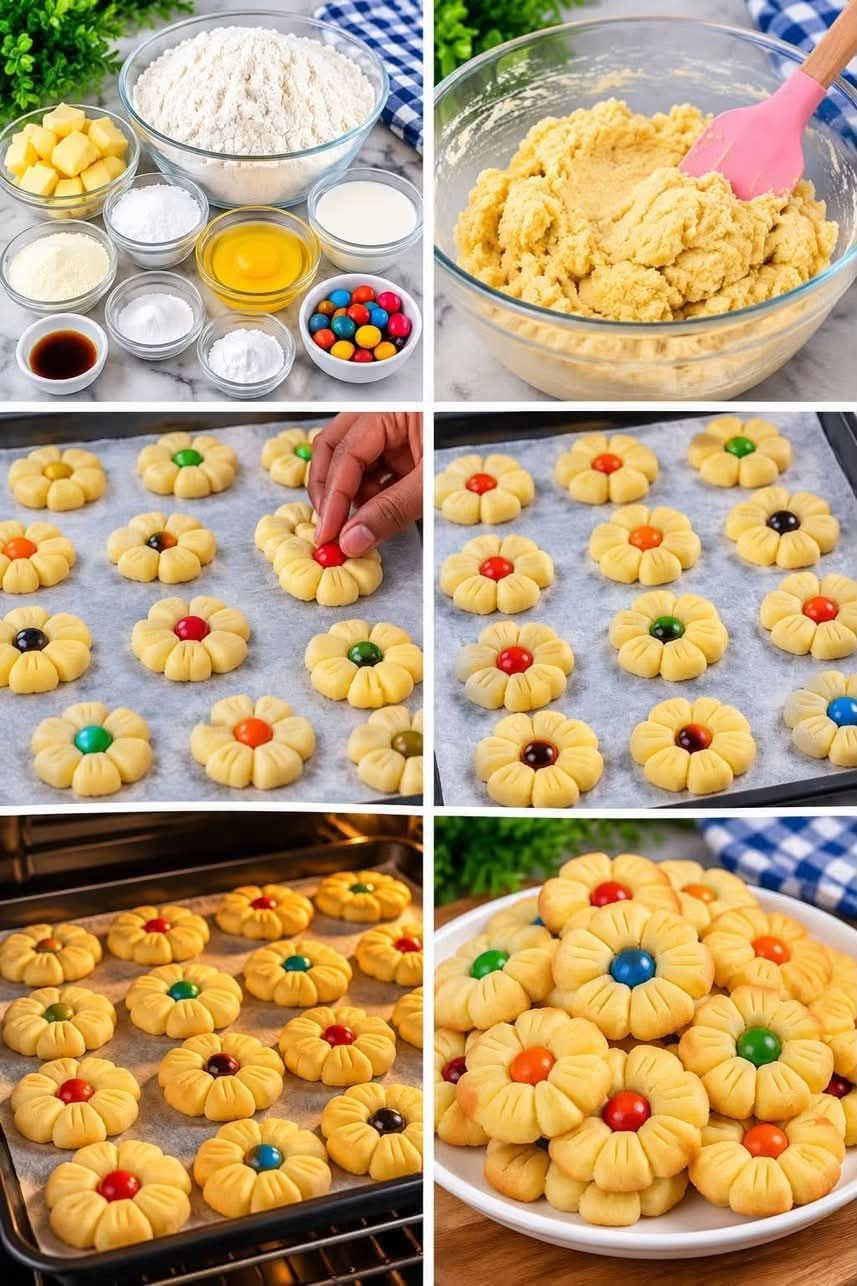
Flower Butter Cookies
Introduction
Flower Butter Cookies are delicate, buttery, melt-in-your-mouth biscuits shaped into beautiful little flowers and finished with a colorful candy center. They are simple enough for everyday baking but pretty enough for afternoon tea, family gatherings, birthdays, holidays, and dessert tables.
The combination of softened butter, icing sugar, vanilla, flour, cornflour, and milk powder creates a tender cookie with a lightly crisp edge and a soft, delicate crumb. The flower shape gives these cookies their charming appearance, while the candy-coated chocolate in the center adds a small burst of color and sweetness.
These cookies are especially enjoyable when you want a homemade treat that looks more complicated than it actually is. With a few simple shaping techniques, ordinary cookie dough becomes a tray of edible flowers.
Ingredients
For the Cookies
- 250 g butter, softened to room temperature
- ¾ cup icing sugar
- 1 egg yolk
- 1 teaspoon vanilla extract
- 2½ cups all-purpose flour
- 2 tablespoons cornflour or cornstarch
- 2 tablespoons milk powder
- ½ teaspoon baking powder
- A pinch of salt
- Colorful candy-coated chocolates for the centers
Optional Additions
For a slightly different flavor, you can add a small amount of lemon zest, orange zest, almond extract, or a pinch of cinnamon. Keep additional liquid ingredients to a minimum so the dough maintains the correct consistency for shaping.
Instructions
1. Prepare the Butter
Place the softened butter in a large mixing bowl. The butter should be soft enough to press easily with a spoon but should not be melted.
Add the icing sugar and beat together until the mixture becomes pale, smooth, and fluffy. This step is important because properly creamed butter helps create a light and delicate cookie texture.
2. Add the Egg Yolk and Vanilla
Add the egg yolk and vanilla extract to the butter mixture. Mix until everything is completely incorporated and the mixture looks smooth.
Scrape down the sides of the bowl if necessary so that the ingredients are evenly combined.
3. Prepare the Dry Ingredients
In a separate bowl, combine the all-purpose flour, cornflour, milk powder, baking powder, and salt.
Whisk or stir the dry ingredients together to distribute the baking powder and salt evenly throughout the flour.
4. Make the Dough
Gradually add the dry ingredients to the butter mixture. Mix gently until a soft dough forms.
Avoid overmixing once the flour has been incorporated. The finished dough should be soft and pliable but not excessively sticky.
If the dough feels too soft because the butter has become warm, place it in the refrigerator for approximately 15 to 20 minutes before shaping.
5. Shape the Cookies
Line a baking tray with parchment paper.
Take small portions of dough and roll each portion between your palms to form a smooth ball. Place the balls on the prepared tray, leaving enough space between them.
Gently flatten each ball with your fingers or the bottom of a small glass.
6. Create the Flower Shape
Using your fingers, gently press around the outer edge of each flattened cookie to create several rounded petals.
Try to keep the center slightly raised or defined so the candy can sit securely in the middle.
For a more decorative appearance, use a fork, the blunt edge of a knife, or another small tool to make shallow grooves on each petal.
Do not cut too deeply into the dough. The markings should decorate the surface without separating the petals.
7. Add the Candy Center
Place one colorful candy-coated chocolate in the center of each flower.
Press it gently into the dough so that it stays in place during baking. Avoid pressing too hard because the cookie may become too thin in the center.
8. Bake
Preheat the oven to 170°C (340°F).
Place the baking tray in the preheated oven and bake for approximately 12 to 15 minutes.
The cookies should remain relatively pale, with the edges becoming lightly golden. Avoid overbaking them because excessive browning can make the cookies harder and reduce their delicate buttery texture.
9. Cool Completely
Remove the tray from the oven and allow the cookies to rest on the baking tray for several minutes.
Once they have firmed up, carefully transfer them to a wire rack and allow them to cool completely.
The cookies will become more stable and develop their final texture as they cool.
Method
The secret to successful Flower Butter Cookies is controlling the texture of the dough. Begin with properly softened butter rather than melted butter. Creaming the butter with icing sugar incorporates air and produces a tender cookie.
The egg yolk contributes richness and helps bind the dough without adding too much moisture. Cornflour helps create a delicate, tender crumb, while milk powder adds richness and a subtle creamy flavor.
When adding the dry ingredients, mix only until the dough comes together. Overworking the dough can make the cookies less tender.
The shaping stage is where these simple cookies become special. Roll the dough into evenly sized balls, flatten them gently, then form the outer edge into petals. Small grooves made with a fork or knife add definition and make each cookie resemble a flower.
The candy center should be added before baking so it becomes part of the finished decoration.
Baking Tips
Use room-temperature butter for the best creaming process.
Measure the flour carefully. Too much flour can make the cookies dry and difficult to shape.
If the dough is too sticky, chill it briefly rather than immediately adding large amounts of extra flour.
If the dough becomes difficult to shape, allow it to rest at room temperature for a few minutes.
Keep the cookies similar in size so they bake evenly.
Do not wait for the entire cookie to become dark golden. These cookies are best when the edges are only lightly golden.
Allow the cookies to cool before moving them extensively because freshly baked butter cookies are fragile.
For especially neat flowers, use a small cookie scoop to portion the dough evenly.
The History and Inspiration Behind Butter Cookies
Butter cookies belong to a broad family of traditional European-style biscuits that became popular because of their simple ingredients and rich buttery flavor. Similar cookies have appeared in many forms around the world, with different cultures adding their own flavors, shapes, decorations, and techniques.
The appeal of butter cookies comes partly from their simplicity. Butter, sugar, flour, and eggs can be transformed into a delicate biscuit with very little effort. Over time, home bakers began shaping these cookies into flowers, stars, hearts, shells, and other decorative forms.
Flower-shaped cookies are particularly popular for celebrations because the design is cheerful and attractive without requiring complicated decorating skills. Adding a colorful candy to the center gives the traditional butter cookie a playful modern touch.
Formation and Texture
The finished Flower Butter Cookie should have a lightly crisp exterior with a tender, buttery center.
The structure comes primarily from the flour, while the cornflour helps make the crumb more delicate. Butter provides richness and contributes to the characteristic melt-in-the-mouth quality of the cookie.
Icing sugar dissolves easily into the butter and helps maintain a smooth dough. Milk powder adds additional richness and gives the cookies a pleasant creamy note.
The flower shape also creates slightly thinner edges, which can become lightly crisp during baking while the center remains tender.
Serving Suggestions
Serve these cookies with tea, coffee, hot chocolate, or a glass of cold milk.
They are also lovely arranged on a dessert platter with other homemade biscuits and small cakes.
For parties, place the cookies on a large serving plate according to color, or arrange several different candy colors together to create a bright flower garden effect.
They can also be packaged individually in small food-safe bags and given as homemade gifts.
Storage
Once completely cooled, store the cookies in an airtight container at room temperature.
Place parchment paper between layers if you are stacking them to help protect the decorative centers and delicate edges.
Properly stored, the cookies can remain enjoyable for several days. Keep them away from humidity and direct sunlight to preserve their texture and appearance.
Variations
Vanilla Flower Cookies
Keep the original recipe exactly as written for a classic buttery vanilla cookie.
Citrus Flower Cookies
Add a small amount of finely grated lemon or orange zest to the butter mixture for a fresh citrus flavor.
Almond Flower Cookies
Replace part of the vanilla flavoring with a small amount of almond extract. Almond pairs particularly well with buttery cookies.
Festive Flower Cookies
Use candies in seasonal colors to create cookies suitable for birthdays, holidays, showers, or family celebrations.
Chocolate-Dipped Flower Cookies
After the cookies have cooled completely, dip part of each cookie into melted chocolate and allow it to set. This creates a richer dessert while keeping the flower design visible.
Conclusion
Flower Butter Cookies are a wonderful example of how a simple homemade biscuit can become something beautiful with just a little shaping and decoration. The buttery dough is rich and tender, the flower design makes each cookie attractive, and the colorful candy center gives every piece its own cheerful character.
They are easy enough for beginner bakers while still being enjoyable for experienced home cooks who appreciate classic butter cookies. Whether prepared for afternoon tea, a family gathering, a celebration, or simply a homemade treat, these cookies bring together delicate texture, buttery flavor, and charming presentation.
For Cookie Lovers
If you love traditional butter cookies, these flower-shaped biscuits are a recipe worth keeping. They offer the familiar richness of a classic homemade cookie while adding a decorative touch that makes them feel special.
They are especially enjoyable when served fresh with a warm cup of tea or coffee and shared with family and friends. The recipe can also become a fun baking activity for children, who can help roll the dough, shape the petals, and choose the colorful candy centers.
The best part is that every flower can look slightly different. Some may have rounded petals, others may have deeper grooves, and the candy centers can be made colorful and varied. That homemade character is exactly what makes these cookies so charming.
Final Method Summary
Cream softened butter and icing sugar until light and fluffy. Add the egg yolk and vanilla, then gradually incorporate the flour, cornflour, milk powder, baking powder, and salt. Form the soft dough into small balls, flatten them gently, and shape the edges into flower petals. Add small grooves to the petals and place a colorful candy in the center. Bake at 170°C (340°F) for 12 to 15 minutes, watching carefully for lightly golden edges. Cool completely before serving or storing.
These Flower Butter Cookies are simple, elegant, buttery, and wonderfully homemade.