
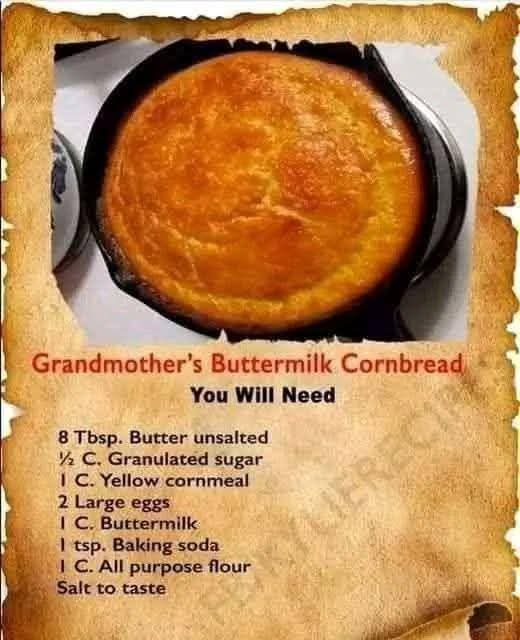
Grandmother’s Buttermilk Cornbread – A Classic Southern Homemade Favorite
Introduction
There is something truly special about a warm piece of homemade cornbread fresh from the oven. Grandmother’s Buttermilk Cornbread is an old-fashioned comfort food recipe that brings back memories of family dinners, country kitchens, and meals prepared with love. With its golden crust, tender crumb, and rich corn flavor, this traditional bread is simple, satisfying, and perfect for almost any occasion.
Made with yellow cornmeal, all-purpose flour, buttermilk, and a few basic pantry ingredients, this cornbread delivers a beautiful balance of flavor and texture. The buttermilk adds a gentle tang and helps create a tender interior, while the baking powder and baking soda give the bread a light, pleasant rise.
Whether you serve it alongside a pot of homemade chili, a bowl of hearty soup, slow-cooked beans, or a traditional Southern dinner, this grandmother-inspired cornbread is a recipe worth keeping. It is easy enough for beginners and delicious enough to become a family tradition.
Ingredients
Dry Ingredients
- 1 cup yellow cornmeal
- ¾ cup all-purpose flour
- 1 tablespoon granulated sugar
- 1½ teaspoons baking powder
- ½ teaspoon baking soda
- ½ teaspoon salt, or to taste
Wet Ingredients
- 1 cup buttermilk
- 1 large egg
- ¼ cup melted unsalted butter, slightly cooled
- 2 tablespoons vegetable oil or melted butter, for greasing the pan
Optional Additions
- 2 tablespoons extra melted butter for brushing the top
- ¼ cup shredded cheddar cheese for a savory variation
- 1–2 tablespoons honey for a slightly sweeter flavor
Note: The original ingredient list does not specify the wet ingredients or salt. These additions complete the recipe and help produce a moist, well-balanced cornbread.
Instructions
Step 1: Preheat the Oven
Preheat your oven to 400°F (200°C). Lightly grease an 8-inch square baking pan or a 9-inch cast-iron skillet with vegetable oil or butter.
For a crispier bottom crust, place the greased cast-iron skillet in the oven while it preheats. Carefully remove it once hot before adding the batter.
Step 2: Combine the Dry Ingredients
In a large mixing bowl, add the yellow cornmeal, all-purpose flour, sugar, baking powder, baking soda, and salt.
Whisk everything together until evenly combined. Breaking up any small lumps helps ensure that the leavening agents are distributed throughout the mixture, allowing the cornbread to rise evenly.
Step 3: Mix the Wet Ingredients
In a separate bowl, whisk together the buttermilk and egg until smooth. Slowly add the melted butter while stirring.
Make sure the butter is not extremely hot, as excessive heat can cook the egg before the ingredients are mixed into the batter.
The buttermilk gives the cornbread its characteristic tangy flavor and reacts with the baking soda to help create a tender texture.
Step 4: Prepare the Batter
Pour the wet ingredients into the bowl of dry ingredients. Stir gently with a wooden spoon or spatula until everything is just combined.
The batter should be thick but pourable. A few small lumps are perfectly fine.
Avoid overmixing, because too much stirring can develop the gluten in the flour and make the finished cornbread tougher than desired.
Step 5: Transfer to the Baking Pan
Pour the batter into your prepared baking pan or hot skillet. Spread it evenly using a spatula.
If you are using a preheated cast-iron skillet, the batter may begin to sizzle slightly when it touches the hot surface. This helps develop a deliciously crisp bottom crust.
Step 6: Bake Until Golden
Place the pan in the preheated oven and bake for approximately 20–25 minutes.
The cornbread is ready when the top is golden brown, the edges are lightly crisp, and a toothpick inserted into the center comes out clean or with a few moist crumbs.
If the top browns too quickly, check the oven temperature and avoid leaving the bread in longer than necessary.
Step 7: Add the Finishing Touch
Remove the cornbread from the oven and let it rest for 5–10 minutes before cutting.
For an extra-rich finish, brush the top with a little melted butter while the bread is still warm. This adds flavor and gives the crust a lovely appearance.
Step 8: Slice and Serve
Cut the cornbread into squares or wedges and serve warm. Enjoy it with butter, a drizzle of honey, or your favorite hearty meal.
Cooking Methods
Traditional Oven-Baked Method
The oven method is the easiest way to prepare this recipe. It produces an evenly baked center, a golden top, and lightly crisp edges.
Bake at 400°F (200°C) for 20–25 minutes, adjusting the time slightly depending on the pan you use.
Cast-Iron Skillet Method
For a more traditional Southern-style result, use a cast-iron skillet. Preheat the greased skillet in the oven before adding the batter.
The hot skillet creates a beautifully browned bottom and rustic edges. This method is especially good for serving cornbread alongside beans, greens, barbecue, or chili.
Muffin Method
For individual portions, divide the batter among a greased muffin tin, filling each cup approximately two-thirds full.
Bake at 400°F (200°C) for about 12–16 minutes, or until the muffins are golden and cooked through.
Cornbread muffins are convenient for packed lunches, potlucks, picnics, and family gatherings.
The History of Buttermilk Cornbread
Cornbread has deep roots in North American cooking, particularly in the Southern United States, where corn has long been an important staple. Indigenous peoples cultivated corn for thousands of years and developed many ways to process and prepare it. European settlers later adopted corn-based cooking techniques and incorporated them into their own food traditions.
Over generations, cornbread became a practical and beloved part of everyday meals. Cornmeal was relatively accessible, and simple breads made from it could accompany beans, vegetables, soups, stews, and roasted meats.
Buttermilk became a familiar ingredient in many traditional Southern kitchens. Its tangy flavor and acidity worked especially well with baking soda, helping quick breads rise without yeast. Families developed their own variations, adjusting the sweetness, fat, texture, and cooking method according to personal taste and regional tradition.
Some Southern cornbreads are savory and crumbly, while others contain a little sugar and have a softer texture. Cast-iron skillets became especially popular for producing a deeply browned crust.
Although every grandmother’s recipe is a little different, the idea behind this dish remains the same: use simple ingredients to create something comforting, filling, and delicious.
The Formation and Texture of Perfect Cornbread
The secret to excellent buttermilk cornbread lies in the balance between its ingredients.
Yellow cornmeal provides the distinctive corn flavor and slightly grainy texture that make cornbread unique.
All-purpose flour softens the crumb and helps the bread hold together when sliced.
Buttermilk contributes moisture and a gentle tang. Its acidity also reacts with baking soda to release carbon dioxide, helping the batter rise.
Baking powder provides additional lift, creating a lighter texture.
Baking soda helps neutralize some of the buttermilk’s acidity and contributes to browning.
Sugar adds a touch of sweetness without turning the bread into a dessert.
Egg helps bind the ingredients and supports the structure of the finished bread.
Butter adds richness and a tender mouthfeel, while the greased pan helps prevent sticking and encourages a flavorful crust.
When these ingredients are mixed gently and baked at the correct temperature, the result is cornbread with a golden exterior and a moist, tender center.
Tips for the Best Grandmother’s Buttermilk Cornbread
- Use fresh cornmeal. Cornmeal can lose its fresh flavor over time, so check that it smells pleasant and has been stored properly.
- Measure carefully. Too much flour can make the bread dry, while too much liquid can leave the center undercooked.
- Do not overmix. Stir only until the ingredients come together for a tender crumb.
- Preheat the oven fully. A properly heated oven helps the cornbread rise and brown evenly.
- Choose the right pan. A cast-iron skillet creates a particularly crisp crust, while a square baking pan produces neat, even slices.
- Avoid overbaking. Remove the bread as soon as the center is cooked to prevent it from drying out.
- Let it rest briefly. A short resting period makes the cornbread easier to cut and allows the crumb to settle.
- Serve it warm. A little butter melting into a warm slice makes this simple bread especially satisfying.
Delicious Ways to Serve Cornbread
Grandmother’s Buttermilk Cornbread is wonderfully versatile and can be served with many different meals.
- With chili: Pair it with beef chili, turkey chili, or vegetarian bean chili.
- With soup: Serve alongside vegetable soup, chicken soup, or creamy potato soup.
- With beans: Enjoy it with pinto beans, black-eyed peas, or slow-cooked white beans.
- With Southern dinners: Serve with collard greens, fried chicken, roasted vegetables, or barbecue.
- With breakfast: Enjoy a warm slice with scrambled eggs and a little butter.
- As a sweet snack: Add a drizzle of honey or maple syrup.
- For holiday meals: Include it as a side dish for Thanksgiving, Christmas, or a family Sunday dinner.
Variations to Try
Honey Buttermilk Cornbread
Add 1–2 tablespoons of honey to the wet ingredients. The honey creates a gentle sweetness that pairs beautifully with butter and warm cornbread.
Cheddar Cornbread
Fold ¼ cup of shredded cheddar cheese into the batter before baking. The cheese adds a savory flavor and makes the bread an excellent companion for soups and chili.
Jalapeño Cornbread
Add 1–2 tablespoons of finely chopped jalapeños for a little heat. For extra flavor, combine the peppers with shredded cheddar cheese.
Extra-Buttery Cornbread
Replace some of the vegetable oil used for greasing with butter, and brush the finished cornbread with additional melted butter.
Cornbread Muffins
Bake the batter in a muffin tin for individual portions. These are ideal for meal preparation, lunchboxes, and gatherings.
Storage and Reheating
At room temperature: Allow the cornbread to cool completely, then store it in an airtight container for up to 2 days.
In the refrigerator: Store in an airtight container for up to 5 days.
In the freezer: Wrap individual pieces tightly and place them in a freezer-safe bag or container. Freeze for up to 3 months for best quality.
To reheat: Warm individual slices in a 300°F (150°C) oven for about 8–10 minutes, or microwave briefly until heated through. Covering the bread while reheating helps retain moisture.
If frozen, thaw the pieces in the refrigerator or reheat them gently from frozen until warmed through.
Frequently Asked Questions
Can I make this cornbread without sugar?
Yes. You can omit the tablespoon of sugar for a more savory cornbread. The flavor will be slightly less sweet, but the bread will still be delicious.
Can I make it without buttermilk?
Yes. If buttermilk is unavailable, mix 1 tablespoon of lemon juice or white vinegar with enough regular milk to make 1 cup. Let it stand for 5–10 minutes before using. The flavor and thickness may differ slightly from real buttermilk.
Why did my cornbread turn out dry?
Dry cornbread is often caused by overbaking, too much flour, or inaccurate ingredient measurements. Check for doneness early and remove the bread as soon as the center is cooked.
Why is the center still wet?
The pan may be too deep, the oven may be running cool, or the bread may need additional baking time. Continue baking in short intervals until a toothpick inserted into the center comes out clean or with a few moist crumbs.
Can I prepare the batter ahead of time?
It is best to bake the batter soon after mixing because the baking powder and baking soda begin working once the wet and dry ingredients come together. For convenience, measure the dry and wet ingredients separately in advance and combine them just before baking.
Can I make this recipe gluten-free?
You can try replacing the all-purpose flour with a gluten-free measure-for-measure baking flour. Check that the cornmeal and all other ingredients are certified gluten-free if necessary. The texture may vary depending on the flour blend.
Conclusion
Grandmother’s Buttermilk Cornbread is a wonderful reminder that the simplest recipes can create the most memorable meals. With yellow cornmeal, flour, buttermilk, and a handful of everyday ingredients, you can prepare a comforting homemade bread that is golden on the outside, tender in the middle, and full of old-fashioned flavor.
Serve it fresh from the oven with butter, honey, a bowl of chili, or your favorite family dinner. Whether you bake it in a traditional skillet or a simple baking pan, this recipe is easy to adapt and enjoyable throughout the year.
Make it for a weeknight dinner, share it at a potluck, or bring it to your next holiday gathering. One warm slice may be all it takes to make this classic a regular favorite in your kitchen.
For the Love of Homemade Cornbread
Some recipes are more than a list of ingredients. They are a connection to family traditions, shared meals, and the comforting flavors that make a house feel like home.
Grandmother’s Buttermilk Cornbread celebrates the beauty of homemade cooking. It does not require complicated techniques or expensive ingredients—just a little care, a warm oven, and the joy of making something delicious for the people you love.
Bake a batch, gather around the table, and enjoy every golden slice. This is the kind of timeless comfort food that deserves to be made, shared, and passed down for generations.