
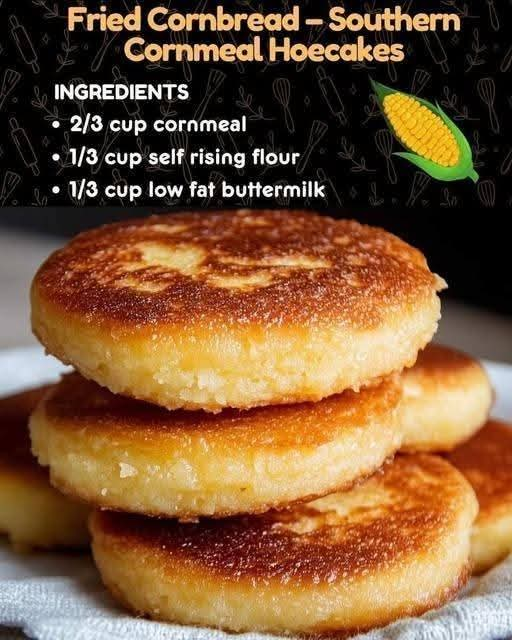
Old-Fashioned Fried Cornbread – A Traditional Southern Favorite
Introduction
There is something special about old-fashioned fried cornbread. With its golden, crispy edges, tender center, and comforting corn flavor, this simple homemade bread brings the warmth of traditional country cooking straight to your kitchen. Made with just a handful of everyday ingredients, it is an affordable, satisfying recipe that generations of families have enjoyed alongside hearty meals.
Unlike traditional oven-baked cornbread, fried cornbread is cooked in a hot skillet with a little oil, creating a beautifully crisp exterior while keeping the inside soft and moist. The buttermilk adds a gentle tang, while the cornmeal provides that familiar, rustic flavor that makes every bite so comforting.
This recipe is perfect for busy weeknights, family dinners, Sunday suppers, or anytime you want something homemade without spending hours in the kitchen. Serve it hot from the skillet with beans, greens, soups, stews, or your favorite Southern dishes.
If you love simple recipes that taste like they came straight from Grandma’s kitchen, this old-fashioned fried cornbread deserves a permanent place in your recipe collection.
Ingredients
For the Fried Cornbread
- 1 cup cornmeal
- 1/2 cup all-purpose flour
- 1 teaspoon baking powder
- 1/2 teaspoon salt
- 1 cup buttermilk
- 2–4 tablespoons vegetable oil, bacon grease, or another suitable cooking fat, for frying
Optional Additions
- 1 tablespoon melted butter for extra richness
- 1 tablespoon finely chopped green onions for a savory flavor
- 1/4 teaspoon black pepper for a little extra seasoning
- 1–2 tablespoons water or additional buttermilk if the batter is too thick
These optional ingredients are not necessary for the traditional version, but they allow you to adjust the flavor and texture to your liking.
Instructions
Step 1: Prepare the Dry Ingredients
In a medium mixing bowl, combine the cornmeal, all-purpose flour, baking powder, and salt. Whisk the ingredients together until evenly distributed.
Mixing the dry ingredients first helps prevent pockets of baking powder or salt from forming in the finished cornbread. It also ensures that the batter cooks evenly.
Step 2: Add the Buttermilk
Pour the buttermilk into the dry ingredients gradually, stirring with a spoon or spatula until a thick, spoonable batter forms.
The mixture should be moist and easy to scoop but should not be as thin as pancake batter. Depending on the type of cornmeal you use, you may need a small splash of additional buttermilk or water.
Avoid overmixing. Stir just until the ingredients are combined to help keep the cornbread tender.
Allow the batter to rest for approximately 5 minutes. This gives the cornmeal a little time to absorb the liquid.
Step 3: Heat the Skillet
Place a heavy skillet, preferably cast iron, over medium heat. Add enough vegetable oil or bacon grease to coat the bottom of the pan.
Allow the oil to heat until it shimmers gently. To test it, place a tiny amount of batter in the skillet. If it sizzles immediately without burning, the pan is ready.
The correct temperature is important. If the oil is too cool, the cornbread may absorb excess grease. If it is too hot, the outside may brown before the center has cooked through.
Step 4: Shape the Cornbread
Using a spoon, carefully drop small portions of batter into the hot skillet. Flatten each portion gently with the back of the spoon to form small patties.
Leave a little space between the pieces so they cook evenly and are easy to turn.
You can make them small and round for individual servings or slightly larger if you prefer a more substantial piece of cornbread.
Step 5: Fry Until Golden
Cook the cornbread for approximately 3–5 minutes on the first side, depending on the thickness of each piece.
Watch for golden-brown edges and a surface that begins to look set. When the bottom is crisp and the patties hold together, carefully flip them with a spatula.
Cook the second side for another 2–4 minutes, or until golden brown and cooked through.
Adjust the heat as needed to prevent the outside from becoming too dark before the middle is done.
Step 6: Drain and Serve
Transfer the cooked cornbread to a plate lined with paper towels to remove excess oil.
Continue cooking the remaining batter in batches, adding a little more oil to the skillet when necessary.
Serve the fried cornbread warm, preferably straight from the pan. A small pat of butter on top makes it even more delicious.
Cooking Methods
Traditional Skillet Method
The skillet method is the classic choice for this recipe. A cast-iron skillet provides steady heat and helps create a crisp, golden crust.
Use medium heat, avoid overcrowding the pan, and turn each piece only when the first side has developed a firm crust. This method produces the characteristic combination of crunchy edges and a tender center.
Shallow-Frying Method
For a slightly richer and crispier result, use enough oil to cover the bottom of the skillet generously. The patties should sizzle as soon as they touch the pan.
You do not need to deep-fry them. Shallow frying is sufficient to develop a delicious crust while allowing the cornbread to cook through.
Butter-Finished Method
For an extra buttery flavor, cook the cornbread in oil or bacon grease and brush the finished pieces lightly with melted butter.
This adds richness without requiring butter to be the primary frying fat, which can burn more easily at higher temperatures.
The History of Fried Cornbread
Cornbread has deep roots in the food traditions of Indigenous peoples of the Americas, who cultivated corn and developed many ways of preparing it long before European settlement.
Corn later became an important staple throughout the American South, where it was used to make breads, porridges, and other filling foods. Because cornmeal was relatively affordable and versatile, it became a regular ingredient in many rural kitchens.
Different families and communities developed their own methods of preparing cornbread. Some baked it in ovens or cast-iron skillets, while others cooked small portions of cornmeal batter directly on a hot griddle or in a frying pan.
Fried cornbread became associated with practical home cooking because it required few ingredients and could be prepared quickly alongside other dishes. Recipes varied from household to household, with some using buttermilk, others using water, and many relying on the cook’s judgment rather than exact measurements.
Today, fried cornbread remains a beloved comfort food, especially when served with beans, greens, soups, and other hearty meals. This recipe carries on that tradition with a simple combination of cornmeal, flour, buttermilk, and seasonings.
Formation: What Makes Perfect Fried Cornbread?
The secret to delicious fried cornbread lies in balancing the ingredients and controlling the heat.
Cornmeal creates the signature flavor. It gives the bread its distinctive corn taste and slightly grainy texture. A medium-ground cornmeal works well for a rustic result.
Flour helps hold everything together. The addition of all-purpose flour provides structure, making the patties easier to flip without breaking apart.
Buttermilk adds moisture and flavor. Its mild tang complements the cornmeal and helps create a tender interior.
Baking powder provides a little lift. It helps keep the cornbread from becoming overly dense.
Hot oil creates the crust. The surface begins to crisp as the batter cooks, producing the golden exterior that makes fried cornbread so appealing.
The finished cornbread should be golden on both sides, crisp around the edges, and fully cooked in the center. If it is too crumbly, the batter may need a little more liquid or more careful handling. If it is soggy, the skillet may not have been hot enough or too much oil may have been used.
Helpful Tips for the Best Results
- Use real buttermilk when possible. It contributes a pleasant tang and helps create a tender texture.
- Do not make the batter too thin. A thick, spoonable consistency helps the cornbread maintain its shape in the skillet.
- Let the batter rest briefly. Five minutes gives the cornmeal time to absorb moisture.
- Preheat the skillet properly. Consistent medium heat helps the patties cook evenly.
- Avoid flipping too early. Allow the first side to develop a golden crust before turning.
- Cook in batches. Leaving enough room between pieces helps maintain the skillet temperature.
- Serve immediately. Fried cornbread is at its best while the edges are still crisp and the center is warm.
- Adjust the seasoning to taste. The basic recipe is intentionally simple, so you can add a little pepper or green onion if desired.
What to Serve with Fried Cornbread
Fried cornbread is wonderfully versatile and pairs well with many comforting dishes.
- Pinto beans or black-eyed peas: The crisp bread is excellent for soaking up the flavorful cooking liquid.
- Collard greens or turnip greens: Serve it alongside tender greens for a traditional Southern-style meal.
- Vegetable soup: A warm piece of fried cornbread makes a satisfying accompaniment to a bowl of soup.
- Chili or beef stew: Its mild corn flavor balances rich, savory dishes.
- Fried chicken: Add it to a hearty family dinner with vegetables and gravy.
- Scrambled eggs and breakfast meats: Enjoy it as part of a savory breakfast.
- Butter and honey: For a sweeter serving, add butter and drizzle a little honey over the warm cornbread.
Storage and Reheating
Allow leftover fried cornbread to cool before storing it in an airtight container in the refrigerator. For food safety, refrigerate leftovers within two hours of cooking.
It will generally keep well in the refrigerator for up to 3–4 days.
To reheat, place the pieces in a skillet over medium-low heat for a few minutes on each side. This helps restore some of their crispness. You can also use an oven or air fryer until heated through.
A microwave works when you are short on time, but the texture will be softer rather than crispy.
For longer storage, freeze the cooled pieces in a freezer-safe container with parchment paper between layers. For best quality, use them within about 2–3 months. Reheat from thawed or frozen until thoroughly hot.
Frequently Asked Questions
Can I make fried cornbread without buttermilk?
Yes. You can make a substitute by adding 1 tablespoon of lemon juice or white vinegar to a measuring cup and filling it with regular milk to the 1-cup mark. Let it stand for 5–10 minutes before using.
The flavor and texture may differ slightly from those of traditional buttermilk cornbread.
Why is my fried cornbread falling apart?
The batter may be too dry, the pieces may be too large, or the cornbread may have been flipped before the first side had set.
Add a little more buttermilk if needed, make smaller patties, and allow a golden crust to develop before turning.
Can I prepare the batter ahead of time?
It is best to mix and fry the batter shortly before serving. Baking powder begins reacting after it is moistened, so letting the batter sit for too long may reduce its lifting power.
For convenience, you can measure and combine the dry ingredients ahead of time, then add the buttermilk when you are ready to cook.
Can I make the recipe without all-purpose flour?
The flour helps bind the patties, so leaving it out may change the texture. You can experiment with a suitable gluten-free flour blend, but the results may vary depending on the blend.
How do I make the cornbread extra crispy?
Use a properly heated skillet, avoid overcrowding, and allow the first side to become golden before flipping. Drain the finished pieces briefly on paper towels and serve them while hot.
Conclusion
Old-fashioned fried cornbread proves that a handful of simple ingredients can create something truly satisfying. With cornmeal, flour, baking powder, salt, and buttermilk, you can make a batch of warm, golden cornbread that is crisp on the outside and tender in the middle.
It is an easy recipe for family meals, potlucks, and quiet evenings when you want a taste of traditional home cooking. Pair it with beans, greens, soups, or your favorite main dish, and you have a comforting addition to the table.
Keep this recipe close, because it is the kind of timeless kitchen favorite you will want to make again and again.
For the Lovers of Homemade Comfort Food
If you love old-fashioned recipes, skillet cooking, and the comforting flavors of home, this fried cornbread is for you. It brings together simple pantry staples in a way that feels familiar, hearty, and satisfying.
Whether you learned to make cornbread from a parent or grandparent or are trying it for the first time, this recipe is easy to adapt to your family’s tastes.
Serve it hot, share it with the people you love, and enjoy the simple pleasure of homemade food made from scratch.
Recipe at a Glance
- Prep time: 10 minutes
- Resting time: 5 minutes
- Cooking time: 15–20 minutes
- Total time: Approximately 30–35 minutes
- Yield: About 6–8 small pieces
- Difficulty: Easy
- Cooking method: Skillet frying
- Best served: Warm, immediately after cooking
A little reminder: Save this old-fashioned fried cornbread recipe for the next time you want a simple, golden, homemade side dish that brings traditional comfort to your table.