
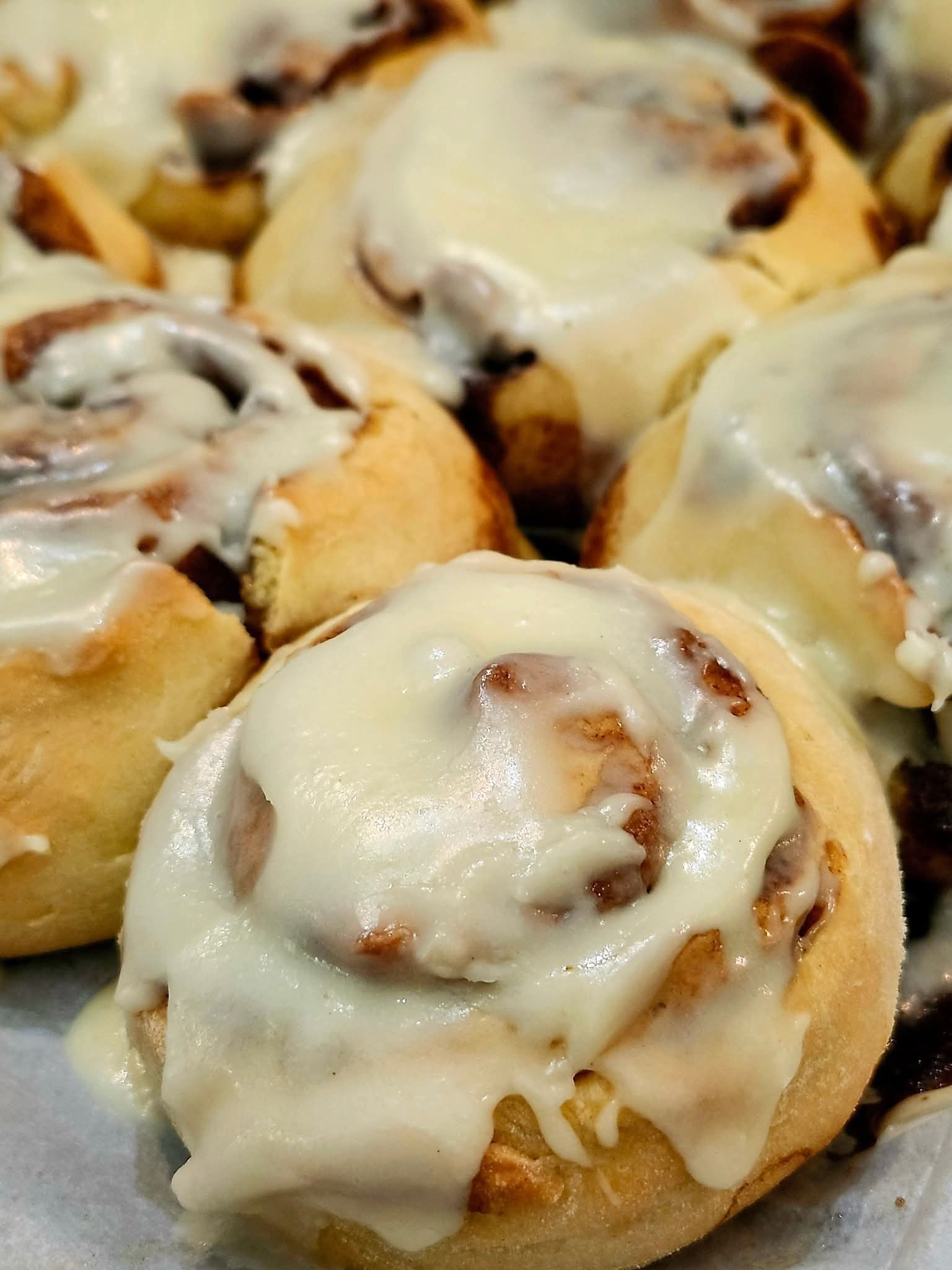
Homemade Cinnamon Rolls
Introduction
There is something wonderfully comforting about homemade cinnamon rolls. Soft, fluffy, buttery dough is rolled around a generous layer of cinnamon and brown sugar, then baked until golden and fragrant. Finished with a smooth vanilla glaze or cream cheese frosting, these cinnamon rolls are the kind of homemade treat that makes the kitchen smell like a bakery.
They are perfect for breakfast, brunch, holidays, weekend baking, family gatherings, or simply whenever you want something warm and comforting. Although they take a little time because the dough needs to rise, the result is well worth the effort.
Ingredients
For the Dough
- 1 cup warm whole milk
- 2 1/4 teaspoons active dry yeast
- 1/4 cup granulated sugar
- 1/2 cup unsalted butter, melted and slightly cooled
- 2 large eggs
- 1 teaspoon vanilla extract
- 1 teaspoon salt
- 4 to 4 1/2 cups all-purpose flour
For the Cinnamon Filling
- 1/2 cup unsalted butter, softened
- 1 cup packed brown sugar
- 2 tablespoons ground cinnamon
- 1/4 teaspoon salt
- 1 teaspoon vanilla extract
For the Cream Cheese Frosting
- 4 ounces cream cheese, softened
- 1/4 cup unsalted butter, softened
- 1 1/2 cups powdered sugar
- 1 teaspoon vanilla extract
- 2 to 3 tablespoons milk, as needed
Instructions
Step 1: Activate the Yeast
Pour the warm milk into a large mixing bowl. The milk should be warm but not hot. Add the yeast and granulated sugar.
Stir gently and allow the mixture to sit for about 5 to 10 minutes. The yeast should become slightly foamy, which indicates that it is active.
If the mixture does not foam, the yeast may be inactive or the milk may have been too hot or too cold.
Step 2: Prepare the Dough
Add the melted butter, eggs, vanilla extract, and salt to the yeast mixture.
Stir until everything is well combined.
Gradually add the flour, beginning with about 4 cups. Mix until a soft dough forms.
The dough should be soft and slightly tacky but should not be extremely sticky. Add additional flour a tablespoon at a time if necessary.
Step 3: Knead the Dough
Transfer the dough to a lightly floured surface.
Knead for approximately 6 to 8 minutes until the dough becomes smooth, elastic, and soft.
You can also use a stand mixer fitted with a dough hook and knead on low to medium speed until the dough is smooth.
Avoid adding too much flour. Too much flour can make the cinnamon rolls dense instead of light and fluffy.
Step 4: First Rise
Place the dough in a lightly greased bowl.
Cover it with a clean kitchen towel or plastic wrap and place it somewhere warm.
Allow the dough to rise for approximately 1 to 1 1/2 hours, or until it has doubled in size.
The exact rising time will depend on the temperature of your kitchen.
Step 5: Make the Cinnamon Filling
While the dough is rising, prepare the filling.
In a small bowl, combine the brown sugar, cinnamon, salt, and vanilla extract.
Keep the softened butter separate so it can be spread easily over the dough.
Step 6: Roll Out the Dough
Once the dough has doubled in size, gently punch it down to release excess air.
Transfer it to a lightly floured surface and roll it into a large rectangle, approximately 15 by 20 inches.
Try to keep the dough an even thickness from one end to the other.
Step 7: Add the Filling
Spread the softened butter evenly over the entire surface of the dough.
Sprinkle the cinnamon-brown sugar mixture evenly over the butter.
Leave a small border around the edges to make rolling easier.
Step 8: Roll the Dough
Starting from one of the long sides, carefully roll the dough into a tight log.
Try to roll evenly without pressing the dough too aggressively.
Once completely rolled, pinch the seam gently to help keep the log closed.
Step 9: Cut the Rolls
Using a sharp knife or unflavored dental floss, divide the dough into approximately 12 equal pieces.
Place the rolls cut-side up in a greased 9-by-13-inch baking dish.
Leave a little space between them because they will expand during the second rise.
Step 10: Second Rise
Cover the baking dish and allow the rolls to rise for another 30 to 45 minutes.
They should become noticeably puffy and begin to touch one another.
This second rise is important because it helps create the soft, airy texture associated with good homemade cinnamon rolls.
Step 11: Bake
Preheat the oven to 350°F (175°C).
Bake the cinnamon rolls for approximately 22 to 28 minutes, or until the tops are lightly golden and the centers are cooked through.
Do not overbake them. Cinnamon rolls continue cooking slightly as they cool, and excessive baking can make them dry.
Step 12: Prepare the Frosting
While the rolls are baking, beat the softened cream cheese and butter together until smooth.
Add the powdered sugar and vanilla extract.
Mix until creamy.
Add milk, one tablespoon at a time, until the frosting reaches your preferred consistency.
Step 13: Frost the Cinnamon Rolls
Remove the cinnamon rolls from the oven and allow them to cool for about 5 to 10 minutes.
Spread the cream cheese frosting generously over the warm rolls.
The warmth will allow the frosting to soften and gently melt into the swirls.
Methods
Traditional Hand-Kneading Method
The traditional method begins by activating the yeast in warm milk before combining the wet ingredients with flour.
Once the dough forms, knead it until smooth and elastic. Allow it to rise until doubled, then roll it out, spread it with butter and cinnamon sugar, and roll it into a log.
After cutting the rolls, allow them to rise again before baking.
This method produces soft, fluffy rolls with a tender interior and beautifully defined cinnamon layers.
Stand Mixer Method
For an easier preparation, combine the ingredients in a stand mixer fitted with a dough hook.
Mix until the dough comes together, then knead on low to medium speed until smooth and elastic.
The remaining steps remain the same: first rise, rolling, filling, shaping, second rise, baking, and frosting.
Overnight Method
For fresh cinnamon rolls in the morning, prepare and shape the rolls the night before.
Place the cut rolls into the baking dish, cover tightly, and refrigerate overnight.
The following morning, remove them from the refrigerator and allow them to sit at room temperature until puffy.
Bake according to the recipe instructions and frost while warm.
History of Cinnamon Rolls
Cinnamon rolls have a long history connected to European sweet breads and enriched yeast doughs.
Cinnamon itself has been used in cooking and baking for centuries, while sweet, buttery yeast breads became especially popular across Northern Europe.
Swedish kanelbullar, German and Central European sweet breads, and other regional pastries helped establish the tradition of combining yeast dough with butter, sugar, and spices.
The cinnamon roll eventually became especially popular in North America, where it developed into the large, soft, generously frosted version many people know today.
American-style cinnamon rolls are often richer and sweeter than their Scandinavian counterparts, frequently featuring brown sugar, plenty of cinnamon, and cream cheese frosting.
Formation and Texture
The secret to beautifully soft cinnamon rolls is proper dough development and controlled rising.
The yeast produces carbon dioxide as the dough ferments. This gas becomes trapped within the developing gluten structure, causing the dough to expand.
The first rise develops flavor and structure, while the second rise gives the shaped rolls their light and fluffy texture.
The butter and brown sugar filling creates the rich, sticky cinnamon layers. During baking, the butter melts into the dough while the brown sugar and cinnamon become fragrant and slightly caramelized.
For the softest results, avoid adding excessive flour and avoid overbaking.
Helpful Tips
Use warm rather than hot milk when activating the yeast.
Make sure your yeast is fresh and active.
Keep the dough soft. Adding too much flour can produce heavy rolls.
Roll the dough evenly so all the cinnamon rolls are similar in size.
Use softened butter for the filling so it spreads easily without tearing the dough.
Do not skip the second rise.
Bake until lightly golden rather than deeply browned.
For especially soft rolls, spread a few tablespoons of warm heavy cream over the rolls just before baking.
Allow the rolls to cool slightly before frosting so the frosting softens without completely disappearing.
Serving Suggestions
These cinnamon rolls are delicious served warm with coffee, tea, hot chocolate, or a glass of cold milk.
They make a wonderful breakfast centerpiece and are especially good for weekend brunches, holiday mornings, birthdays, family gatherings, and special occasions.
For an extra indulgent dessert, serve a warm cinnamon roll with a small scoop of vanilla ice cream.
Storage
Store leftover cinnamon rolls in an airtight container at room temperature for up to 2 days or refrigerate them for several days.
To reheat, warm an individual roll in the microwave for approximately 15 to 25 seconds.
You can also freeze the baked cinnamon rolls. Wrap them individually or place them in a well-sealed freezer container. Thaw them in the refrigerator or at room temperature and gently reheat before serving.
Conclusion
Homemade cinnamon rolls are worth the time and patience required to make them. The combination of soft yeast dough, buttery cinnamon-brown sugar filling, and creamy frosting creates a classic treat that is difficult to resist.
The best part is the aroma that fills the kitchen while they bake. Once they come out of the oven, the warm cinnamon fragrance and soft layers make these rolls feel like something truly special.
Whether you make them for your family on a quiet weekend morning or prepare them for a holiday gathering, these homemade cinnamon rolls are sure to become a recipe people ask you to make again and again.
For Cinnamon Roll Lovers
If you love soft, buttery, generously filled cinnamon rolls, this recipe is a wonderful one to keep in your collection.
The rolls are tender on the inside, golden around the edges, filled with fragrant cinnamon sugar, and finished with a rich cream cheese frosting. They are comforting, homemade, and perfect for sharing.
Once you learn the basic method, you can also experiment with additions such as chopped pecans, walnuts, raisins, apple pieces, or a simple vanilla glaze.
The result is a classic homemade cinnamon roll that tastes like it came straight from a warm family kitchen.