
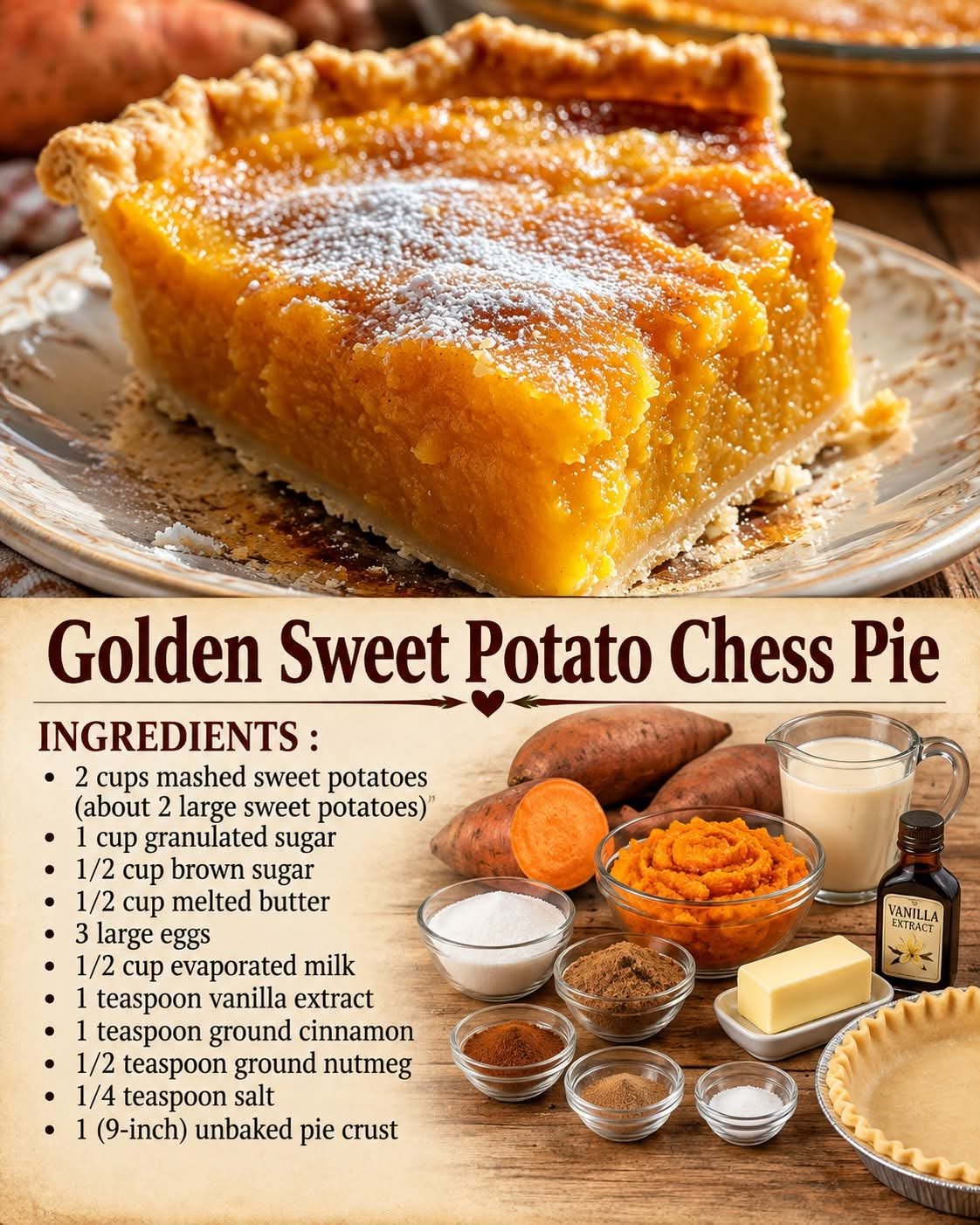
Golden Sweet Potato Chess Pie
Introduction
Golden Sweet Potato Chess Pie is a classic Southern-inspired dessert that brings together the comforting sweetness of baked sweet potatoes with the rich, custard-like texture of a traditional chess pie. It is simple, old-fashioned, and wonderfully satisfying, with a smooth golden filling that develops a lightly caramelized top as it bakes.
This pie is especially lovely during the fall and holiday seasons, but it is easy enough to prepare whenever you have a cooked sweet potato waiting in the kitchen. The sweet potato gives the filling a naturally earthy sweetness and beautiful color, while butter, sugar, vanilla, and warm spices create a familiar homemade flavor.
Serve it slightly warm, at room temperature, or chilled with whipped cream or a scoop of vanilla ice cream.
Ingredients
For the Pie
- 1 large sweet potato, cooked, peeled, and mashed
- 1 cup granulated sugar
- 1/2 cup unsalted butter, melted and slightly cooled
- 1 unbaked 9-inch pie crust
- 2 large eggs
- 1/2 cup evaporated milk or whole milk
- 1 teaspoon vanilla extract
- 1 tablespoon cornmeal
- 1 tablespoon all-purpose flour
- 1 tablespoon fresh lemon juice
- 1/4 teaspoon salt
- 1/2 teaspoon ground cinnamon
- 1/4 teaspoon ground nutmeg
- 1/4 teaspoon ground ginger, optional
For Serving
- Whipped cream
- Vanilla ice cream
- Light dusting of powdered sugar, optional
- A little cinnamon for garnish, optional
Instructions
Step 1: Prepare the Sweet Potato
Cook the sweet potato until completely tender. You can bake it at 400°F (200°C) for approximately 45 to 60 minutes, depending on its size, or boil it until soft.
Allow it to cool enough to handle, then remove the skin. Mash the flesh until very smooth. For an especially silky pie, press the mashed sweet potato through a fine sieve or blend it briefly.
Measure out 1 cup of mashed sweet potato for the filling.
Step 2: Prepare the Pie Crust
Place the unbaked 9-inch pie crust into a pie dish if it is not already prepared. Gently press it into the bottom and sides of the dish.
Crimp or decorate the edges as desired. Keep the crust chilled while you prepare the filling.
Step 3: Make the Filling
In a large mixing bowl, combine the mashed sweet potato and melted butter. Whisk until smooth.
Add the granulated sugar and mix thoroughly. Then add the eggs one at a time, whisking after each addition.
Pour in the evaporated milk, followed by the vanilla extract and lemon juice.
Add the cornmeal, flour, salt, cinnamon, nutmeg, and ginger. Whisk everything together until the mixture is smooth and evenly combined.
Do not overbeat the mixture. The goal is a creamy filling rather than a heavily aerated one.
Step 4: Fill the Crust
Pour the sweet potato mixture into the prepared pie crust.
Gently tap the pie dish against the counter once or twice to release any large air bubbles. Smooth the surface with a spatula if necessary.
Step 5: Bake
Preheat the oven to 350°F (175°C).
Place the pie on the center oven rack and bake for approximately 45 to 55 minutes.
The edges should be set while the center may still have a slight gentle jiggle. The filling will continue to firm as the pie cools.
If the crust begins becoming too brown before the filling is finished, loosely cover the edges with aluminum foil.
Step 6: Cool Completely
Remove the pie from the oven and place it on a cooling rack.
Allow it to cool for at least 2 hours before slicing. This resting time is important because the custard continues to set as it cools.
For an even firmer texture, refrigerate the pie for several hours before serving.
Method
The secret to a beautiful Sweet Potato Chess Pie is creating a smooth, balanced custard.
First, make sure the sweet potato is thoroughly cooked and mashed. Any large pieces can make the finished pie less creamy. Combining the sweet potato with melted butter creates the rich foundation of the filling.
The eggs provide structure, while the milk creates a softer custard texture. Cornmeal and flour are characteristic ingredients in many chess pie recipes and help give the filling its distinctive body.
A small amount of lemon juice is particularly important because it balances the sweetness. It does not make the pie taste strongly of lemon; instead, it keeps the rich filling from becoming overly heavy.
Bake the pie gently and avoid overbaking. The center should have a slight wobble when the pie first comes out of the oven.
The History of Chess Pie
Chess pie is one of the beloved old-fashioned pies associated with Southern American baking. Its exact origins are debated, but variations have been made for generations using simple pantry ingredients such as sugar, eggs, butter, flour or cornmeal, and sometimes milk or cream.
Sweet potato pie developed alongside the long history of sweet potatoes in Southern cooking. Sweet potatoes became an important ingredient in many American kitchens because they were versatile, inexpensive, filling, and naturally sweet.
Combining sweet potato with chess-pie-style custard creates a particularly comforting dessert. Instead of relying entirely on spices, the recipe allows the sweet potato, butter, and caramelized sugar flavors to remain at the center.
This style of pie is closely associated with family gatherings, Sunday dinners, Thanksgiving tables, Christmas celebrations, church suppers, and community gatherings.
Formation of the Pie
The formation of this pie happens in several layers of flavor.
The buttery crust provides the crisp foundation. Above it sits a smooth sweet potato custard filled with butter and sugar. During baking, the eggs gently set the filling while the sugar contributes to the golden surface.
The cornmeal adds subtle texture and helps distinguish the filling from an ordinary sweet potato custard. Cinnamon and nutmeg provide warmth without overwhelming the natural flavor of the sweet potato.
As the pie cools, the filling becomes firm enough to cut while remaining soft and creamy.
Tips for the Best Sweet Potato Chess Pie
Use a naturally sweet, fully cooked sweet potato for the best flavor.
For an exceptionally smooth filling, mash or puree the sweet potato before combining it with the other ingredients.
Let the melted butter cool slightly before adding the eggs.
Do not slice the pie immediately after baking. A freshly baked custard pie needs time to set.
For a deeper flavor, replace part of the granulated sugar with light brown sugar.
A teaspoon of vanilla can be increased slightly if you prefer a stronger vanilla flavor.
If you enjoy a more pronounced spice flavor, add a small pinch of ground cloves.
Serving Suggestions
Sweet Potato Chess Pie is delicious on its own, but several toppings make it even more special.
Serve a slice slightly warm with a spoonful of whipped cream. For a classic dessert combination, add a scoop of vanilla ice cream and allow it to melt slowly over the warm pie.
For holiday dinners, serve the pie at room temperature with lightly sweetened whipped cream.
A small sprinkle of cinnamon or powdered sugar can also provide a simple finishing touch.
Storage
Cover the cooled pie and refrigerate it for up to 4 days.
Because the filling contains eggs and milk, it should not be left at room temperature for an extended period.
The pie can be served chilled directly from the refrigerator or allowed to sit at room temperature briefly before serving.
Conclusion
Golden Sweet Potato Chess Pie is the kind of dessert that feels as though it belongs on a well-loved family table. It uses humble ingredients but transforms them into something rich, creamy, buttery, and deeply comforting.
The golden sweet potato filling, delicate spices, buttery crust, and lightly caramelized surface make every slice satisfying. It is a wonderful choice for Thanksgiving, Christmas, Sunday dinner, potlucks, or simply when you want an old-fashioned homemade pie.
For Sweet Potato Pie Lovers
If you love classic Southern desserts, this pie is a wonderful addition to your collection. It has the familiar comfort of sweet potato pie while incorporating the distinctive custard texture and subtle cornmeal character associated with chess pie.
It is simple enough for a beginner, yet special enough to serve to guests. Most importantly, it tastes homemade in the best possible way: warm, buttery, sweet, creamy, and nostalgic.