
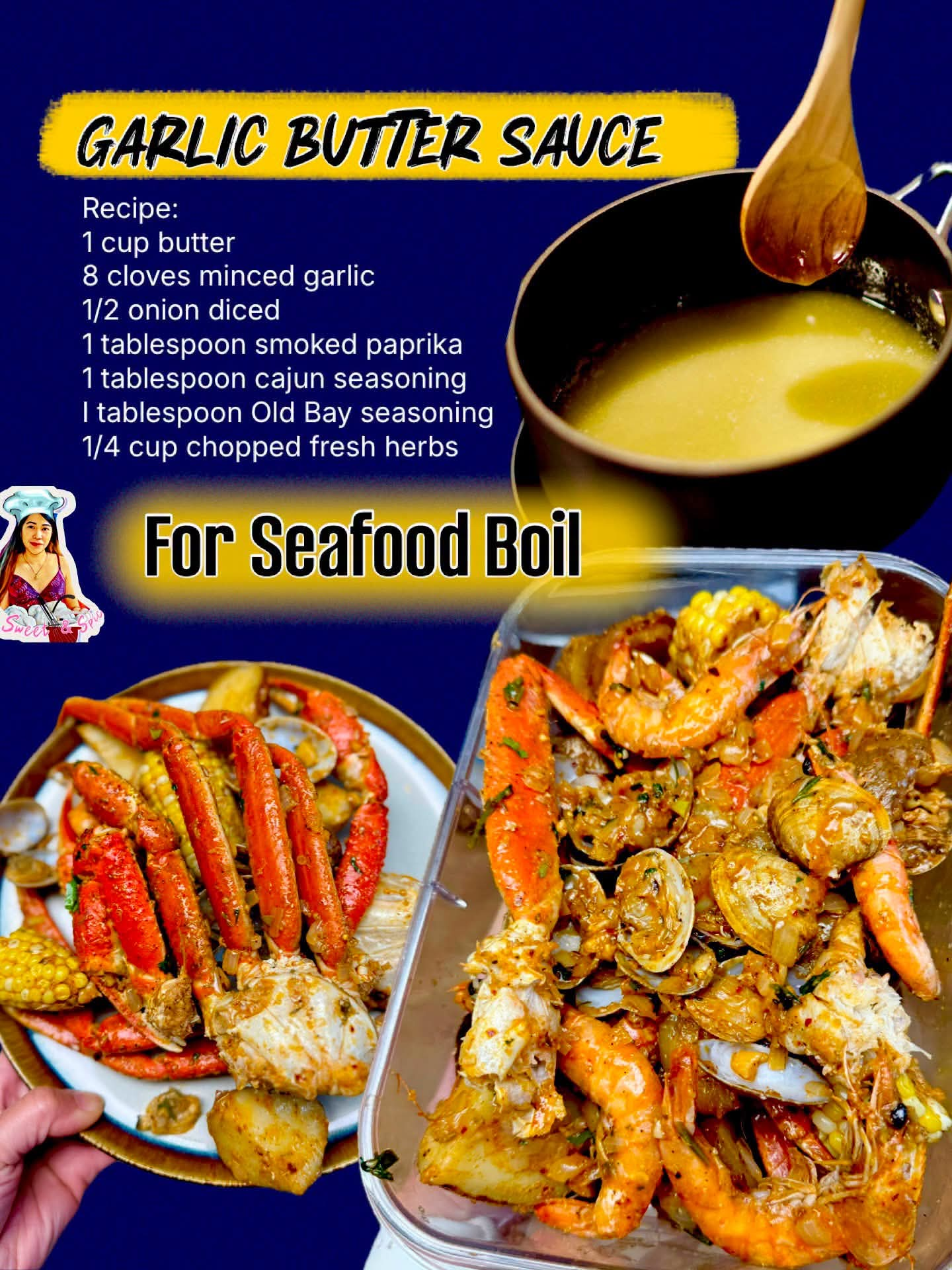
Homemade Seafood Boil with Salt-Free Seasoning and Garlic Butter Sauce
Introduction
A seafood boil is one of those meals that turns an ordinary dinner into a generous, flavorful feast. Crab legs, shrimp, clams or mussels, sweet corn, and tender potatoes are cooked until perfectly done and then coated in a rich homemade garlic butter sauce.
This version features a homemade salt-free seafood boil seasoning, allowing you to control the amount of salt added to the meal. The seasoning combines bay leaves, cayenne, mustard seeds, coriander, dill, paprika, garlic, herbs, black pepper, cloves, and other aromatic spices. The finished dish is bold, smoky, garlicky, buttery, and pleasantly spicy.
The recipe below makes approximately 5 pounds of seafood, making it excellent for a family dinner, weekend gathering, or seafood-loving crowd.
Salt-Free Seafood Boil Seasoning
Ingredients
- 7 dried bay leaves, crushed
- 2 tablespoons cayenne pepper
- 2 tablespoons mustard seeds
- 1 tablespoon ground coriander
- 1 teaspoon ground allspice
- 1 tablespoon ground dill
- 1 tablespoon garlic powder
- 1 tablespoon paprika
- 1 tablespoon red pepper flakes
- 1 teaspoon ground black pepper
- 1 teaspoon dried thyme
- 1 teaspoon dried oregano
- 1 teaspoon ground cloves
- 1 teaspoon onion powder
Method for Making the Seasoning
- Place the crushed bay leaves, cayenne pepper, mustard seeds, coriander, allspice, dill, garlic powder, paprika, red pepper flakes, black pepper, thyme, oregano, cloves, and onion powder in a bowl.
- Stir thoroughly until all of the spices are evenly distributed.
- If you prefer a finer seasoning, pulse the mixture briefly in a spice grinder. Do not grind it into a completely smooth powder if you want some texture from the mustard seeds.
- Transfer the seasoning to a clean, completely dry airtight jar.
- Label the jar and store it in a cool, dark, dry cupboard.
- Always use a dry spoon when measuring the seasoning so moisture does not enter the container.
Storage
For the best flavor, use the homemade seasoning within several months. Keep it tightly sealed and away from heat, sunlight, and humidity.
Because this is a salt-free seasoning, you can add salt separately according to your preference when preparing the seafood.
Homemade Garlic Butter Seafood Sauce
Ingredients
- 1 cup butter
- 8 cloves garlic, finely minced
- 1/2 medium onion, finely diced
- 1 tablespoon smoked paprika
- 1 tablespoon Cajun seasoning
- 1 tablespoon Old Bay seasoning or homemade salt-free seafood seasoning
- 1/4 cup fresh parsley or cilantro, chopped
Optional additions
For an even richer sauce, you can add:
- 1 tablespoon fresh lemon juice
- 1 teaspoon lemon zest
- 1/2 teaspoon red pepper flakes
- 1 tablespoon honey for a slightly sweet contrast
- 1 to 2 tablespoons seafood cooking liquid
- Additional cayenne pepper for extra heat
If using Old Bay or another commercial Cajun seasoning, remember that these products generally contain salt. If you specifically want the sauce to remain salt-free, use the homemade seasoning instead and add salt only if desired.
Method for Making the Garlic Butter Sauce
- Place a large skillet or saucepan over medium-low heat.
- Add the butter and allow it to melt slowly. Avoid using excessively high heat because butter can burn easily.
- Add the diced onion.
- Sauté the onion for approximately 3 to 5 minutes, stirring occasionally, until it becomes soft and translucent.
- Add the minced garlic.
- Cook the garlic for approximately 30 to 60 seconds, stirring constantly. Do not allow it to become dark brown or burnt.
- Add the smoked paprika, Cajun seasoning, and seafood boil seasoning.
- Stir everything together until the spices become incorporated into the melted butter.
- Reduce the heat to low and allow the sauce to gently cook for another 1 to 2 minutes.
- Remove the pan from the heat.
- Stir in the chopped fresh parsley or cilantro.
- Add lemon juice if desired and taste the sauce. Adjust the seasoning according to your preference.
The finished sauce should be buttery, aromatic, garlicky, and packed with spice.
Seafood Boil
Ingredients
Seafood and Vegetables
- 2 pounds crab legs
- 2 pounds clams or mussels
- 1 pound shrimp
- 4 ears corn, cut into smaller pieces
- 2 pounds potatoes, washed and cut into chunks
- Fried or smoked sausage, optional
- Homemade garlic butter sauce
Optional additions
You can also add:
- Lobster tails
- Crawfish
- Scallops
- Snow crab
- Dungeness crab
- Extra shrimp
- Lemon wedges
- Fresh parsley
- Additional butter sauce for dipping
Preparation of the Seafood
Before cooking, prepare each ingredient according to its needs.
Crab Legs
If using cooked crab legs, they only need to be heated thoroughly rather than cooked for an extended period.
Shrimp
Peel and devein the shrimp if desired. You can leave the shells and tails on for additional flavor and a more traditional seafood-boil presentation.
Clams and Mussels
Scrub the shells under cold running water. Remove any visible debris and discard any shellfish that remain open and do not close when gently tapped before cooking.
Potatoes
Wash and cut the potatoes into evenly sized pieces so they cook at approximately the same rate.
Corn
Remove the husks and cut each ear into several smaller pieces.
Cooking Method
This version uses steaming rather than boiling the seafood directly in a large pot.
Step 1: Cook the Potatoes
Place the potatoes in a steamer or large pot with a steaming rack.
Steam until they are beginning to become tender. Depending on their size and variety, this can take approximately 15 to 25 minutes.
Do not overcook them because they will be mixed with the sauce later.
Step 2: Add the Corn
Add the pieces of corn to the steamer.
Continue cooking until the corn becomes tender and the potatoes can easily be pierced with a fork.
Step 3: Steam the Shellfish
Add the clams or mussels and steam until their shells open.
Discard shellfish that remain closed after cooking.
Step 4: Add the Shrimp
Add the shrimp and cook until they become opaque and are cooked through. Shrimp cook quickly, so keep a close eye on them to prevent overcooking.
Step 5: Heat the Crab
Add the crab legs toward the end because they generally require less cooking time when already cooked.
Steam just until they are heated through.
Forming the Seafood Boil
Once everything is cooked, carefully drain the seafood and vegetables.
Transfer the potatoes, corn, crab legs, clams or mussels, and shrimp to a very large serving tray, roasting pan, wok, or large food-safe container.
Pour the warm garlic butter sauce generously over the seafood.
Using large spoons or tongs, gently toss everything together.
Take your time while mixing so the garlic butter sauce coats the seafood and vegetables without breaking apart the crab meat or potatoes.
For an especially flavorful result, allow everything to sit for approximately 5 minutes before serving. This gives the sauce time to cling to the ingredients.
Serving Method
Serve the seafood boil immediately while it is hot.
Arrange the seafood so that the crab legs, shrimp, shellfish, corn, and potatoes are easy to reach.
Serve with:
- Lemon wedges
- Extra garlic butter sauce
- Fresh chopped parsley
- Additional seafood seasoning
- Crusty bread for soaking up the sauce
For a casual gathering, place the seafood directly onto a large parchment-lined table or serving surface, provided the surface and food-handling setup are appropriate for serving food safely.
The History and Tradition of Seafood Boils
Seafood boils are strongly associated with coastal food traditions in the United States, particularly the Southern Gulf Coast and Atlantic coastal regions. They developed around the abundance of locally available seafood and the tradition of preparing large quantities of food for groups of people.
Different regions developed their own versions. Louisiana-style boils commonly feature crawfish, shrimp, crab, sausage, corn, and potatoes with bold seasoning. Low Country boils from the coastal Carolinas and Georgia often combine shrimp, corn, potatoes, and sausage. Other coastal communities developed their own combinations based on the seafood available locally.
The important idea behind all of these traditions is not simply the ingredients but the communal style of eating. Large quantities of food are cooked together, seasoned generously, placed on a table, and shared among family and friends.
Modern seafood boils have expanded far beyond their original regional traditions, with cooks creating their own sauces and combinations of seafood.
Formation of Flavor
The success of this recipe comes from building layers of flavor.
The butter provides richness and carries the spices throughout the dish.
The garlic and onion create the savory foundation.
The smoked paprika contributes color and a gentle smoky character.
The cayenne and red pepper flakes provide heat.
The mustard seeds, coriander, dill, and bay leaves bring aromatic complexity to the seasoning.
The thyme and oregano add herbal notes, while the small amount of clove and allspice contributes warmth.
The fresh parsley or cilantro added at the end gives the sauce a fresh finish.
Finally, lemon juice, if used, cuts through the richness of the butter and helps brighten the seafood.
Tips for the Best Seafood Boil
Do not overcook the seafood
Shrimp can become rubbery when cooked too long. Cook them only until opaque and firm.
Cut vegetables evenly
Potatoes of similar size cook more evenly, preventing some pieces from becoming mushy while others remain hard.
Keep the sauce at a gentle temperature
Garlic tastes bitter when burned. Cook it slowly over medium-low heat.
Taste before adding salt
Because the homemade seasoning is salt-free, you have complete control over the salt level. If using Old Bay or Cajun seasoning, taste the sauce before adding additional salt.
Use fresh garlic
Freshly minced garlic gives the butter sauce considerably more aroma and flavor than garlic powder alone.
Add lemon at the end
A little acidity helps balance the richness of the butter.
Make extra sauce
Seafood lovers often enjoy dipping the crab, shrimp, potatoes, and corn into additional warm garlic butter.
Variations for Seafood Lovers
Extra-Spicy Seafood Boil
Increase the cayenne pepper and red pepper flakes. You can also add a little hot sauce to the garlic butter.
Lemon Garlic Seafood Boil
Add the juice and zest of one or two lemons to the finished sauce for a brighter flavor.
Herb-Lover’s Seafood Boil
Increase the fresh parsley and add a small amount of fresh cilantro, green onion, or fresh dill.
Sausage Seafood Boil
Add sliced smoked or Cajun sausage for a heartier meal.
All-Seafood Version
Leave out the sausage and increase the shrimp, crab, lobster, crawfish, or other shellfish. This is ideal when you want the seafood itself to be the focus.
Make-Ahead Method
The salt-free seasoning can be prepared well in advance and stored in an airtight container.
The garlic butter sauce can also be prepared ahead of time. Allow it to cool, refrigerate it in a covered container, and gently reheat it before serving. Stir well after reheating.
For the best seafood texture, however, cook the seafood close to serving time.
Conclusion
This homemade seafood boil brings together everything that makes a shared seafood feast so enjoyable: tender seafood, sweet corn, hearty potatoes, aromatic spices, fresh herbs, and a rich garlic butter sauce.
The homemade salt-free seasoning gives you control over the flavor and sodium content while still providing plenty of spice and complexity. The garlic butter sauce then brings all the ingredients together, coating every piece with buttery garlic, smoky paprika, herbs, and Cajun-inspired seasoning.
Whether you prepare it with crab and shrimp alone, add clams or mussels, or build an enormous seafood feast with lobster and crawfish, the basic method remains simple: cook the ingredients carefully, prepare a flavorful sauce, combine everything while hot, and serve it generously for everyone to enjoy.
It is a recipe made for seafood lovers, family gatherings, weekend dinners, and anyone who enjoys sitting around a table and sharing a truly satisfying meal.