
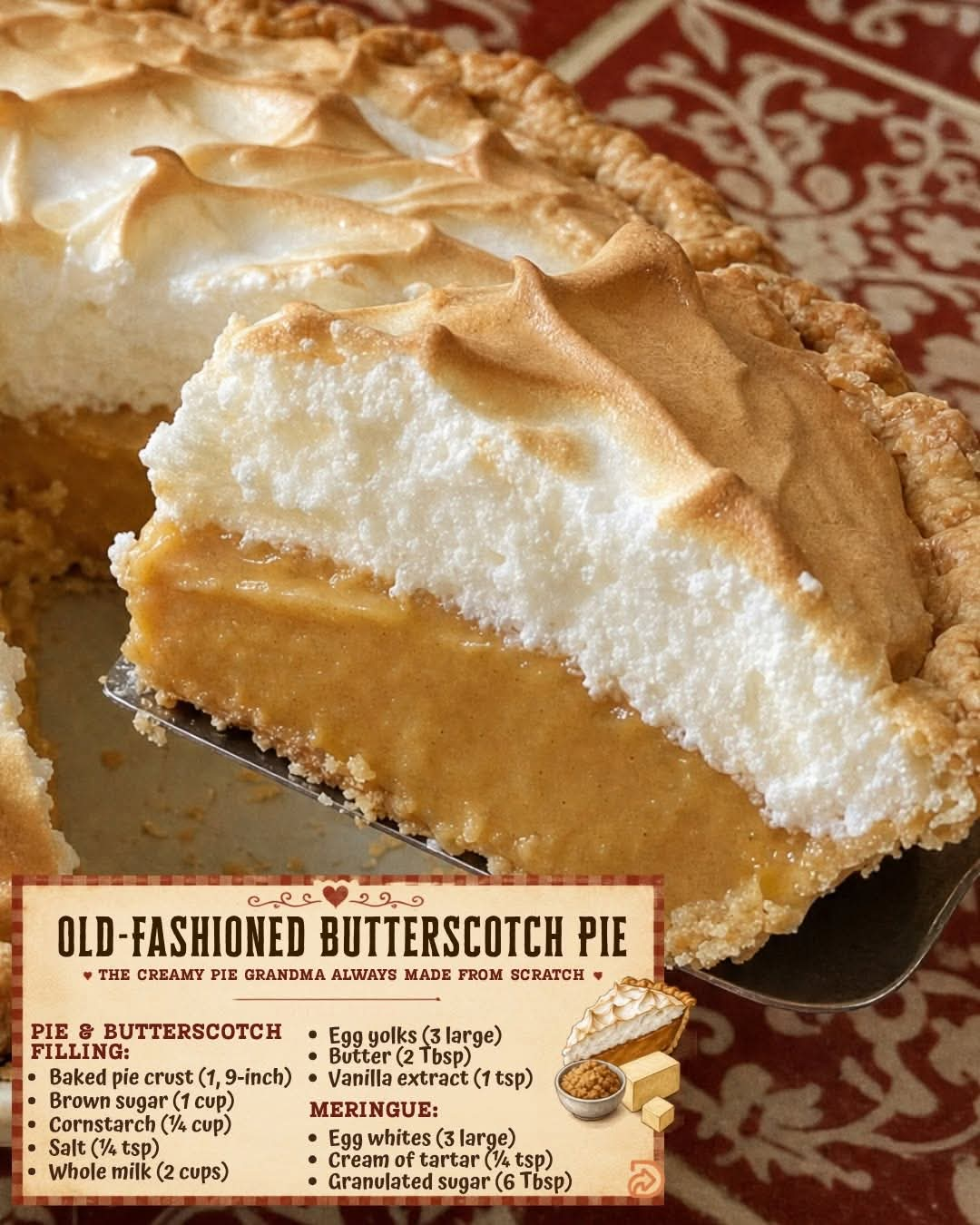
Old-Fashioned Butterscotch Pie with Homemade Meringue
Introduction
Old-Fashioned Butterscotch Pie is a classic homemade dessert that brings together a buttery, brown-sugar filling, a crisp baked pie crust, and a light, fluffy homemade meringue. It is the kind of pie that feels nostalgic and comforting, especially for anyone who remembers traditional desserts made from simple pantry ingredients.
The filling is prepared from scratch on the stovetop. Brown sugar provides the characteristic deep butterscotch flavor, while whole milk and egg yolks create a rich, creamy custard. Butter and vanilla are added at the end for extra richness and aroma. The warm filling is then topped with sweet meringue and briefly baked until beautifully golden.
This recipe is especially worth saving because homemade butterscotch pies with traditional meringue are becoming less common. It is an excellent dessert for Sunday dinners, holidays, family gatherings, or whenever you want an old-fashioned pie made the traditional way.
Recipe Information
Preparation time: About 25 minutes
Baking time: 10–15 minutes
Cooling time: At least 2–3 hours
Total time: Approximately 3 hours
Yield: 8 slices
Pie size: 9-inch pie
Ingredients
For the Pie Crust
- 1 baked 9-inch pie crust
You can use a homemade pastry crust or a prepared pie crust. Make sure the crust is completely baked before adding the filling.
For the Butterscotch Filling
- 1 cup packed brown sugar
- 1/4 cup cornstarch
- 1/4 teaspoon salt
- 2 cups whole milk
- 3 large egg yolks
- 2 tablespoons butter
- 1 teaspoon vanilla extract
For the Homemade Meringue
- 3 large egg whites
- 1/4 teaspoon cream of tartar
- 6 tablespoons granulated sugar
Instructions
Step 1: Prepare the Pie Crust
Begin with a fully baked 9-inch pie crust. If you are making the crust from scratch, bake it according to your preferred pastry recipe until the edges are golden and the bottom is cooked through.
Allow the crust to cool while preparing the filling.
Step 2: Combine the Dry Ingredients
Place the packed brown sugar, cornstarch, and salt into a medium saucepan.
Whisk everything together thoroughly. Breaking up any lumps in the brown sugar and cornstarch at this stage will help create a smoother filling.
Step 3: Add the Milk
Gradually whisk the whole milk into the brown-sugar mixture.
Add the milk slowly while whisking continuously. This helps prevent the cornstarch from forming lumps.
Step 4: Add the Egg Yolks
Separate the three eggs, placing the whites in a clean mixing bowl for the meringue.
Whisk the three egg yolks into the milk mixture until thoroughly combined.
Step 5: Cook the Butterscotch Custard
Place the saucepan over medium heat.
Cook the mixture while stirring constantly, making sure to scrape the bottom and corners of the saucepan as you stir.
Continue cooking until the mixture becomes noticeably thick and creamy. This usually takes several minutes.
Do not walk away from the saucepan while the custard is cooking. Constant stirring helps prevent scorching and keeps the filling smooth.
Step 6: Add Butter and Vanilla
Once the filling has thickened, remove the saucepan from the heat.
Immediately stir in the butter and vanilla extract.
Continue stirring until the butter has completely melted and the vanilla is evenly incorporated.
The finished filling should be smooth, glossy, thick, and creamy.
Step 7: Fill the Pie Crust
Pour the hot butterscotch filling into the prepared baked pie crust.
Smooth the surface gently with a spatula if necessary.
Keep the filling warm while preparing the meringue. The meringue is spread over the warm filling so that the two layers can properly come together during baking.
Method for Making the Meringue
Step 8: Beat the Egg Whites
Place the three egg whites in a clean, dry mixing bowl.
Add the cream of tartar.
Using an electric mixer, beat the egg whites until they become foamy and begin forming soft peaks.
Step 9: Add the Sugar Gradually
Gradually add the granulated sugar while continuing to beat the egg whites.
Do not add all of the sugar at once. Adding it gradually helps produce a smoother, more stable meringue.
Continue beating until the meringue becomes glossy and holds stiff peaks.
When you lift the beaters, the meringue should stand up firmly without collapsing.
Step 10: Top the Pie
Immediately spread the meringue over the warm butterscotch filling.
Spread it gently from the center toward the edges.
Make sure the meringue reaches all the way to the crust edges. Sealing the meringue against the crust helps reduce the chance of the meringue shrinking away from the edges while it cools.
For a traditional appearance, use the back of a spoon or a spatula to create attractive peaks and swirls in the meringue.
Baking Method
Step 11: Bake the Meringue
Preheat the oven to 350°F (175°C).
Place the pie in the oven and bake for approximately 10–15 minutes, or until the meringue is lightly golden.
Watch the pie carefully during the final minutes because meringue can go from lightly golden to overly browned relatively quickly.
The filling is already cooked before the pie enters the oven, so the main purpose of this final baking stage is to set and brown the meringue.
Step 12: Cool Completely
Remove the pie from the oven and place it on a cooling rack.
Allow it to cool completely before slicing.
For the cleanest slices and the best texture, refrigerate the cooled pie for a couple of hours before serving. This gives the butterscotch custard additional time to firm up.
Important Methods and Tips
Use Packed Brown Sugar
When measuring the brown sugar, pack it firmly into the measuring cup. Brown sugar is an important part of the flavor and structure of this pie, so accurate measurement matters.
Stir the Custard Constantly
The filling contains cornstarch and egg yolks, which means it can thicken quickly. Constant stirring prevents lumps and reduces the possibility of the custard sticking or scorching on the bottom of the saucepan.
Do Not Overcook the Filling
Once the filling has become thick and creamy, remove it from the heat. Overcooking can make a custard filling excessively thick or affect its smooth texture.
Use Room-Temperature Egg Whites
For the best meringue, allow the egg whites to come closer to room temperature before beating them. Room-temperature whites generally whip more easily and achieve greater volume.
Keep the Mixing Bowl Clean
Even a small amount of egg yolk, grease, or butter in the bowl can interfere with the egg whites becoming fluffy. Use a completely clean and dry bowl and beaters.
Add Sugar Slowly
Gradually incorporating the sugar produces a smoother meringue and helps the sugar dissolve into the whipped egg whites.
Seal the Meringue
Spread the meringue completely to the crust edge. This is an important traditional technique for helping keep the meringue attached to the pie as it cools.
The History of Butterscotch Pie
Butterscotch is traditionally associated with cooked brown sugar and butter, producing a rich flavor with notes of caramel, toasted sugar, and vanilla. The exact origin of the word “butterscotch” is debated, but the flavor became especially popular in British and American sweets and desserts.
Traditional American pies often relied on inexpensive ingredients that families could keep in their kitchens. Brown sugar, milk, eggs, butter, cornstarch, and flour or pastry could be transformed into a rich dessert without requiring expensive ingredients.
Butterscotch pie became part of the broader tradition of American cream and custard pies. Before modern packaged desserts became common, cooks frequently prepared pie fillings on the stovetop using eggs, milk, sugar, and starch. Homemade meringue was a natural finishing touch because the leftover egg whites could be transformed into a light, sweet topping.
This combination also illustrates an old-fashioned approach to cooking: nothing goes to waste. The egg yolks enrich the butterscotch custard while the leftover egg whites become the meringue.
Formation of the Pie
This pie is built in three distinct layers.
First layer: The baked pastry crust provides structure and a slightly crisp contrast to the soft filling.
Second layer: The homemade butterscotch custard forms the heart of the dessert. Brown sugar gives it its characteristic flavor, while milk and egg yolks provide richness and cornstarch gives the filling its thick, spoonable consistency.
Third layer: The meringue creates a soft, airy contrast to the dense custard underneath. Baking gives the surface a delicate golden color while keeping the interior light and fluffy.
When served properly chilled, the three components create a satisfying contrast between crisp pastry, creamy butterscotch custard, and tender meringue.
Serving Suggestions
Serve the pie chilled or slightly cool.
For an especially traditional presentation, cut the pie into eight wedges and serve it as it is. The homemade butterscotch flavor is rich enough that it does not require a complicated garnish.
It can also be served with:
- A small spoonful of whipped cream
- A light dusting of cinnamon
- A drizzle of homemade butterscotch sauce
- A few finely chopped toasted pecans
- A cup of coffee
- Hot tea
- A glass of cold milk
If adding toppings, keep them modest so they do not overpower the classic butterscotch flavor.
Storage
Cover the cooled pie and refrigerate it.
Because the filling contains milk and eggs and the pie is topped with homemade meringue, it should not be left at room temperature for extended periods.
For the best texture, enjoy the pie within a few days.
When storing, avoid pressing plastic wrap directly onto the meringue because it can stick to the surface. A pie container or loosely tented covering works better.
Common Problems and Solutions
The Filling Is Too Thin
The custard may not have been cooked long enough for the cornstarch to fully thicken. Return it to medium heat and continue cooking while stirring until it reaches a thick, creamy consistency.
The Filling Has Lumps
Lumps can occur if the cornstarch is not incorporated properly or if the mixture is not stirred continuously. Whisking the dry ingredients together thoroughly before adding the milk helps prevent this.
The Meringue Shrinks
Make sure the meringue reaches and touches the crust edges. Also avoid under-beating the egg whites.
The Meringue Weeps
Excess moisture can cause meringue to become watery. Make sure the sugar is incorporated gradually and the meringue is properly beaten. Spreading it over the warm filling and baking it promptly also helps.
The Meringue Browns Too Quickly
Ovens vary considerably. If the surface is browning faster than expected, watch it closely and remove the pie once the meringue reaches a light golden color.
Conclusion
Old-Fashioned Butterscotch Pie is a beautiful example of traditional homemade baking. It does not rely on complicated ingredients or elaborate decoration. Instead, its appeal comes from careful preparation and the combination of simple ingredients.
The brown sugar creates a deep butterscotch character, the homemade custard provides a smooth and creamy center, and the golden meringue adds a light, delicate finish. Together, these elements create a nostalgic dessert that deserves a place at the family table.
For Butterscotch Pie Lovers
If you love traditional cream pies, homemade custards, brown sugar desserts, and old-fashioned meringue pies, this recipe is one to keep in your collection.
It is the kind of dessert that reminds people of family kitchens, holiday meals, handwritten recipe cards, and desserts prepared patiently from scratch. Every slice offers a combination of buttery pastry, creamy butterscotch filling, and sweet homemade meringue.
The best part is that the recipe proves that a memorable dessert does not need to be complicated. With a few basic ingredients and the right methods, you can recreate the comforting taste of an old-fashioned butterscotch pie in your own kitchen.