
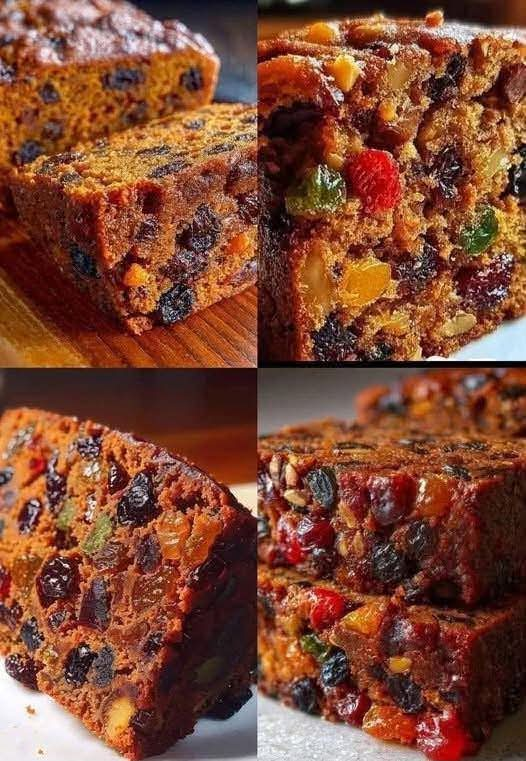
Moist Christmas Fruit Cake Recipe
Introduction
A beautifully moist fruit cake is one of those classic desserts that makes a celebration feel special. Packed with raisins, sultanas, dates, candied fruits, cranberries, apricots, and chopped nuts, this cake is rich with layers of flavor and texture.
The combination of brown sugar, molasses, orange zest, warm spices, butter, and soaked dried fruits gives the cake its deep color, fragrant aroma, and wonderfully moist crumb. It is ideal for Christmas, holidays, family gatherings, afternoon tea, or any occasion when you want a traditional homemade cake.
One of the secrets to a truly moist fruit cake is allowing the dried fruits enough time to absorb the soaking liquid. The fruit becomes plump and tender, while the soaking liquid contributes additional flavor to the finished cake.
Ingredients
For the Fruit Mix
- 1 cup raisins
- 1 cup sultanas
- 1 cup chopped dates
- 1 cup mixed candied fruits, such as red, green, and yellow
- 1/2 cup dried cranberries
- 1/2 cup dried apricots, finely chopped
- 1/2 cup mixed nuts, such as almonds, cashews, and walnuts, chopped
- 1 cup dark rum, brandy, or fruit juice
For a completely alcohol-free cake, use orange juice, apple juice, or a mixture of orange juice and water.
For the Cake Batter
- 250 g unsalted butter, softened
- 1 cup brown sugar, firmly packed
- 4 large eggs, at room temperature
- 1 1/2 cups all-purpose flour
- 1 teaspoon baking powder
- 1/2 teaspoon baking soda
- 1 teaspoon ground nutmeg
- 1 teaspoon ground cinnamon
- 1/2 teaspoon allspice or mixed spice
- Zest of 1 orange
- 1/4 cup fresh orange juice
- 1 teaspoon vanilla extract
- 2 tablespoons molasses or dark caramel syrup
Optional Additions
- 1 tablespoon lemon zest
- 1/2 teaspoon ground ginger
- 1/4 teaspoon ground cloves
- 2 tablespoons chopped pecans
- 2 tablespoons chopped walnuts
- 1 tablespoon honey for additional moisture
Preparation of the Fruit
The fruit mixture is the heart of this cake, so preparing it properly is important.
Place the raisins, sultanas, chopped dates, candied fruits, dried cranberries, dried apricots, and chopped nuts in a large bowl.
Pour over the rum, brandy, or fruit juice. Stir thoroughly so that the liquid coats the fruit.
Cover the bowl and allow the mixture to soak.
For a quick method, soak it for at least 2 hours.
For a richer and more flavorful fruit cake, soak the fruit overnight in the refrigerator.
If you have time to prepare the cake several days in advance, the fruit can be soaked longer, provided it is stored safely and refrigerated when appropriate.
Before adding the fruit to the batter, bring the mixture to room temperature and stir well.
Instructions
Step 1: Prepare the Oven
Preheat the oven to 160°C (320°F).
Grease a deep 8-inch round cake pan or a similar-sized deep square pan. Line the bottom and sides with parchment paper.
Because fruit cake is dense and contains a large amount of dried fruit, baking it at a moderate temperature helps prevent the outside from becoming too dark before the center is fully cooked.
Step 2: Prepare the Dry Ingredients
In a medium bowl, combine the flour, baking powder, baking soda, cinnamon, nutmeg, and allspice.
Whisk everything together until evenly distributed.
Set aside.
Step 3: Cream the Butter and Sugar
Place the softened butter and brown sugar in a large mixing bowl.
Beat for several minutes until the mixture becomes smooth, creamy, and slightly lighter in texture.
Brown sugar adds moisture and gives the cake a deeper caramel-like flavor.
Step 4: Add the Eggs
Add the eggs one at a time, beating well after each addition.
If the mixture looks slightly curdled, do not worry. A small amount of flour can be added to help bring the batter together.
Add the vanilla extract and mix again.
Step 5: Add the Orange and Molasses
Add the orange zest, orange juice, and molasses or dark caramel syrup.
Mix gently until incorporated.
The orange zest provides fresh citrus fragrance, while the molasses gives the cake its characteristic dark, rich flavor.
Step 6: Add the Dry Ingredients
Gradually add the flour mixture to the wet ingredients.
Fold gently using a spatula or wooden spoon.
Do not overmix. Stop as soon as the flour is incorporated.
Overmixing can make the cake heavier and less tender.
Step 7: Add the Soaked Fruit
Add the prepared fruit and nut mixture.
Fold carefully until the dried fruits and nuts are evenly distributed throughout the batter.
Make sure there are no large pockets of fruit concentrated in one area.
The finished batter should be thick and rich.
Step 8: Fill the Cake Pan
Transfer the batter into the prepared cake pan.
Spread the surface evenly with a spatula.
Tap the pan gently on the counter once or twice to remove large air pockets.
Smooth the top.
Step 9: Bake
Place the cake in the center of the preheated oven.
Bake for approximately 1 hour 30 minutes to 2 hours, depending on the depth and size of the pan and the individual oven.
Begin checking the cake toward the end of the baking time.
Insert a wooden skewer or cake tester into the center. It should come out clean or with a few moist crumbs attached. It should not have wet batter on it.
If the top begins becoming too dark before the center is finished, loosely cover the cake with aluminum foil and continue baking.
Step 10: Cool Completely
Remove the cake from the oven and allow it to cool in the pan for approximately 15 to 20 minutes.
Carefully remove it from the pan and transfer it to a wire rack.
Allow it to cool completely before slicing.
Fruit cake becomes easier to cut and develops a better texture as it cools.
Traditional Moistening Method
For an especially moist and flavorful cake, you can brush the cooled cake with a small amount of rum, brandy, or fruit juice.
Use a pastry brush to lightly coat the surface.
Do not saturate the cake.
If using alcohol, the cake can be wrapped tightly in parchment paper and then foil and stored in a cool place or refrigerator. Additional small amounts of liquid can be brushed onto the cake periodically according to your preferred style.
For an alcohol-free version, use orange juice or apple juice.
Method for the Best Texture
The most important part of making fruit cake is controlling moisture.
First, soak the dried fruits so they become soft and plump.
Second, use room-temperature butter and eggs so the batter combines evenly.
Third, avoid overmixing after adding the flour.
Fourth, bake slowly at a moderate temperature.
Finally, allow the cake to cool completely before cutting.
These steps help create a dense but tender cake rather than one that is dry or crumbly.
History of Fruit Cake
Fruit cake has a long history in European baking traditions. Cakes containing dried fruits, nuts, spices, and sweeteners developed from older preserved-fruit and festive breads.
Dried fruits were especially valuable because they could be stored for long periods, making them useful ingredients during winter and important celebrations.
As international trade expanded, ingredients such as dried citrus peel, spices, sugar, and dried fruits became more widely available. Fruit cakes eventually developed into many regional styles.
Holiday fruit cakes became particularly associated with Christmas and other winter celebrations in Britain and throughout countries influenced by British baking traditions.
Different families developed their own recipes, often changing the types of dried fruits, nuts, spices, and soaking liquids according to what was available.
Formation of the Cake
The structure of this fruit cake comes from several components working together.
The butter provides richness and helps create a tender texture.
The brown sugar contributes sweetness, moisture, and caramel notes.
The eggs provide structure and help bind the ingredients together.
The flour forms the basic framework of the cake.
Baking powder and baking soda provide controlled leavening.
The dried fruits contribute natural sweetness and moisture.
The nuts provide texture and a pleasant contrast to the soft fruit.
Orange zest and juice brighten the rich flavors, while cinnamon, nutmeg, and allspice create the warm aroma associated with traditional holiday baking.
Molasses or dark caramel syrup contributes color and depth.
How to Keep Fruit From Sinking
If your fruit tends to sink toward the bottom of the cake, make sure the batter is thick enough to support it.
Drain excess soaking liquid if there is a large amount remaining.
You can also toss the soaked fruit lightly with a small amount of the measured flour before folding it into the batter.
Do not use excessive flour, as this can make the cake dry.
How to Store the Cake
Once completely cooled, wrap the cake tightly in parchment paper or plastic wrap and place it in an airtight container.
For short-term storage, keep it in a cool, dry place if the ingredients and local conditions allow.
For longer storage, refrigeration is recommended.
Before serving, allow a refrigerated fruit cake to come closer to room temperature. This softens the butter and allows the flavors to become more pronounced.
Serving Suggestions
Slice the cake into thin or medium-sized portions because it is rich and packed with fruit.
Serve it with:
- A cup of tea
- Coffee
- Hot chocolate
- Warm milk
- Vanilla ice cream
- Whipped cream
- Custard
- Fresh orange slices
For a festive presentation, dust the top lightly with powdered sugar or decorate it with whole nuts and additional candied fruit.
Tips for Success
- Use good-quality dried fruits because they make up a large portion of the cake.
- Do not skip soaking the fruit if you want a particularly moist result.
- Bring the butter and eggs to room temperature before beginning.
- Measure flour carefully. Too much flour can make fruit cake dry.
- Fold the fruit into the batter gently.
- Bake at a moderate temperature rather than using very high heat.
- Check the cake with a skewer before removing it from the oven.
- Do not slice the cake while it is still hot.
- For an even richer flavor, prepare the cake a day before serving.
- Store the finished cake properly in an airtight container so it retains its moisture.
Variations
Alcohol-Free Fruit Cake
Replace the rum or brandy with orange juice, apple juice, or grape juice. This creates a family-friendly version while keeping the fruit moist and flavorful.
Citrus Fruit Cake
Add extra orange zest along with a little lemon zest. The citrus balances the richness of the butter and dried fruit.
Nutty Fruit Cake
Increase the nuts to 3/4 cup or 1 cup and use a combination of walnuts, almonds, pecans, and cashews.
Extra-Spiced Fruit Cake
For a warmer holiday flavor, add small amounts of ground ginger and cloves along with the cinnamon, nutmeg, and allspice.
Conclusion
This moist fruit cake is a traditional-style celebration cake filled with rich dried fruits, nuts, warm spices, citrus, brown sugar, and butter. The soaking process gives the fruit a soft texture, while slow baking helps preserve the cake’s moisture.
It is the kind of dessert that can become a family tradition. Prepare it for Christmas, holidays, birthdays, afternoon tea, or whenever you want a rich homemade cake filled with old-fashioned flavor.
For the best experience, allow the cake to rest after baking so the flavors can settle and develop. A slice served at room temperature with a warm drink makes a simple but satisfying treat.
For Fruit Cake Lovers
If you love rich, traditional cakes filled with dried fruit and warm spices, this recipe is worth keeping. It is especially appealing to anyone who enjoys old-fashioned holiday baking and desserts that become even more flavorful after resting.
The combination of soft raisins, sweet dates, tangy cranberries, chewy apricots, colorful candied fruit, crunchy nuts, fragrant spices, and orange creates a cake with something different in every bite.
This is a fruit cake made for sharing, celebrating, and creating memories around the table.