
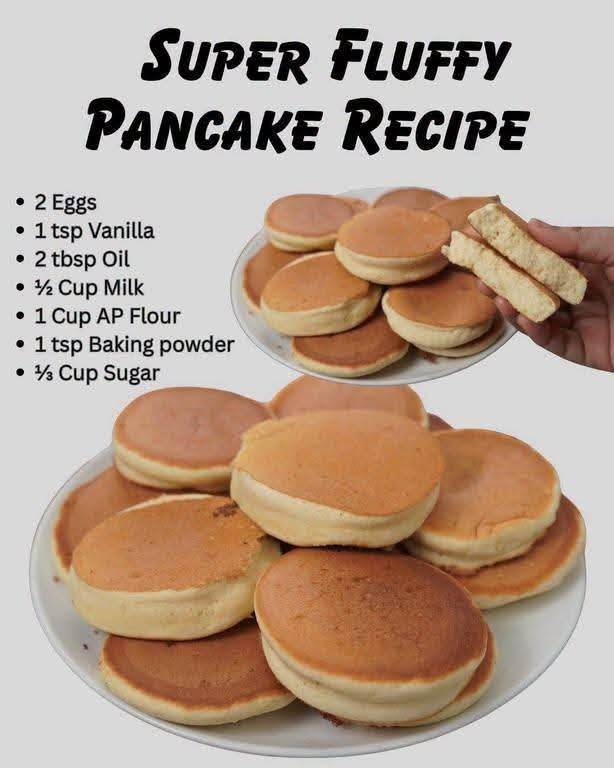
Super Fluffy Pancake Recipe: Soft, Tall, and Delicious
Introduction
There is something truly special about waking up to a plate of warm, homemade pancakes. These super fluffy pancakes are soft, tall, light, and wonderfully tender, making them the perfect breakfast for weekends, holidays, or any morning when you want something comforting and delicious.
Unlike ordinary pancakes, this recipe uses separated eggs to create an especially airy texture. The egg whites are whipped until fluffy and gently folded into the batter, helping the pancakes rise beautifully while keeping their centers soft and delicate.
With simple pantry ingredients such as flour, milk, eggs, vanilla, and sugar, you can prepare a delicious breakfast without complicated techniques or expensive ingredients. Serve them with maple syrup, fresh fruit, honey, or a little butter for a breakfast everyone will love.
Whether you are cooking for your family, preparing a special weekend brunch, or simply craving something sweet, these fluffy pancakes are sure to become a favorite.
Ingredients
Preparation time: 15 minutes
Cooking time: 15–20 minutes
Total time: Approximately 35 minutes
Servings: 3–4 people
Difficulty: Easy
Main Ingredients
- 2 large eggs, separated into yolks and whites
- 1 teaspoon vanilla extract
- 2 tablespoons vegetable oil
- 1/2 cup milk
- 1 cup all-purpose flour
- 1 teaspoon baking powder
- 1/3 cup granulated sugar
Optional Toppings
- Maple syrup
- Fresh strawberries, blueberries, or banana slices
- Powdered sugar
- Honey
- Butter
- Whipped cream
- Chocolate chips
- A spoonful of fruit jam
Instructions
Step 1: Prepare the Eggs
Carefully separate the two eggs, placing the yolks in one bowl and the whites in another.
Make sure the bowl containing the egg whites is clean and completely free of grease. Even a small amount of egg yolk can prevent the whites from whipping properly.
Set both bowls aside while you prepare the remaining ingredients.
Step 2: Mix the Egg Yolks
In a medium-sized mixing bowl, whisk the egg yolks with the sugar until the mixture becomes smooth and slightly lighter in color.
Add the vanilla extract, vegetable oil, and milk. Whisk everything together until the ingredients are fully combined.
The mixture should look creamy and smooth, with no visible streaks of oil.
Step 3: Combine the Dry Ingredients
In a separate bowl, combine the all-purpose flour and baking powder.
Whisk briefly to distribute the baking powder evenly throughout the flour. This helps the pancakes rise consistently during cooking.
Gradually add the dry ingredients to the egg yolk mixture.
Stir gently until a thick batter forms. Avoid overmixing, because excessive mixing can develop the gluten in the flour and make the finished pancakes less tender.
A few small lumps are perfectly acceptable.
Step 4: Whip the Egg Whites
Using a clean electric mixer or hand whisk, beat the egg whites until they become foamy.
Continue beating until soft peaks form. When you lift the whisk, the egg whites should hold a soft peak that gently bends over.
For an especially airy texture, you can continue beating toward medium peaks, where the whites hold their shape without becoming dry or grainy.
Do not overbeat them. Dry, clumpy egg whites are harder to fold into the batter evenly.
Step 5: Fold the Egg Whites into the Batter
Add approximately one-third of the whipped egg whites to the pancake batter and stir gently to loosen it.
Next, add the remaining egg whites in two portions.
Using a spatula, gently lift the batter from the bottom of the bowl and fold it over the egg whites. Rotate the bowl as you work until the mixture is mostly combined.
Try to preserve as much air as possible. The finished batter should look light, thick, and airy.
Do not vigorously whisk or stir the mixture after adding the whipped whites, as this will remove the air that makes the pancakes fluffy.
Step 6: Preheat the Pan
Place a nonstick skillet or griddle over low to medium-low heat.
Lightly grease the surface with a little vegetable oil or butter, then wipe away any excess with a paper towel.
Allow the pan to warm evenly before adding the batter.
A pan that is too hot may brown the outside before the inside has time to cook. Gentle heat is the secret to tall, soft pancakes with fully cooked centers.
Step 7: Cook the Pancakes
Spoon approximately 2–3 tablespoons of batter into the pan for each pancake.
For thicker pancakes, add the batter in a small mound rather than spreading it widely. Leave enough room between pancakes so they can cook evenly.
Cover the pan with a lid and cook for approximately 2–4 minutes, checking the bottoms occasionally.
When the edges begin to look set and the underside is golden brown, carefully flip each pancake using a thin spatula.
Cook the second side for another 2–3 minutes, or until the pancakes are golden and the centers are fully cooked.
Adjust the heat as needed. If the pancakes brown too quickly, reduce the temperature.
Step 8: Serve Warm
Transfer the finished pancakes to a serving plate.
If you are cooking several batches, keep the cooked pancakes warm in a low-temperature oven while you finish the remaining batter.
Serve immediately with your favorite toppings. Maple syrup and butter create a classic combination, while fresh berries add brightness and a naturally sweet flavor.
Cooking Method
This recipe uses the separated-egg method, a technique that creates a lighter pancake texture by incorporating air into the egg whites before mixing them into the batter.
The baking powder provides additional lift as the pancakes cook. Meanwhile, the milk adds moisture, the egg yolks contribute richness, the oil helps keep the crumb tender, and the sugar encourages a lightly golden exterior.
Cooking the pancakes over gentle heat allows the batter to rise and the centers to cook without burning the outside.
For the best results, use fresh baking powder, fold the egg whites carefully, and avoid pressing down on the pancakes with your spatula.
The History of Pancakes
Pancakes are among the oldest and most widely enjoyed foods in the world. Versions of flat cakes made from grains, liquids, and eggs have been prepared for centuries across many different cultures.
Ancient cooks used simple mixtures of ground grains and liquids to create cakes cooked on hot stones or heated surfaces. Over time, ingredients and techniques evolved, producing many different styles of pancakes.
In Europe, pancakes became associated with everyday home cooking and traditional celebrations. In the United States, pancakes developed into a popular breakfast staple, commonly served in stacks with butter and maple syrup.
Modern recipes vary from thin crepes to thick buttermilk pancakes and exceptionally airy soufflé-style pancakes.
This super fluffy version combines familiar homemade pancake ingredients with the technique of whipping egg whites, creating a light texture that feels a little more special than an ordinary breakfast pancake.
Formation and Science Behind Fluffy Pancakes
The beautiful height and soft texture of these pancakes come from several important factors.
1. Whipped egg whites
Beating the egg whites introduces tiny air bubbles into the mixture. When folded into the batter, these bubbles help create a lighter structure.
2. Baking powder
Baking powder releases carbon dioxide when activated by moisture and heat. These gas bubbles expand during cooking, helping the pancakes rise.
3. Gentle folding
Carefully folding the egg whites into the batter preserves the air needed for a delicate crumb. Overmixing can cause the batter to lose volume.
4. Balanced moisture
Milk hydrates the flour and helps create a smooth batter. The egg yolks and oil contribute richness and tenderness.
5. Controlled cooking temperature
Low to medium-low heat gives the pancakes enough time to cook through while developing a golden surface. Excessively high heat can leave the centers undercooked.
Together, these elements create pancakes that are soft inside, lightly golden outside, and noticeably taller than many traditional versions.
Tips for Perfect Results
- Use room-temperature eggs: They are generally easier to whip and incorporate smoothly.
- Keep the egg whites clean: Avoid getting any yolk into the whites.
- Measure the flour accurately: Too much flour can make the pancakes heavy.
- Do not overmix: A few small lumps are better than a tough batter.
- Fold gently: Preserve the air in the whipped egg whites.
- Keep the pan at a moderate temperature: Slow cooking helps the centers cook completely.
- Use a lid: Covering the pan helps heat circulate around the thick batter.
- Flip only when ready: Wait until the underside is golden and the edges are beginning to set.
- Cook the batter soon after mixing: The whipped egg whites gradually lose volume as they stand.
Delicious Variations
1. Vanilla Fluffy Pancakes
Add an extra 1/2 teaspoon of vanilla extract for a stronger vanilla aroma. Serve with butter and maple syrup.
2. Chocolate Chip Pancakes
Sprinkle a few chocolate chips onto each pancake immediately after spooning the batter into the pan. Press them in lightly before cooking.
3. Berry Pancakes
Serve with fresh strawberries, raspberries, or blueberries. You can also add a small handful of berries to the batter, folding them in carefully to avoid deflating it.
4. Cinnamon Sugar Pancakes
Add 1/2 teaspoon of ground cinnamon to the dry ingredients. The warm spice pairs beautifully with maple syrup and sliced apples.
5. Honey Butter Pancakes
Mix softened butter with a little honey and spread it over the warm pancakes just before serving.
6. Lemon Vanilla Pancakes
Add a little finely grated lemon zest to the egg yolk mixture for a fresh citrus flavor that complements the vanilla.
Serving Suggestions
These pancakes are versatile enough for an everyday breakfast or a special brunch.
For a classic breakfast, stack them on a plate with butter and warm maple syrup.
For a fruit-filled breakfast, serve them with sliced bananas, strawberries, and blueberries.
For a more indulgent treat, add whipped cream, chocolate chips, or a drizzle of chocolate sauce.
For a simple afternoon snack, enjoy them warm with honey or fruit preserves and a cup of tea or coffee.
You can also serve smaller pancakes as part of a brunch platter alongside fresh fruit, yogurt, and scrambled eggs.
Storage and Reheating
Refrigeration: Allow leftover pancakes to cool, then place them in an airtight container. Refrigerate for up to 3 days.
Freezing: Arrange the cooled pancakes in a single layer until frozen, then transfer them to a freezer-safe container with parchment paper between the layers. Freeze for up to 2 months for best quality.
Reheating: Warm refrigerated or frozen pancakes in a microwave, toaster, or skillet until heated through. A skillet or toaster can help restore a lightly golden exterior.
The pancakes are at their fluffiest immediately after cooking, so serve them fresh whenever possible.
Frequently Asked Questions
Why aren’t my pancakes fluffy?
The egg whites may not have been whipped enough, the batter may have been overmixed, or the baking powder may have lost its effectiveness. Make sure to fold the whites gently and cook over moderate heat.
Can I make the batter ahead of time?
It is best to cook the batter soon after preparing it because the whipped egg whites gradually lose their volume. For convenience, measure the dry ingredients ahead of time and separate the eggs just before mixing.
Why do my pancakes brown too quickly?
Your skillet may be too hot. Reduce the heat and allow the pancakes to cook slowly so their centers have enough time to set.
Can I replace the vegetable oil with butter?
Yes. Use the same amount of melted butter, cooled slightly before mixing it into the egg yolks. It will provide a richer, buttery flavor.
Can I make smaller pancakes?
Absolutely. Use 1–2 tablespoons of batter per pancake. Smaller pancakes are easier to flip and work well for children or brunch platters.
How can I tell when the pancakes are fully cooked?
The outside should be golden, the edges should be set, and the center should no longer look wet or raw. If you are unsure, make one test pancake and adjust the cooking temperature and time.
Conclusion
These super fluffy pancakes prove that a few simple ingredients can create something truly delicious. By separating the eggs, whipping the whites, folding them carefully into the batter, and cooking everything over gentle heat, you can make pancakes that are soft, airy, tall, and full of homemade flavor.
The recipe is easy enough for beginners but special enough to serve to guests. You can keep it simple with butter and syrup or personalize each serving with fruit, cinnamon, chocolate chips, or honey.
Once you master the technique, these pancakes can become a dependable favorite for relaxed weekend mornings, family breakfasts, and special occasions.
For the Love of Homemade Pancakes
There is a special kind of comfort in sharing a warm stack of pancakes around the breakfast table. Their delicate texture, sweet vanilla aroma, and golden edges make every bite feel like a little homemade celebration.
Whether you prepare them for your children, your partner, your friends, or simply yourself, these fluffy pancakes are a wonderful reminder that delicious food does not have to be complicated.
Make a fresh batch, add your favorite toppings, and enjoy every soft, tender bite.
Final Method Summary
- Separate the eggs.
- Whisk the yolks with sugar, vanilla, oil, and milk.
- Combine the flour and baking powder, then mix them into the wet ingredients.
- Whip the egg whites until soft to medium peaks form.
- Gently fold the whites into the batter.
- Cook small portions in a lightly greased skillet over low to medium-low heat.
- Cover, cook until the bottoms are golden, flip, and cook the other sides.
- Serve warm with your favorite toppings.
The secret to success: Whipped egg whites, gentle folding, and patient cooking are what make these pancakes especially soft, tall, and delicious.