
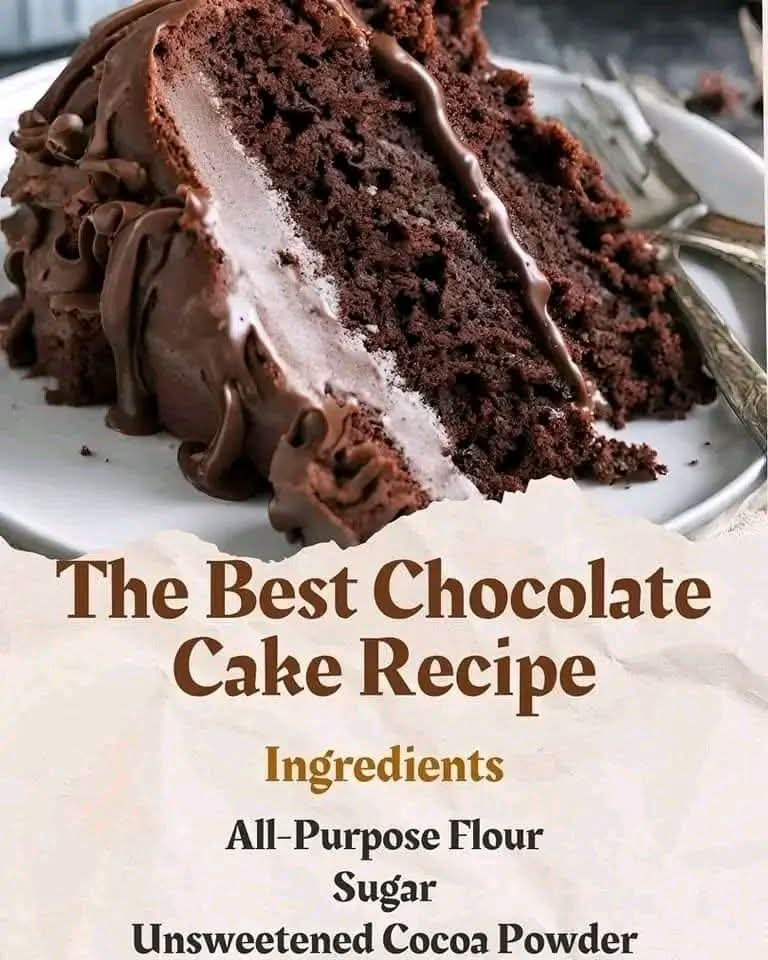
Rich and Moist Homemade Chocolate Cake
Introduction
There is something wonderfully comforting about a homemade chocolate cake. This rich and moist chocolate cake is simple enough for an everyday dessert but delicious enough for birthdays, celebrations, family gatherings, holidays, and special occasions.
The cake has a deep chocolate flavor, a soft and tender crumb, and a wonderfully moist texture. The secret is the combination of unsweetened cocoa powder, a little espresso powder, vegetable oil, and boiling water. The espresso does not make the cake taste like coffee; instead, it helps intensify the chocolate flavor.
The batter is surprisingly easy to prepare, and once the cakes are baked and completely cooled, they can be covered with a smooth chocolate buttercream frosting for a classic bakery-style finish.
Ingredients
For the Chocolate Cake
- 2 cups all-purpose flour, about 240 g
- 2 cups granulated sugar, about 396 g
- 3/4 cup unsweetened cocoa powder, about 63 g
- 2 teaspoons baking powder
- 1 1/2 teaspoons baking soda
- 1 teaspoon kosher salt
- 1 teaspoon espresso powder, homemade or store-bought
- 1 cup milk, about 227 g
- 1/2 cup vegetable or canola oil, about 99 g
- 2 large eggs
- 2 teaspoons vanilla extract
- 1 cup boiling water, about 227 g
For the Chocolate Buttercream Frosting
- 1 cup unsalted butter, softened
- 3 1/2 to 4 cups powdered sugar
- 3/4 cup unsweetened cocoa powder
- 1 teaspoon vanilla extract
- 1/4 teaspoon salt
- 1/3 to 1/2 cup milk or heavy cream, as needed
- 2 tablespoons melted chocolate, optional, for an even deeper chocolate flavor
Equipment
- Two 9-inch round cake pans
- Large mixing bowl or stand mixer
- Whisk
- Electric mixer
- Measuring cups and spoons
- Rubber spatula
- Wire cooling rack
- Cake plate or serving stand
Preparation
Preheat the oven to 350°F (175°C).
Prepare two 9-inch round cake pans. Lightly grease the pans with butter or baking spray, then dust them lightly with flour. For easier removal, you can also place a round piece of parchment paper in the bottom of each pan.
Make sure your ingredients are measured accurately before beginning. Because this batter becomes quite thin after the boiling water is added, having the prepared pans ready is important.
Method 1: Preparing the Dry Ingredients
Add the flour, granulated sugar, cocoa powder, baking powder, baking soda, salt, and espresso powder to a large mixing bowl.
Whisk everything together thoroughly until the cocoa powder is evenly distributed and there are no visible lumps.
If your cocoa powder is particularly lumpy, sift the flour and cocoa powder before combining them with the remaining dry ingredients. This will help create a smoother cake batter.
Method 2: Adding the Wet Ingredients
Add the milk, vegetable oil, eggs, and vanilla extract to the dry ingredients.
Mix on medium speed until the ingredients are well combined and the batter looks smooth.
If you are using a stand mixer, use the paddle attachment and avoid overmixing once the flour has been incorporated.
At this point, the batter will be relatively thick.
Method 3: Adding the Boiling Water
Carefully pour the boiling water into the batter while mixing on low speed.
The batter will become much thinner. This is completely normal and is one of the characteristics of this style of chocolate cake.
The hot water helps hydrate the cocoa powder and produces a soft, moist crumb. Mix only until the water has been incorporated and the batter is smooth.
Be careful when working with the boiling water.
Method 4: Filling the Cake Pans
Divide the batter evenly between the two prepared 9-inch cake pans.
For the most even layers, you can weigh the batter and divide it equally between the pans.
Gently tap the pans against the counter once or twice to release any large air bubbles.
Do not tap them excessively because the batter is thin.
Method 5: Baking
Place the cake pans in the preheated oven.
Bake for approximately 30 to 35 minutes.
Begin checking the cakes around the 30-minute mark. Insert a toothpick or cake tester into the center of each cake. The cake is ready when the tester comes out clean or with a few moist crumbs attached.
Avoid overbaking. Chocolate cakes can become dry if they remain in the oven too long.
Method 6: Cooling
Remove the cakes from the oven and place the pans on a cooling rack.
Allow them to cool in the pans for approximately 10 minutes.
Carefully run a thin knife around the edges if necessary, then turn the cakes out onto the cooling rack.
Remove the parchment paper if used.
Allow both cake layers to cool completely before frosting.
Do not frost the cakes while they are still warm because the buttercream can melt and slide off the cake.
Chocolate Buttercream Frosting
While the cake cools, prepare the chocolate buttercream.
Place the softened butter into a large mixing bowl. Beat it for several minutes until it becomes light and creamy.
Add the cocoa powder and powdered sugar gradually. Mix on low speed at first to prevent the powdered sugar and cocoa from flying out of the bowl.
Add the vanilla extract and salt.
Gradually add the milk or heavy cream until the frosting reaches a smooth, creamy, spreadable consistency.
If you want an especially rich chocolate flavor, add a small amount of melted chocolate after allowing it to cool slightly. Beat until completely incorporated.
If the frosting is too thick, add a little more milk or cream. If it is too thin, add additional powdered sugar.
Method 7: Assembling the Cake
Place the first completely cooled cake layer on a cake plate.
Spread a generous layer of chocolate buttercream over the top.
Place the second cake layer on top, keeping it centered.
Cover the top with more buttercream, then spread the frosting around the sides of the cake.
For a rustic homemade appearance, use a spatula to create gentle swirls.
For a smoother finish, use an offset spatula or cake scraper.
Allow the cake to sit for approximately 20 to 30 minutes before slicing if you want the frosting to set slightly.
Optional Decorations
The finished cake can be decorated in many different ways.
You can add:
- Chocolate shavings
- Mini chocolate chips
- Chocolate curls
- Cocoa powder
- Crushed chocolate cookies
- Chopped toasted nuts
- A simple chocolate drizzle
- Additional buttercream piping
- Fresh berries alongside each slice
Keep the decoration simple if you want the rich chocolate cake itself to remain the main attraction.
History of Chocolate Cake
Chocolate cake has become one of the most beloved desserts around the world.
Chocolate was originally consumed primarily as a beverage, but as cocoa became more widely available and baking techniques developed, cooks began incorporating cocoa and chocolate into cakes and other desserts.
Early chocolate cakes were often quite different from the rich, soft cakes commonly made today. Over time, the combination of cocoa powder, chemical leaveners, eggs, milk, butter or oil, and other ingredients produced increasingly tender and chocolate-rich cakes.
Modern chocolate cake recipes often use cocoa powder for concentrated chocolate flavor. Some recipes also use hot water or coffee to help bloom the cocoa and create a deeper chocolate taste.
This particular style of cake represents the kind of dependable homemade dessert that can be prepared without complicated techniques while still producing a soft, impressive result.
Formation and Texture
The formation of this cake depends on several ingredients working together.
The flour provides the structure. Eggs contribute structure, richness, and moisture. Sugar adds sweetness while also helping the cake remain tender.
Cocoa powder provides the chocolate flavor and color.
Baking powder and baking soda help the cake rise during baking.
The vegetable oil contributes moisture and tenderness. Unlike butter, oil remains liquid when the cake cools, which helps maintain a soft texture.
The boiling water is especially important. It helps fully hydrate the cocoa powder and produces a thin batter that bakes into a moist, tender cake.
The espresso powder is used in a small quantity and primarily enhances the chocolate flavor rather than creating a strong coffee taste.
Important Baking Tips
Use room-temperature eggs
Room-temperature eggs generally blend more easily into the batter and help create a more consistent mixture.
Do not skip the boiling water
The boiling water is an important part of this recipe. The batter will look unusually thin after it is added, but that is expected.
Do not overbake
Start checking the cake around 30 minutes. Every oven is different, so baking time can vary slightly.
Cool completely before frosting
This is one of the most important steps. Warm cake can cause the frosting to melt.
Measure flour correctly
Too much flour can make the cake dense and dry. For the most consistent results, weighing the flour is recommended.
Use good-quality cocoa powder
Since cocoa is one of the main flavors in this dessert, using a good-quality unsweetened cocoa powder can make a noticeable difference.
Storage
Store the frosted cake covered at room temperature for a short period if your kitchen is cool, or refrigerate it when necessary.
For longer storage, place the cake in an airtight container and refrigerate it.
Allow refrigerated cake to sit at room temperature for a little while before serving so the cake and frosting can soften.
Individual slices can also be wrapped carefully and frozen for later enjoyment.
Serving Suggestions
Serve this chocolate cake as a dessert after dinner, alongside a cup of coffee or tea, or as the centerpiece of a birthday celebration.
For an extra indulgent serving, add a scoop of vanilla ice cream beside a warm or room-temperature slice.
A few fresh berries can also provide a pleasant contrast to the rich chocolate flavor.
Conclusion
This rich and moist homemade chocolate cake is proof that an impressive dessert does not have to be complicated.
With simple ingredients, an easy mixing method, and a few important baking techniques, you can create two beautiful chocolate cake layers with a soft crumb and deep chocolate flavor. Finished with homemade chocolate buttercream, it becomes a classic dessert that is perfect for birthdays, holidays, family gatherings, potlucks, or simply satisfying a chocolate craving.
The combination of cocoa, espresso powder, vanilla, and boiling water gives this cake its wonderfully rich character, while vegetable oil helps keep every slice moist and tender.
For Chocolate Cake Lovers
If you love chocolate desserts, this cake is an excellent recipe to keep in your collection. It is simple enough to make on an ordinary day, yet special enough to serve when you have guests.
For the best experience, serve generous slices with plenty of chocolate buttercream and enjoy the cake while it is fresh and tender.
This is the kind of homemade chocolate cake that can quickly become a family favorite and a recipe you return to whenever you need a dependable, rich, and satisfying dessert.